

Gravy, unspecified type, dry
Whole food · Soups, Sauces, and Gravies

Photo: Wikipedia
This is the dehydrated powder base for a classic savory sauce, typically a blend of toasted flour, salt, spices, and sometimes dried beef or yeast extracts. When reconstituted with water or milk, it transforms into a rich, umami-packed, velvety sauce with a deep brown color. Nutritionally, it's a concentrated source of carbohydrates from its flour base, providing quick energy.
Calorie split: 15% protein · 65% carbs · 20% fat
↓ Full nutrition💚 Why it's loved
People love it for its unmatched convenience and ability to instantly create a comforting, savory sauce that ties a meal together. It's a cultural staple for transforming simple roasts, mashed potatoes, and leftovers into a cohesive, hearty dish.
⚠️ Watch-outs & how to enjoy it better
The dry mix is often very high in sodium, which can contribute to water retention and is a concern for those monitoring blood pressure. It can also cause rapid blood-sugar spikes due to its refined carbohydrate content. To counteract this, use a small portion and pair it with protein and fiber-rich vegetables, or look for low-sodium versions.
Key benefits
- Provides a quick, savory flavor base for sauces and gravies
- Shelf-stable and convenient for long-term pantry storage
- High in carbohydrates for immediate energy
- Adds moisture and richness to dry dishes like roasts
- Can be a low-fat way to add flavor compared to some pan sauces
🍽️ Popular dishes


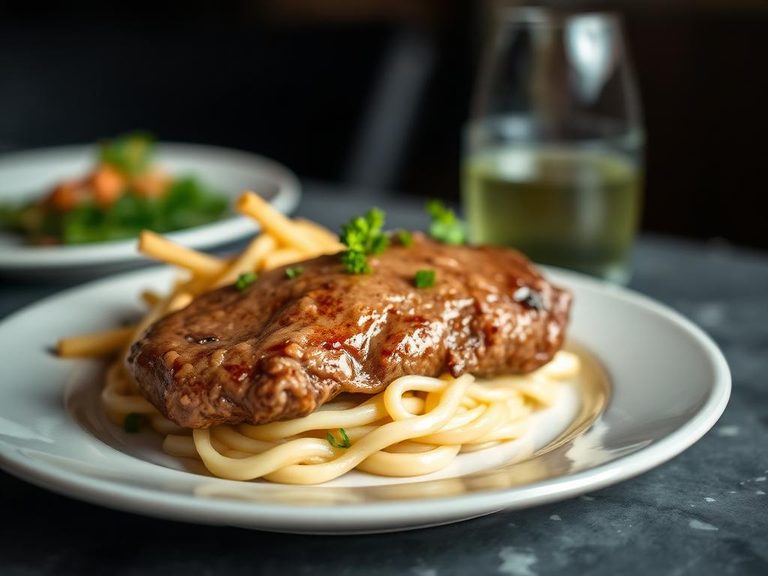
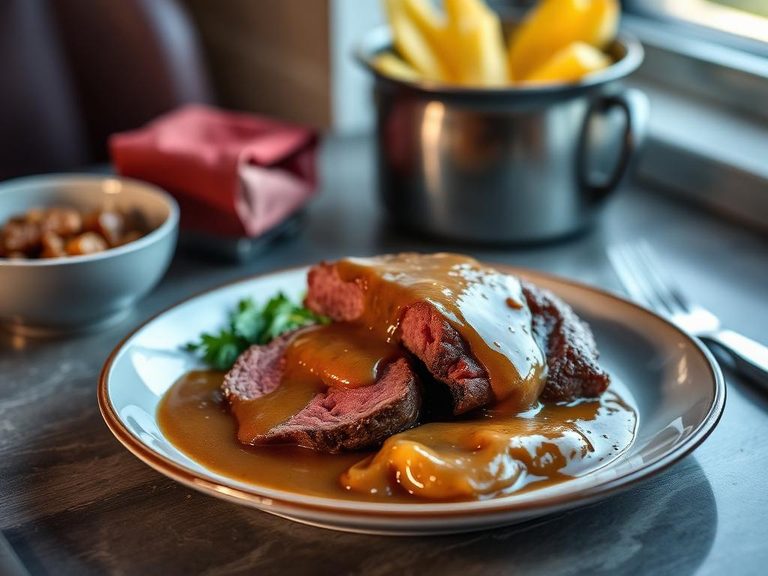

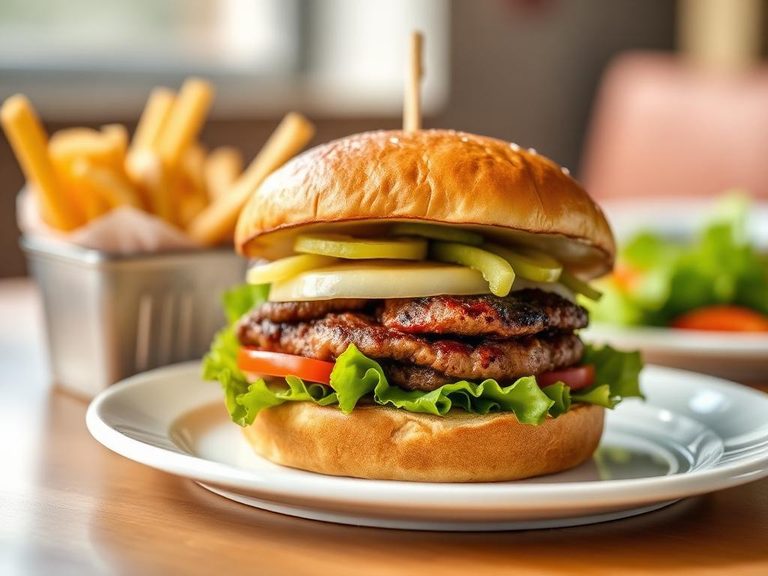
🌍 Where it's eaten
💡 Did you know?
The 'browning' in many dry gravy mixes comes from a process called the Maillard reaction applied to the flour during manufacturing, which creates the deep color and savory flavor without any actual meat juices.
Full nutrition (USDA data · scales with serving)
| Water | 4.0 g |
| Energy | 344 kcal |
| Energy | 1439 kj |
| Protein | 13.0 g |
| Total lipid (fat) | 8.0 g |
| Ash | 17.0 g |
| Carbohydrate, by difference | 58.0 g |
| Calcium, Ca | 150 mg |
| Iron, Fe | 1.0 mg |
| Magnesium, Mg | 45.0 mg |
| Phosphorus, P | 203 mg |
| Potassium, K | 262 mg |
| Sodium, Na | 5730 mg |
| Zinc, Zn | 1.4 mg |
| Copper, Cu | 0.10 mg |
| Manganese, Mn | 0.40 mg |
| Selenium, Se | 6.1 ug |
| Vitamin C, total ascorbic acid | 7.0 mg |
| Thiamin | 0.20 mg |
| Riboflavin | 0.43 mg |
| Niacin | 3.7 mg |
| Pantothenic acid | 0.10 mg |
| Vitamin B-6 | 0.10 mg |
| Folate, total | 31.0 ug |
| Folic acid | 17.0 ug |
| Folate, food | 14.0 ug |
| Folate, DFE | 43.0 ug |
| Vitamin B-12 | 0.70 ug |
| Vitamin A, RAE | 0.00 ug |
| Retinol | 0.00 ug |
| Vitamin A, IU | 0.00 iu |
Fat & fatty acid profile (per 100g)
| Fatty acids, total saturated | 2.9 g |
| SFA 6:0 | 0.01 g |
| SFA 8:0 | 0.08 g |
| SFA 10:0 | 0.06 g |
| SFA 12:0 | 0.46 g |
| SFA 14:0 | 0.23 g |
| SFA 16:0 | 1.2 g |
| SFA 18:0 | 0.85 g |
| Fatty acids, total monounsaturated | 3.1 g |
| MUFA 16:1 | 0.04 g |
| MUFA 18:1 | 3.1 g |
| MUFA 20:1 | 0.00 g |
| Fatty acids, total polyunsaturated | 1.6 g |
| PUFA 18:2 | 1.5 g |
| PUFA 18:3 | 0.10 g |
| Cholesterol | 4.0 mg |
Amino acid profile (per 100g)
Estimated from Gravy, HEINZ Home Style, savory beef — USDA does not publish this profile for Gravy.
| Tryptophan | 0.01 g |
| Threonine | 0.03 g |
| Isoleucine | 0.03 g |
| Leucine | 0.06 g |
| Lysine | 0.05 g |
| Methionine | 0.01 g |
| Cystine | 0.01 g |
| Phenylalanine | 0.03 g |
| Tyrosine | 0.02 g |
| Valine | 0.04 g |
| Arginine | 0.06 g |
| Histidine | 0.02 g |
| Alanine | 0.06 g |
| Aspartic acid | 0.07 g |
| Glutamic acid | 0.44 g |
| Glycine | 0.10 g |
| Proline | 0.08 g |
| Serine | 0.04 g |
| Hydroxyproline | 0.04 g |
FAQ
What's the difference between dry gravy and a roux?
A dry gravy mix is a pre-made, seasoned blend (often with flour, salt, and flavorings). A roux is a simple, unseasoned mixture of equal parts fat and flour cooked together, which is the foundational thickener for many homemade gravies.
Can I use dry gravy mix for anything other than gravy?
Yes! It's a versatile seasoning. You can use it to coat meats before roasting, thicken stews, flavor mashed potatoes, or create a savory dip when mixed with sour cream.
How do I fix lumpy gravy made from a dry mix?
For smooth gravy, always whisk the dry mix into cold water or milk first to form a slurry before adding it to a hot pan. If lumps form, you can strain the gravy through a fine-mesh sieve.
Nutrient density (calculated · NRF9.3)
Nutrient Rich Foods index: beneficial nutrients (protein, fiber, vitamins, minerals) minus saturated fat, added sugar & sodium, per 100 kcal.
NRF9.3 index — Fulgoni, Keast & Drewnowski, 2009. Computed from USDA nutrients.
Weight-loss friendliness (composite index)
Energy density 3.44 kcal/g · 15% calories from protein · 0.0 g fiber · 0.0 g sugar per 100 g.
Composite of energy density (Rolls et al., 1999), protein & fiber satiety, minus sugar. A calculated heuristic — ranks satiety-per-calorie, not a clinical measure.
Dietary load (calculated from USDA values)
Potential renal acid load. Positive = acid-forming, negative = alkaline-forming.
Sodium-to-potassium ratio: 21.87 (lower is better — aim for ≤ 1)
Sodium:potassium per WHO potassium guidance. Computed from USDA nutrients.