

Grapefruit, raw, white, Florida
Whole food · Fruits and Fruit Juices
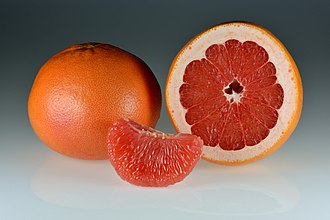
Photo: Wikipedia
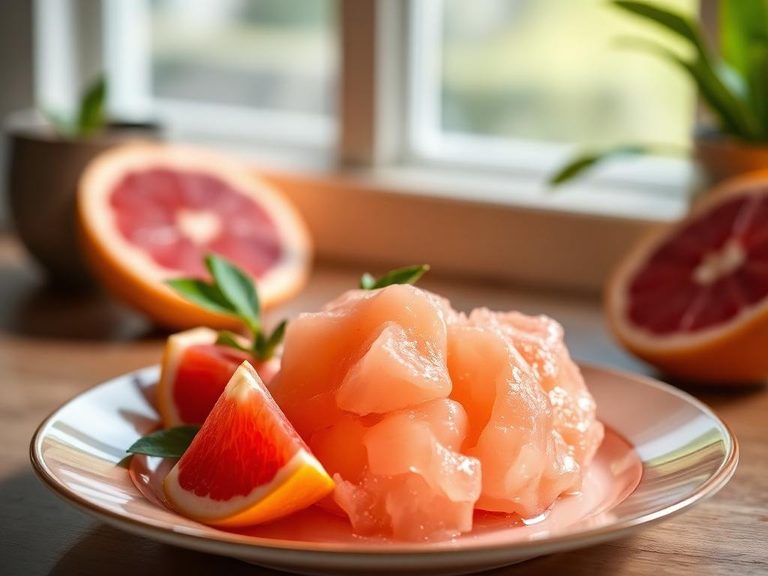
The raw white Florida grapefruit is a large, pale citrus fruit with a thick, aromatic rind and a juicy, segmented interior. Its flavor is a distinctive balance of sweet and tart, with a crisp, refreshing texture that bursts with juice. Nutritionally, it's a low-calorie, hydrating choice, providing a solid dose of vitamin C and potassium with minimal fat.
Calorie split: 7% protein · 91% carbs · 2% fat
↓ Full nutrition💚 Why it's loved
People love its invigorating, bittersweet flavor that wakes up the palate, making it a classic breakfast staple. Its versatility shines in everything from fresh segments and salads to cocktails and desserts.
⚠️ Watch-outs & how to enjoy it better
The tartness can be intense for some palates, and its acidity may cause discomfort for those with acid reflux or sensitive stomachs. It contains furanocoumarins, which can interact with certain medications (like statins and some blood pressure drugs). To counteract, consult your doctor about timing your medication and grapefruit consumption, and always eat it with a meal to buffer the acidity.
Key benefits
- Excellent source of immune-supporting vitamin C
- Provides heart-healthy potassium
- Very low in calories and fat
- High water content aids hydration
- Contains beneficial plant compounds like lycopene and naringin
🍽️ Popular dishes
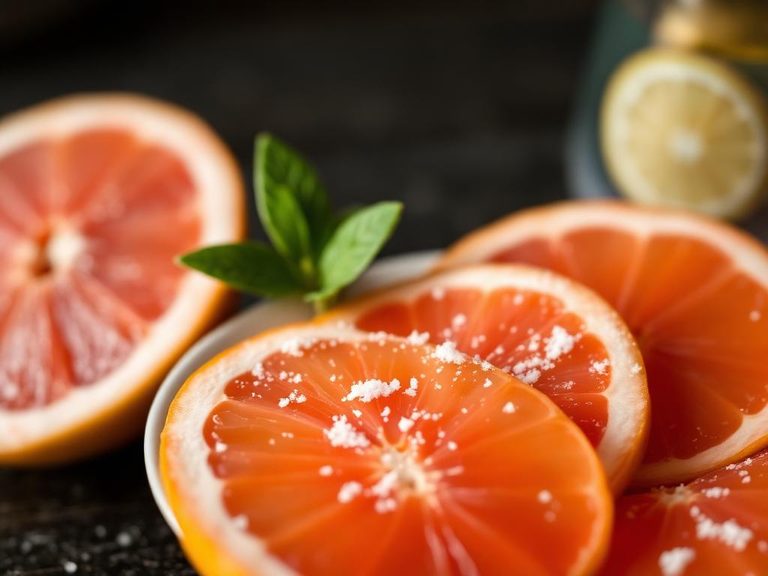
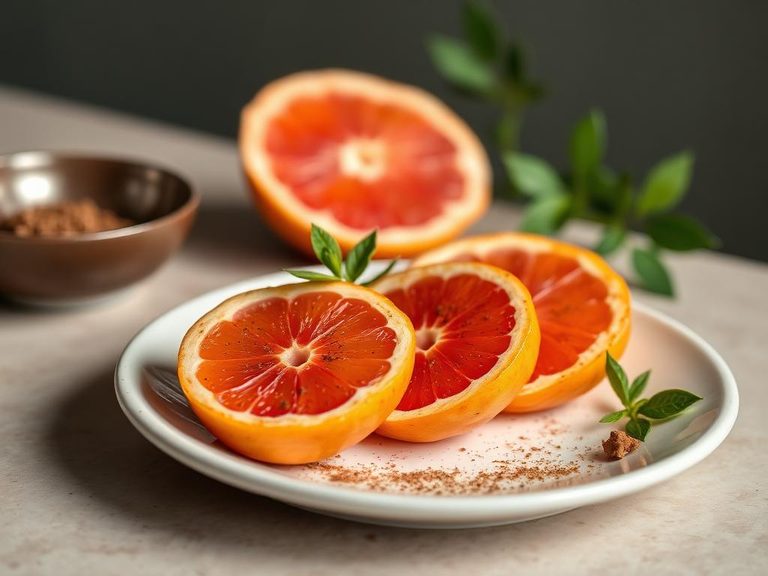
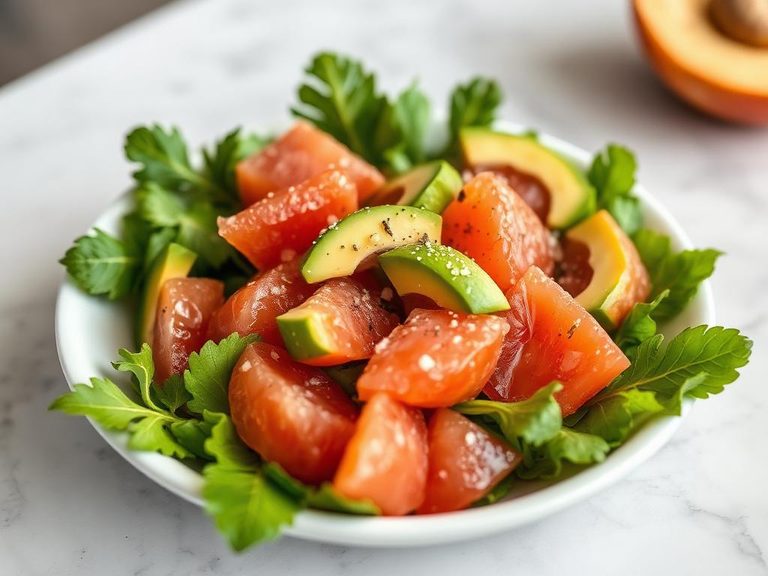

🌍 Where it's eaten
💡 Did you know?
The 'white' in white grapefruit refers to the pale yellow color of its flesh, not the pith, and it's the original grapefruit variety from which all other colors (pink, red) were later cultivated.
Full nutrition (USDA data · scales with serving)
| Water | 90.8 g |
| Energy | 32.0 kcal |
| Energy | 134 kj |
| Protein | 0.63 g |
| Total lipid (fat) | 0.10 g |
| Ash | 0.32 g |
| Carbohydrate, by difference | 8.2 g |
| Calcium, Ca | 15.0 mg |
| Iron, Fe | 0.05 mg |
| Magnesium, Mg | 9.0 mg |
| Phosphorus, P | 7.0 mg |
| Potassium, K | 150 mg |
| Sodium, Na | 0.00 mg |
| Zinc, Zn | 0.07 mg |
| Copper, Cu | 0.06 mg |
| Manganese, Mn | 0.01 mg |
| Vitamin C, total ascorbic acid | 37.0 mg |
| Thiamin | 0.04 mg |
| Riboflavin | 0.02 mg |
| Niacin | 0.20 mg |
| Pantothenic acid | 0.28 mg |
| Vitamin B-6 | 0.04 mg |
| Folate, total | 9.0 ug |
| Folic acid | 0.00 ug |
| Folate, food | 9.0 ug |
| Folate, DFE | 9.0 ug |
| Vitamin B-12 | 0.00 ug |
| Vitamin A, RAE | 0.00 ug |
| Retinol | 0.00 ug |
| Vitamin A, IU | 10.0 iu |
| Vitamin D (D2 + D3), International Units | 0.00 iu |
| Vitamin D (D2 + D3) | 0.00 ug |
Fat & fatty acid profile (per 100g)
| Fatty acids, total saturated | 0.01 g |
| SFA 16:0 | 0.01 g |
| SFA 18:0 | 0.00 g |
| Fatty acids, total monounsaturated | 0.01 g |
| MUFA 16:1 | 0.00 g |
| MUFA 18:1 | 0.01 g |
| Fatty acids, total polyunsaturated | 0.02 g |
| PUFA 18:2 | 0.02 g |
| PUFA 18:3 | 0.01 g |
| Fatty acids, total trans | 0.00 g |
| Cholesterol | 0.00 mg |
Amino acid profile (per 100g)
| Tryptophan | 0.01 g |
| Threonine | 0.01 g |
| Isoleucine | 0.01 g |
| Leucine | 0.01 g |
| Lysine | 0.02 g |
| Methionine | 0.01 g |
| Cystine | 0.01 g |
| Phenylalanine | 0.04 g |
| Tyrosine | 0.01 g |
| Valine | 0.01 g |
| Arginine | 0.07 g |
| Histidine | 0.01 g |
| Alanine | 0.02 g |
| Aspartic acid | 0.11 g |
| Glutamic acid | 0.16 g |
| Glycine | 0.01 g |
| Proline | 0.05 g |
| Serine | 0.02 g |
FAQ
Is white grapefruit higher in sugar than other citrus?
No, it's actually lower in sugar than many common fruits like oranges or apples. Its strong tartness from citric acid can make it taste less sweet than it is.
Why is Florida grapefruit famous?
Florida's sandy soil, subtropical climate, and long growing season produce grapefruit with a perfect balance of sweetness and acidity, and a particularly juicy texture.
Can I eat the white pith?
Yes, the white pith is edible and contains fiber and antioxidants, but it has a bitter taste. Most people prefer to remove it for a better eating experience.
Nutrient density (calculated · NRF9.3)
Nutrient Rich Foods index: beneficial nutrients (protein, fiber, vitamins, minerals) minus saturated fat, added sugar & sodium, per 100 kcal.
NRF9.3 index — Fulgoni, Keast & Drewnowski, 2009. Computed from USDA nutrients.
Weight-loss friendliness (composite index)
Energy density 0.32 kcal/g · 8% calories from protein · 0.0 g fiber · 0.0 g sugar per 100 g.
Composite of energy density (Rolls et al., 1999), protein & fiber satiety, minus sugar. A calculated heuristic — ranks satiety-per-calorie, not a clinical measure.
Dietary load (calculated from USDA values)
Potential renal acid load. Positive = acid-forming, negative = alkaline-forming.
Sodium-to-potassium ratio: 0.00 (lower is better — aim for ≤ 1)
Sodium:potassium per WHO potassium guidance. Computed from USDA nutrients.