

English muffins, plain, unenriched, without calcium propionate (includes sourdough)
Whole food · Baked Products

Photo: Wikipedia
A plain English muffin is a small, round, yeast-leavened bread known for its signature 'nooks and crannies'—a porous interior that acts like a sponge for melted butter or jam. It has a lightly crisp, cornmeal-dusted exterior and a chewy, mildly tangy interior, especially in sourdough versions. Nutritionally, it's a solid source of complex carbohydrates and plant-based protein with minimal fat.
Calorie split: 13% protein · 80% carbs · 7% fat
↓ Full nutrition💚 Why it's loved
People love it for its unique texture—the nooks and crannies perfectly hold melted butter, jam, or egg yolk without becoming soggy. It's a beloved staple of British and American breakfast culture, offering a satisfying, slightly chewy bite.
⚠️ Watch-outs & how to enjoy it better
As a refined carbohydrate, it can cause blood sugar spikes, especially without protein or fat. Those monitoring gluten intake should avoid it as it's a wheat product. To counteract, always pair with protein (egg, cheese) or healthy fat (avocado, nut butter) and consider a half-portion if sensitive to carbs.
Key benefits
- Good source of complex carbohydrates for sustained energy.
- Provides plant-based protein (7.7g per 100g).
- Low in fat (1.8g per 100g).
- Contains dietary fiber (2.7g per 100g).
- Versatile base for both sweet and savory meals.
🍽️ Popular dishes


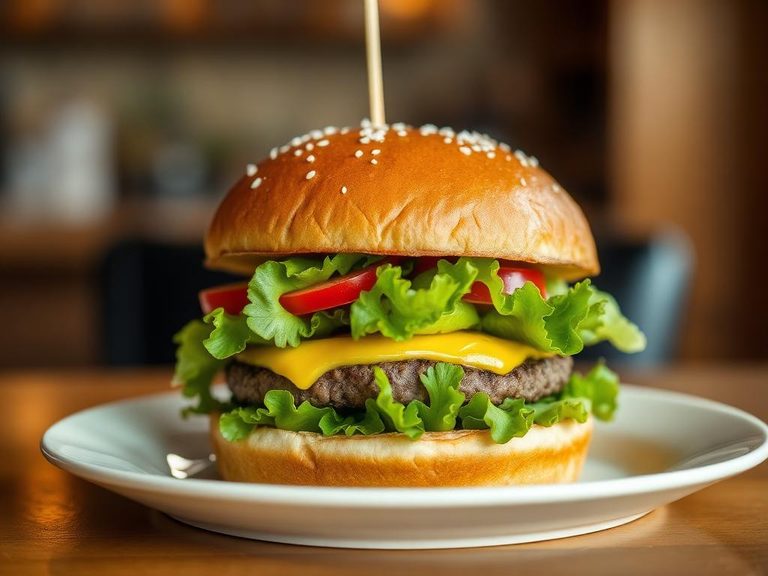
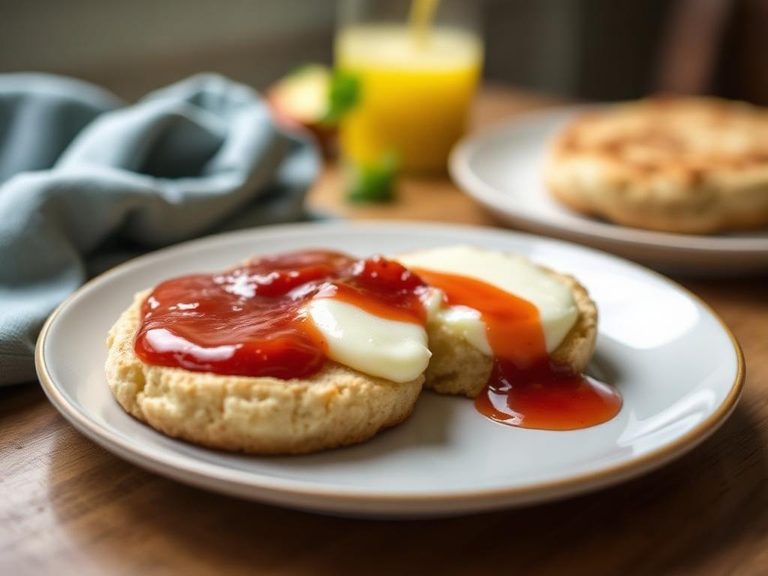
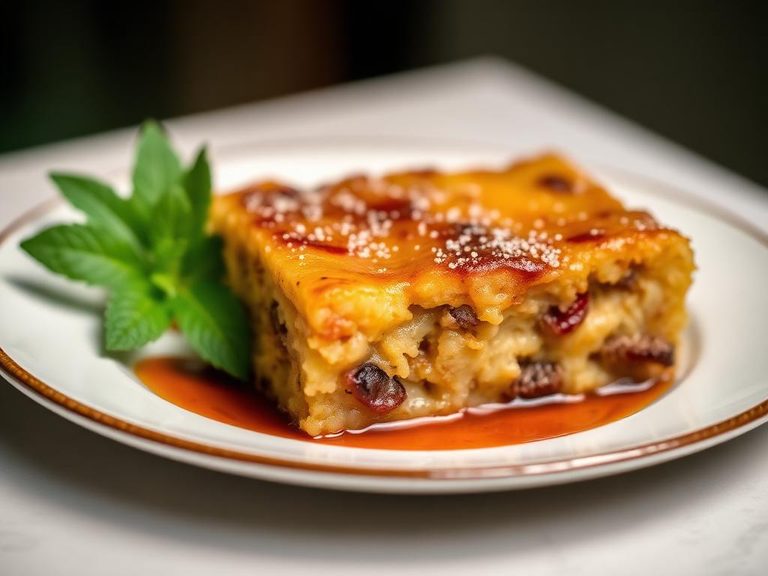
🌍 Where it's eaten
💡 Did you know?
The 'nooks and crannies' aren't just for show; they are created by a specific cooking process where the dough is griddled on both sides, creating a sealed crust that traps steam inside, forming those iconic air pockets.
Full nutrition (USDA data · scales with serving)
| Water | 42.1 g |
| Energy | 235 kcal |
| Energy | 983 kj |
| Protein | 7.7 g |
| Total lipid (fat) | 1.8 g |
| Ash | 2.2 g |
| Carbohydrate, by difference | 46.0 g |
| Fiber, total dietary | 2.7 g |
| Calcium, Ca | 52.0 mg |
| Iron, Fe | 0.89 mg |
| Magnesium, Mg | 21.0 mg |
| Phosphorus, P | 133 mg |
| Potassium, K | 131 mg |
| Sodium, Na | 464 mg |
| Zinc, Zn | 0.70 mg |
| Copper, Cu | 0.13 mg |
| Manganese, Mn | 0.36 mg |
| Vitamin C, total ascorbic acid | 0.10 mg |
| Thiamin | 0.18 mg |
| Riboflavin | 0.15 mg |
| Niacin | 1.6 mg |
| Pantothenic acid | 0.45 mg |
| Vitamin B-6 | 0.04 mg |
| Folate, total | 37.0 ug |
| Folic acid | 0.00 ug |
| Folate, food | 37.0 ug |
| Folate, DFE | 37.0 ug |
| Vitamin B-12 | 0.04 ug |
| Vitamin A, RAE | 0.00 ug |
| Retinol | 0.00 ug |
| Vitamin A, IU | 0.00 iu |
Fat & fatty acid profile (per 100g)
| Fatty acids, total saturated | 0.26 g |
| SFA 4:0 | 0.00 g |
| SFA 6:0 | 0.00 g |
| SFA 8:0 | 0.00 g |
| SFA 10:0 | 0.00 g |
| SFA 12:0 | 0.00 g |
| SFA 14:0 | 0.00 g |
| SFA 16:0 | 0.21 g |
| SFA 18:0 | 0.04 g |
| Fatty acids, total monounsaturated | 0.30 g |
| MUFA 16:1 | 0.03 g |
| MUFA 18:1 | 0.27 g |
| MUFA 20:1 | 0.00 g |
| Fatty acids, total polyunsaturated | 0.89 g |
| PUFA 18:2 | 0.81 g |
| PUFA 18:3 | 0.07 g |
| Cholesterol | 0.00 mg |
Amino acid profile (per 100g)
| Tryptophan | 0.09 g |
| Threonine | 0.24 g |
| Isoleucine | 0.32 g |
| Leucine | 0.55 g |
| Lysine | 0.24 g |
| Methionine | 0.14 g |
| Cystine | 0.16 g |
| Phenylalanine | 0.38 g |
| Tyrosine | 0.23 g |
| Valine | 0.35 g |
| Arginine | 0.29 g |
| Histidine | 0.17 g |
| Alanine | 0.28 g |
| Aspartic acid | 0.40 g |
| Glutamic acid | 2.4 g |
| Glycine | 0.28 g |
| Proline | 0.81 g |
| Serine | 0.38 g |
FAQ
What's the difference between an English muffin and a regular bun?
English muffins are yeast-leavened, griddled (not baked), dusted with cornmeal, and have a chewy texture with nooks and crannies. Regular buns are typically baked, softer, and lack the distinctive interior texture.
Are English muffins sourdough?
Not always. The nutrition data includes sourdough versions, which use a fermented starter for a tangier flavor and potentially better digestibility. Many commercial English muffins are standard yeast breads.
How do I get the best nooks and crannies when toasting?
Split the muffin with a fork instead of a knife to preserve the interior structure. Toast until golden, then immediately slather with butter so it melts into all the holes.
Nutrient density (calculated · NRF9.3)
Nutrient Rich Foods index: beneficial nutrients (protein, fiber, vitamins, minerals) minus saturated fat, added sugar & sodium, per 100 kcal.
NRF9.3 index — Fulgoni, Keast & Drewnowski, 2009. Computed from USDA nutrients.
Weight-loss friendliness (composite index)
Energy density 2.35 kcal/g · 13% calories from protein · 2.7 g fiber · 0.0 g sugar per 100 g.
Composite of energy density (Rolls et al., 1999), protein & fiber satiety, minus sugar. A calculated heuristic — ranks satiety-per-calorie, not a clinical measure.
Dietary load (calculated from USDA values)
Potential renal acid load. Positive = acid-forming, negative = alkaline-forming.
Sodium-to-potassium ratio: 3.54 (lower is better — aim for ≤ 1)
Sodium:potassium per WHO potassium guidance. Computed from USDA nutrients.