

Clams, NFS
Common food
Clams are tender, briny bivalve mollusks with a subtly sweet, oceanic flavor and a satisfyingly chewy-yet-tender texture. They are a standout source of lean protein and are exceptionally rich in essential minerals like iron, zinc, and selenium, all while being low in calories and fat.
Calorie split: 47% protein · 19% carbs · 34% fat
↓ Full nutrition💚 Why it's loved
People adore clams for their deep, clean taste of the sea and their incredible versatility, shining in everything from simple steamed dishes to rich, complex stews. They are a beloved centerpiece in coastal cuisines worldwide, often evoking memories of seaside feasts and communal dining.
⚠️ Watch-outs & how to enjoy it better
Clams are a common shellfish allergen and can be high in sodium and purines, which may be a concern for individuals with gout or hypertension. To mitigate, choose fresh over canned varieties to control salt, and ensure they are cooked thoroughly to avoid foodborne illness.
Key benefits
- Excellent source of high-quality, lean protein.
- Rich in iron, zinc, and selenium for immune and metabolic health.
- Naturally low in calories and fat.
- Provides vitamin B12 and omega-3 fatty acids.
🍽️ Popular dishes
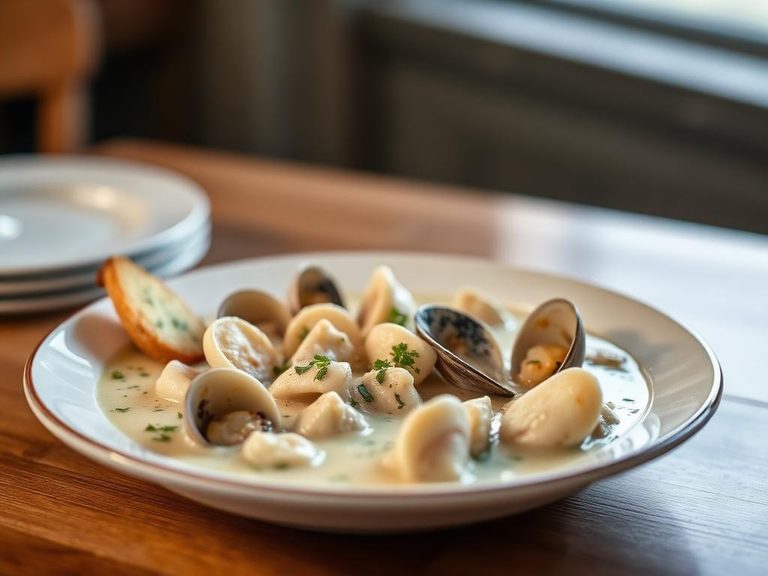
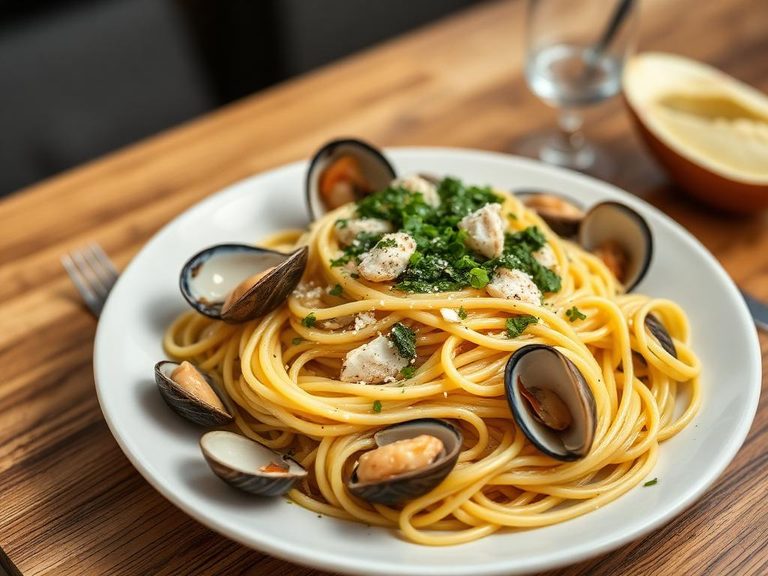
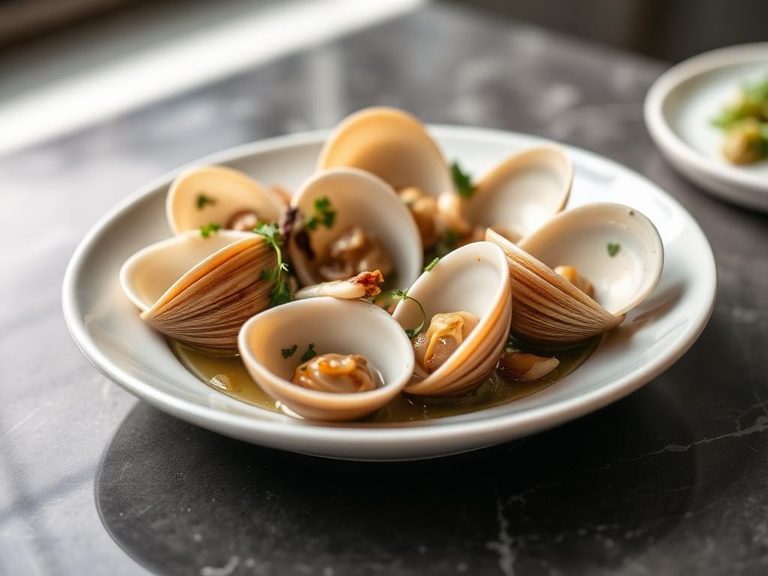
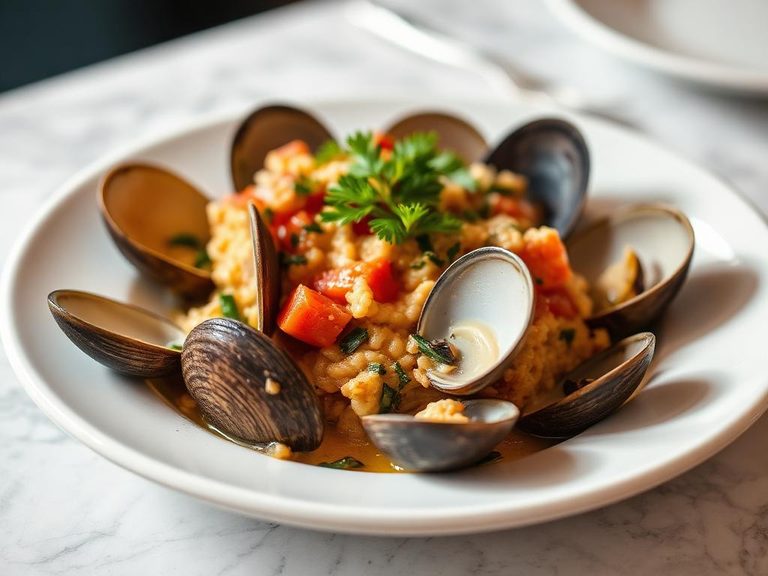
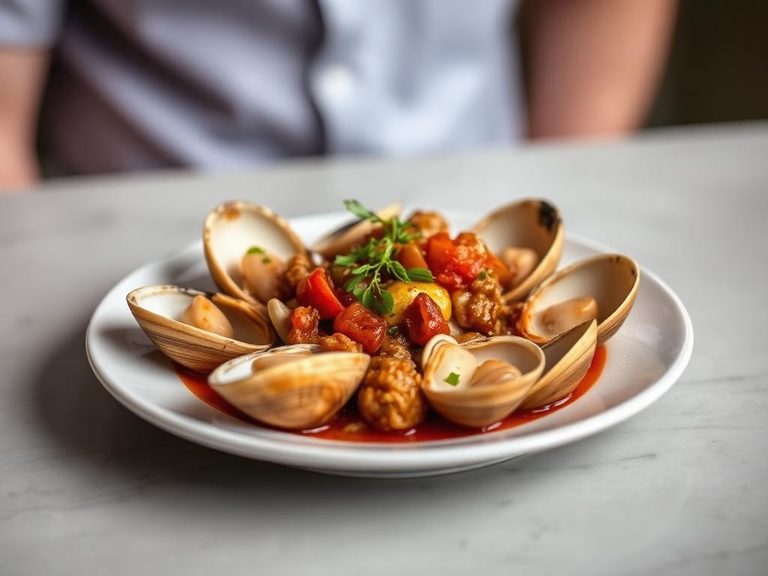
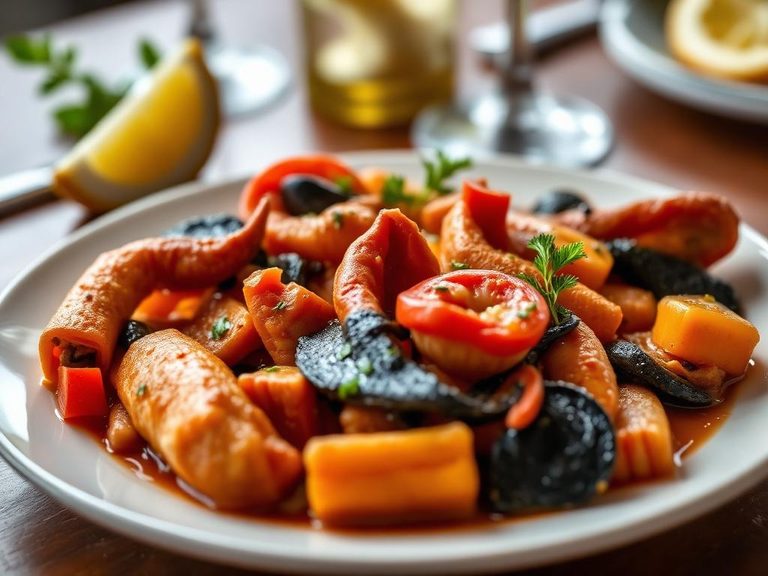
🌍 Where it's eaten
💡 Did you know?
Clams can live for a very long time; the ocean quahog species has individuals confirmed to be over 500 years old, with the oldest known clam, Ming, dying at age 507.
Full nutrition (USDA data · scales with serving)
| Water | 69.6 g |
| Energy | 143 kcal |
| Protein | 16.1 g |
| Total lipid (fat) | 5.2 g |
| Carbohydrate, by difference | 6.7 g |
| Fiber, total dietary | 0.10 g |
| Total Sugars | 0.05 g |
| Calcium, Ca | 45.0 mg |
| Iron, Fe | 1.9 mg |
| Magnesium, Mg | 21.0 mg |
| Phosphorus, P | 217 mg |
| Potassium, K | 55.0 mg |
| Sodium, Na | 199 mg |
| Zinc, Zn | 0.58 mg |
| Copper, Cu | 0.06 mg |
| Selenium, Se | 33.4 ug |
| Vitamin C, total ascorbic acid | 0.00 mg |
| Thiamin | 0.05 mg |
| Riboflavin | 0.06 mg |
| Niacin | 0.62 mg |
| Vitamin B-6 | 0.02 mg |
| Folate, total | 10.0 ug |
| Folic acid | 5.0 ug |
| Folate, food | 5.0 ug |
| Folate, DFE | 14.0 ug |
| Choline, total | 71.2 mg |
| Vitamin B-12 | 10.7 ug |
| Vitamin B-12, added | 0.00 ug |
| Vitamin A, RAE | 98.0 ug |
| Retinol | 98.0 ug |
| Carotene, beta | 2.0 ug |
| Carotene, alpha | 0.00 ug |
| Cryptoxanthin, beta | 0.00 ug |
| Lycopene | 0.00 ug |
| Lutein + zeaxanthin | 2.0 ug |
| Vitamin E (alpha-tocopherol) | 1.5 mg |
| Vitamin E, added | 0.00 mg |
| Vitamin D (D2 + D3) | 0.00 ug |
| Vitamin K (phylloquinone) | 4.1 ug |
| Alcohol, ethyl | 0.00 g |
| Caffeine | 0.00 mg |
| Theobromine | 0.00 mg |
Fat & fatty acid profile (per 100g)
| Fatty acids, total saturated | 0.91 g |
| SFA 4:0 | 0.01 g |
| SFA 6:0 | 0.01 g |
| SFA 8:0 | 0.00 g |
| SFA 10:0 | 0.01 g |
| SFA 12:0 | 0.01 g |
| SFA 14:0 | 0.04 g |
| SFA 16:0 | 0.58 g |
| SFA 18:0 | 0.20 g |
| Fatty acids, total monounsaturated | 1.8 g |
| MUFA 16:1 | 0.04 g |
| MUFA 18:1 | 1.7 g |
| MUFA 20:1 | 0.03 g |
| MUFA 22:1 | 0.00 g |
| Fatty acids, total polyunsaturated | 1.7 g |
| PUFA 18:2 | 1.4 g |
| PUFA 18:3 | 0.18 g |
| PUFA 18:4 | 0.00 g |
| PUFA 20:4 | 0.01 g |
| PUFA 20:5 n-3 (EPA) | 0.05 g |
| PUFA 22:5 n-3 (DPA) | 0.01 g |
| PUFA 22:6 n-3 (DHA) | 0.07 g |
| Cholesterol | 34.0 mg |
FAQ
How do I know if clams are safe to eat before cooking?
Discard any clams with shells that are already open and do not close when tapped, as they are likely dead. After cooking, discard any that did not open.
What is the difference between hard-shell and soft-shell clams?
Hard-shell clams (like quahogs) have thicker shells and a chewier texture, often used in chowders. Soft-shell clams (like steamers) have thinner, brittle shells and are typically steamed whole and eaten with the siphon (neck) peeled.
Can I eat the entire clam?
Yes, the entire soft body is edible. This includes the muscular foot (the chewy part), the siphon, and the visceral mass. The shell is not eaten.
Nutrient density (calculated · NRF9.3)
Nutrient Rich Foods index: beneficial nutrients (protein, fiber, vitamins, minerals) minus saturated fat, added sugar & sodium, per 100 kcal.
NRF9.3 index — Fulgoni, Keast & Drewnowski, 2009. Computed from USDA nutrients.
Weight-loss friendliness (composite index)
Energy density 1.43 kcal/g · 45% calories from protein · 0.1 g fiber · 0.1 g sugar per 100 g.
Composite of energy density (Rolls et al., 1999), protein & fiber satiety, minus sugar. A calculated heuristic — ranks satiety-per-calorie, not a clinical measure.
Dietary load (calculated from USDA values)
Potential renal acid load. Positive = acid-forming, negative = alkaline-forming.
Sodium-to-potassium ratio: 3.62 (lower is better — aim for ≤ 1)
Sodium:potassium per WHO potassium guidance. Computed from USDA nutrients.