

Clams, fried
Common food

Photo: Wikipedia
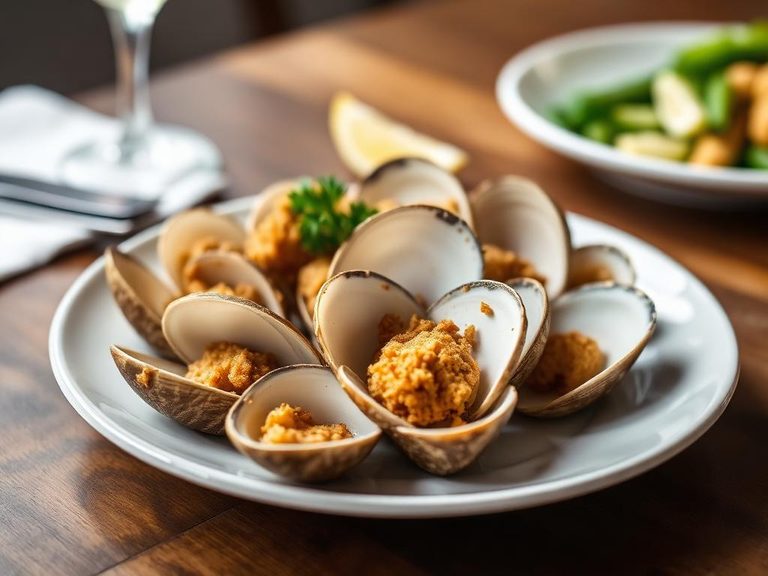
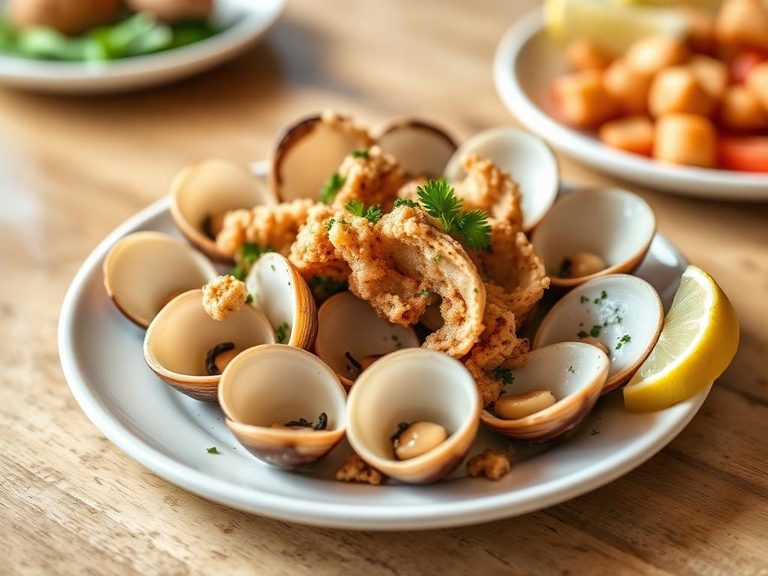
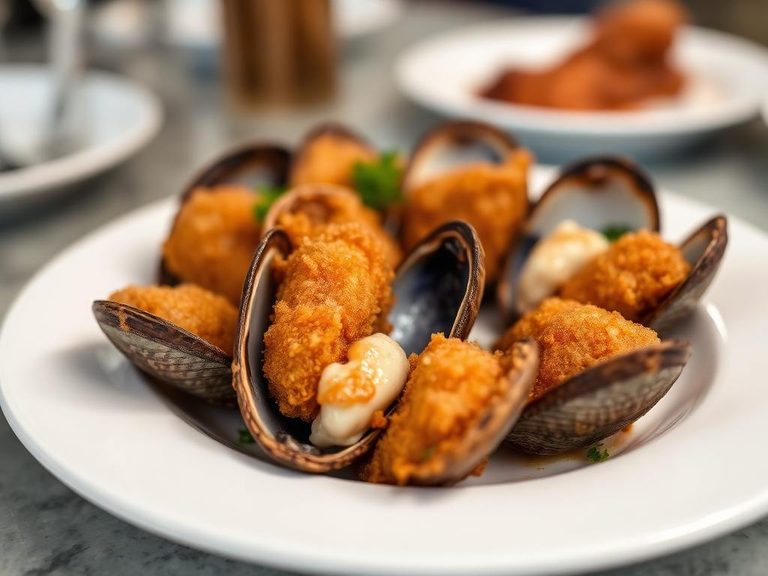
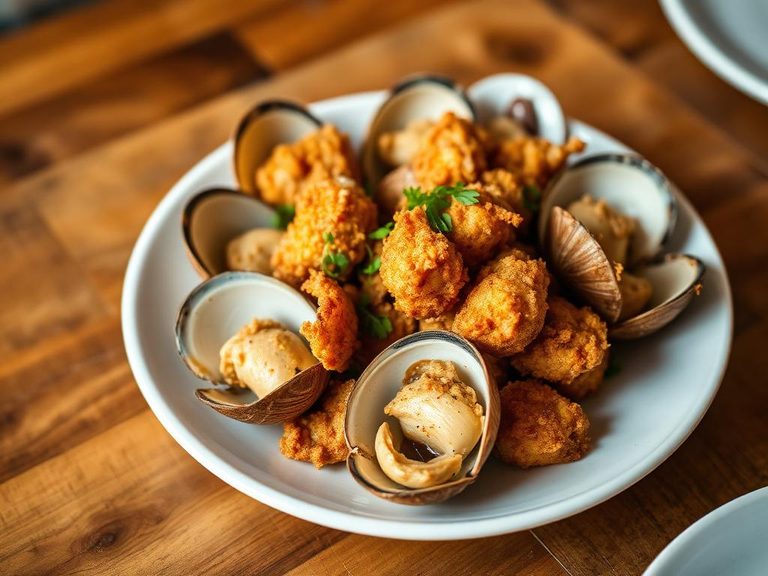
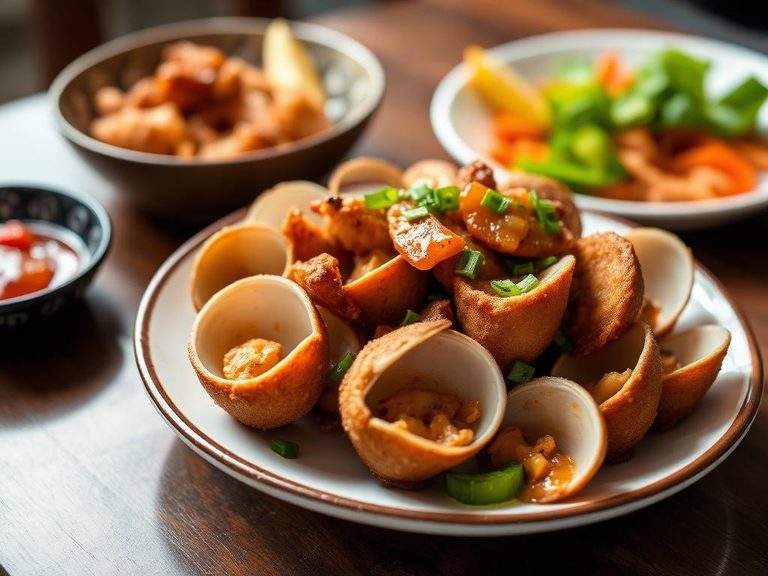
Fried clams are a coastal delicacy, featuring tender, briny clam meat coated in a light, crispy batter or cornmeal and deep-fried to a golden crunch. The interior remains juicy and sweet, while the exterior provides a satisfying textural contrast. Nutritionally, they are a concentrated source of protein and provide a notable amount of energy from both carbohydrates and fats.
Calorie split: 23% protein · 26% carbs · 51% fat
↓ Full nutrition💚 Why it's loved
People adore fried clams for their irresistible combination of a salty-sweet ocean flavor and a perfectly crispy, non-greasy coating. They are a beloved staple of seaside shacks and a symbol of casual, indulgent summer dining in many cultures.
⚠️ Watch-outs & how to enjoy it better
The deep-frying process significantly increases the calorie and fat content compared to steamed or raw preparations. They can also be high in sodium, which is a concern for individuals managing blood pressure. To enjoy them more healthily, consider pairing them with a large, vinegar-based salad to cut the richness, practice strict portion control, or opt for air-fried versions at home to reduce oil absorption.
Key benefits
- Excellent source of high-quality protein for muscle maintenance.
- Contains essential minerals like iron and selenium.
- Provides B vitamins, particularly B12, crucial for nerve function.
- Offers a quick, energy-dense meal option.
🍽️ Popular dishes
🌍 Where it's eaten
💡 Did you know?
The iconic New England fried clam is traditionally made with the soft-shell clam (Mya arenaria), which must be manually 'shucked' or 'stropped' from its shell before frying—a labor-intensive process that contributes to its classic status.
Full nutrition (USDA data · scales with serving)
| Water | 57.2 g |
| Energy | 230 kcal |
| Protein | 13.1 g |
| Total lipid (fat) | 12.9 g |
| Carbohydrate, by difference | 14.4 g |
| Fiber, total dietary | 0.50 g |
| Total Sugars | 0.20 g |
| Calcium, Ca | 44.0 mg |
| Iron, Fe | 2.1 mg |
| Magnesium, Mg | 19.0 mg |
| Phosphorus, P | 174 mg |
| Potassium, K | 59.0 mg |
| Sodium, Na | 386 mg |
| Zinc, Zn | 0.54 mg |
| Copper, Cu | 0.07 mg |
| Selenium, Se | 26.4 ug |
| Vitamin C, total ascorbic acid | 0.00 mg |
| Thiamin | 0.15 mg |
| Riboflavin | 0.10 mg |
| Niacin | 1.3 mg |
| Vitamin B-6 | 0.02 mg |
| Folate, total | 27.0 ug |
| Folic acid | 20.0 ug |
| Folate, food | 8.0 ug |
| Folate, DFE | 41.0 ug |
| Choline, total | 56.3 mg |
| Vitamin B-12 | 7.3 ug |
| Vitamin B-12, added | 0.00 ug |
| Vitamin A, RAE | 68.0 ug |
| Retinol | 68.0 ug |
| Carotene, beta | 0.00 ug |
| Carotene, alpha | 0.00 ug |
| Cryptoxanthin, beta | 0.00 ug |
| Lycopene | 0.00 ug |
| Lutein + zeaxanthin | 10.0 ug |
| Vitamin E (alpha-tocopherol) | 2.8 mg |
| Vitamin E, added | 0.00 mg |
| Vitamin D (D2 + D3) | 0.00 ug |
| Vitamin K (phylloquinone) | 12.1 ug |
| Alcohol, ethyl | 0.00 g |
| Caffeine | 0.00 mg |
| Theobromine | 0.00 mg |
Fat & fatty acid profile (per 100g)
| Fatty acids, total saturated | 1.8 g |
| SFA 4:0 | 0.00 g |
| SFA 6:0 | 0.00 g |
| SFA 8:0 | 0.00 g |
| SFA 10:0 | 0.00 g |
| SFA 12:0 | 0.00 g |
| SFA 14:0 | 0.01 g |
| SFA 16:0 | 1.3 g |
| SFA 18:0 | 0.40 g |
| Fatty acids, total monounsaturated | 5.1 g |
| MUFA 16:1 | 0.06 g |
| MUFA 18:1 | 5.0 g |
| MUFA 20:1 | 0.08 g |
| MUFA 22:1 | 0.00 g |
| Fatty acids, total polyunsaturated | 4.8 g |
| PUFA 18:2 | 4.1 g |
| PUFA 18:3 | 0.53 g |
| PUFA 18:4 | 0.00 g |
| PUFA 20:4 | 0.01 g |
| PUFA 20:5 n-3 (EPA) | 0.03 g |
| PUFA 22:5 n-3 (DPA) | 0.01 g |
| PUFA 22:6 n-3 (DHA) | 0.05 g |
| Cholesterol | 29.0 mg |
FAQ
What is the difference between fried clam bellies and fried clam strips?
Fried clam bellies are the whole, soft body of the clam, which is plumper, chewier, and considered the premium, more flavorful part. Fried clam strips are typically made from larger surf clams, sliced into thin strips before frying, resulting in a more uniform, chewy texture.
Are fried clams a good source of omega-3 fatty acids?
While clams themselves contain some omega-3s, the deep-frying process adds a significant amount of other fats (often from vegetable oils). The final omega-3 content of the dish is relatively low compared to the total fat and calories.
How can I tell if fried clams are fresh and high-quality?
Look for a light, non-greasy coating that is golden brown, not dark or soggy. The clams should be plump and juicy inside, not rubbery or shriveled. A fresh, clean ocean scent (not a strong 'fishy' smell) is a good indicator.
Nutrient density (calculated · NRF9.3)
Nutrient Rich Foods index: beneficial nutrients (protein, fiber, vitamins, minerals) minus saturated fat, added sugar & sodium, per 100 kcal.
NRF9.3 index — Fulgoni, Keast & Drewnowski, 2009. Computed from USDA nutrients.
Weight-loss friendliness (composite index)
Energy density 2.30 kcal/g · 23% calories from protein · 0.5 g fiber · 0.2 g sugar per 100 g.
Composite of energy density (Rolls et al., 1999), protein & fiber satiety, minus sugar. A calculated heuristic — ranks satiety-per-calorie, not a clinical measure.
Dietary load (calculated from USDA values)
Potential renal acid load. Positive = acid-forming, negative = alkaline-forming.
Sodium-to-potassium ratio: 6.54 (lower is better — aim for ≤ 1)
Sodium:potassium per WHO potassium guidance. Computed from USDA nutrients.