

Cereals ready-to-eat, POST, Honeycomb Cereal
Whole food · Breakfast Cereals

Photo: Wikipedia
Honeycomb Cereal is a sweetened, puffed corn cereal shaped like small, hexagonal honeycombs. It offers a light, airy crunch that quickly softens in milk, delivering a pronounced honey-sweet flavor. Nutritionally, it is a high-carbohydrate, low-protein option with a significant portion of its calories coming from added sugar.
Calorie split: 6% protein · 87% carbs · 7% fat
↓ Full nutrition💚 Why it's loved
People love it for its nostalgic, distinctly sweet honey flavor and the fun, playful honeycomb shape that makes breakfast feel like a treat. It's a versatile cereal that can be enjoyed with milk, as a dry snack, or as a crunchy topping for yogurt and ice cream.
⚠️ Watch-outs & how to enjoy it better
The high sugar content (over 31g per 100g) can lead to a rapid blood-sugar spike and subsequent energy crash, making it a poor choice for sustained energy or for those managing blood sugar. To counteract this, pair it with a source of protein or healthy fat, like a handful of nuts or full-fat milk, and practice strict portion control.
Key benefits
- Provides quick energy from carbohydrates
- Fortified with essential vitamins and minerals
- Convenient and ready-to-eat breakfast option
- Light texture is easy to chew and digest
- Appeals to children and those with a sweet tooth
🍽️ Popular dishes
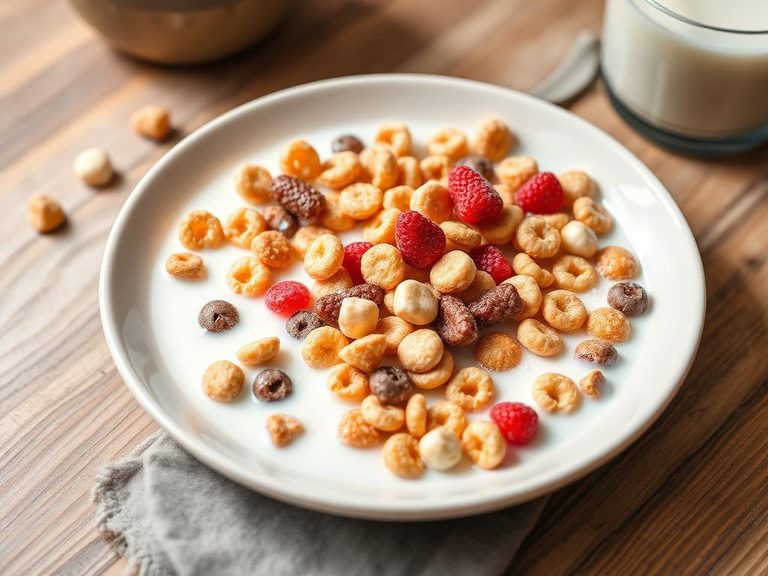
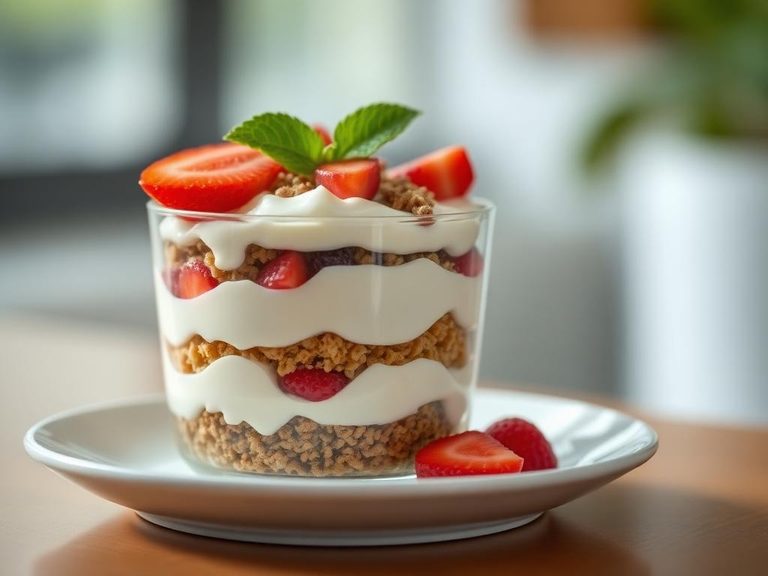


🌍 Where it's eaten
💡 Did you know?
The cereal's iconic hexagonal shape is directly inspired by the wax honeycomb structure bees create, though the cereal itself contains no actual honey.
Full nutrition (USDA data · scales with serving)
| Water | 1.5 g |
| Energy | 394 kcal |
| Energy | 1650 kj |
| Protein | 6.0 g |
| Total lipid (fat) | 2.9 g |
| Ash | 2.9 g |
| Carbohydrate, by difference | 86.6 g |
| Fiber, total dietary | 3.2 g |
| Total Sugars | 31.5 g |
| Calcium, Ca | 11.0 mg |
| Iron, Fe | 8.4 mg |
| Magnesium, Mg | 45.0 mg |
| Phosphorus, P | 132 mg |
| Potassium, K | 142 mg |
| Sodium, Na | 553 mg |
| Zinc, Zn | 4.7 mg |
| Copper, Cu | 0.13 mg |
| Selenium, Se | 10.4 ug |
| Vitamin C, total ascorbic acid | 0.00 mg |
| Thiamin | 1.2 mg |
| Riboflavin | 1.3 mg |
| Niacin | 15.6 mg |
| Vitamin B-6 | 1.6 mg |
| Folate, total | 313 ug |
| Folic acid | 294 ug |
| Folate, food | 19.0 ug |
| Folate, DFE | 518 ug |
| Choline, total | 8.6 mg |
| Vitamin B-12 | 4.7 ug |
| Vitamin B-12, added | 4.7 ug |
| Vitamin A, RAE | 678 ug |
| Retinol | 672 ug |
| Carotene, beta | 46.0 ug |
| Carotene, alpha | 30.0 ug |
| Cryptoxanthin, beta | 0.00 ug |
| Vitamin A, IU | 2344 iu |
| Lycopene | 0.00 ug |
| Lutein + zeaxanthin | 681 ug |
| Vitamin E (alpha-tocopherol) | 0.17 mg |
| Vitamin E, added | 0.00 mg |
| Vitamin D (D2 + D3), International Units | 313 iu |
| Vitamin D (D2 + D3) | 7.8 ug |
| Vitamin D3 (cholecalciferol) | 7.8 ug |
| Vitamin K (phylloquinone) | 0.60 ug |
| Alcohol, ethyl | 0.00 g |
| Caffeine | 0.00 mg |
| Theobromine | 0.00 mg |
Fat & fatty acid profile (per 100g)
| Fatty acids, total saturated | 1.3 g |
| SFA 4:0 | 0.00 g |
| SFA 6:0 | 0.00 g |
| SFA 8:0 | 0.00 g |
| SFA 10:0 | 0.00 g |
| SFA 12:0 | 0.02 g |
| SFA 14:0 | 0.01 g |
| SFA 16:0 | 1.1 g |
| SFA 18:0 | 0.10 g |
| Fatty acids, total monounsaturated | 0.60 g |
| MUFA 16:1 | 0.00 g |
| MUFA 18:1 | 0.60 g |
| MUFA 20:1 | 0.00 g |
| MUFA 22:1 | 0.00 g |
| Fatty acids, total polyunsaturated | 0.91 g |
| PUFA 18:2 | 0.88 g |
| PUFA 18:3 | 0.04 g |
| PUFA 18:4 | 0.00 g |
| PUFA 20:4 | 0.00 g |
| PUFA 20:5 n-3 (EPA) | 0.00 g |
| PUFA 22:5 n-3 (DPA) | 0.00 g |
| PUFA 22:6 n-3 (DHA) | 0.00 g |
| Fatty acids, total trans | 0.01 g |
| Cholesterol | 0.00 mg |
FAQ
Does Honeycomb Cereal contain real honey?
No, despite its name and shape, the cereal's honey flavor is typically derived from natural or artificial flavorings, not actual honey.
Is it a good source of fiber?
With only 3.2g of fiber per 100g, it is not considered a high-fiber cereal. Most of its carbohydrate content comes from refined grains and sugars.
What are the main allergens in this cereal?
As a corn-based cereal, it is gluten-free but may be processed in facilities that handle wheat, soy, or tree nuts. Always check the specific product label for allergen warnings.
Nutrient density (calculated · NRF9.3)
Nutrient Rich Foods index: beneficial nutrients (protein, fiber, vitamins, minerals) minus saturated fat, added sugar & sodium, per 100 kcal.
NRF9.3 index — Fulgoni, Keast & Drewnowski, 2009. Computed from USDA nutrients.
Weight-loss friendliness (composite index)
Energy density 3.94 kcal/g · 6% calories from protein · 3.2 g fiber · 31.5 g sugar per 100 g.
Composite of energy density (Rolls et al., 1999), protein & fiber satiety, minus sugar. A calculated heuristic — ranks satiety-per-calorie, not a clinical measure.
Dietary load (calculated from USDA values)
Potential renal acid load. Positive = acid-forming, negative = alkaline-forming.
Sodium-to-potassium ratio: 3.89 (lower is better — aim for ≤ 1)
Sodium:potassium per WHO potassium guidance. Computed from USDA nutrients.