

Cereals ready-to-eat, MALT-O-MEAL, CORN BURSTS
Whole food · Breakfast Cereals

Photo: Wikipedia
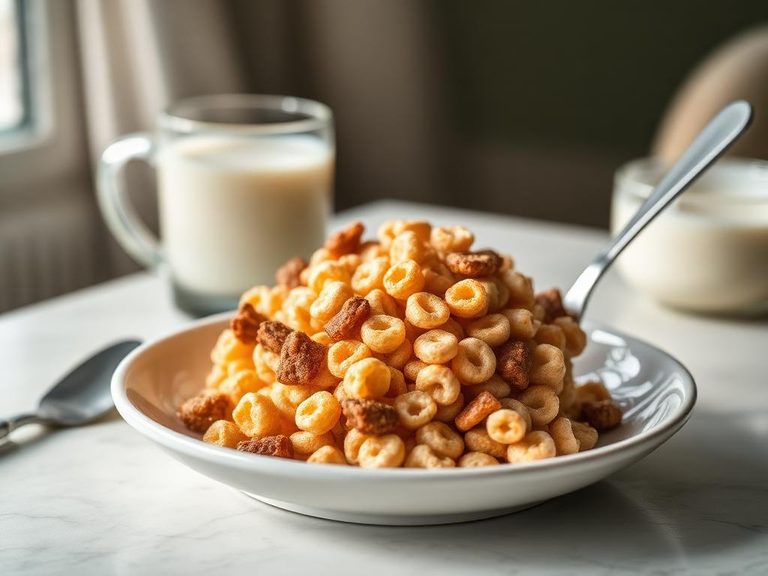
Malt-O-Meal Corn Bursts are vibrant, sunshine-yellow corn cereal pieces that puff up with a light, airy crunch when milk is poured over them. They deliver a distinctly sweet, corn-forward flavor reminiscent of cornbread or kettle corn, with a texture that starts crisp and softens to a pleasant chew. Nutritionally, they are a high-carbohydrate, high-sugar cereal with minimal protein or fat.
Calorie split: 4% protein · 96% carbs · 1% fat
↓ Full nutrition💚 Why it's loved
People love Corn Bursts for their intensely sweet, nostalgic corn flavor and the satisfying crunch that holds up well in milk. It's a fun, colorful cereal that appeals to both kids and adults seeking a simple, comforting breakfast or snack.
⚠️ Watch-outs & how to enjoy it better
The high sugar content (nearly 47g per 100g) can cause rapid blood-sugar spikes, making it a poor choice for those managing diabetes or seeking sustained energy. To counteract this, pair it with a source of protein and healthy fat (like Greek yogurt, nuts, or seeds) to slow sugar absorption, and practice strict portion control by measuring a single serving.
Key benefits
- Quick source of energy from carbohydrates
- Very low in fat
- Fortified with essential vitamins and minerals
- Provides a small amount of dietary fiber
- Convenient and shelf-stable breakfast option
🍽️ Popular dishes
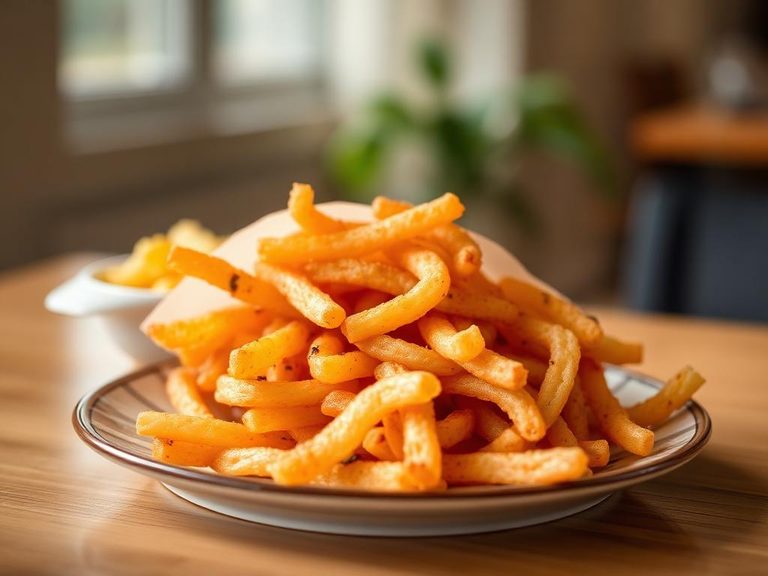

🌍 Where it's eaten
💡 Did you know?
Malt-O-Meal cereals are famously sold in large, resealable bags rather than boxes, a cost-effective packaging choice that has made the brand a staple in American pantries since the 1960s.
Full nutrition (USDA data · scales with serving)
| Water | 2.5 g |
| Energy | 385 kcal |
| Energy | 1611 kj |
| Protein | 3.3 g |
| Total lipid (fat) | 0.35 g |
| Ash | 3.2 g |
| Carbohydrate, by difference | 90.6 g |
| Fiber, total dietary | 1.9 g |
| Total Sugars | 46.9 g |
| Calcium, Ca | 5.0 mg |
| Iron, Fe | 5.8 mg |
| Magnesium, Mg | 4.0 mg |
| Phosphorus, P | 37.0 mg |
| Potassium, K | 71.0 mg |
| Sodium, Na | 855 mg |
| Zinc, Zn | 4.8 mg |
| Copper, Cu | 0.06 mg |
| Selenium, Se | 6.5 ug |
| Vitamin C, total ascorbic acid | 48.4 mg |
| Thiamin | 2.4 mg |
| Riboflavin | 2.7 mg |
| Niacin | 32.3 mg |
| Vitamin B-6 | 3.2 mg |
| Folate, total | 323 ug |
| Folic acid | 289 ug |
| Folate, food | 34.0 ug |
| Folate, DFE | 525 ug |
| Choline, total | 4.7 mg |
| Vitamin B-12 | 4.8 ug |
| Vitamin B-12, added | 4.8 ug |
| Vitamin A, RAE | 700 ug |
| Retinol | 695 ug |
| Carotene, beta | 46.0 ug |
| Carotene, alpha | 30.0 ug |
| Cryptoxanthin, beta | 0.00 ug |
| Vitamin A, IU | 2419 iu |
| Lycopene | 0.00 ug |
| Lutein + zeaxanthin | 780 ug |
| Vitamin E (alpha-tocopherol) | 0.07 mg |
| Vitamin E, added | 0.00 mg |
| Vitamin D (D2 + D3), International Units | 129 iu |
| Vitamin D (D2 + D3) | 3.2 ug |
| Vitamin D3 (cholecalciferol) | 3.2 ug |
| Vitamin K (phylloquinone) | 0.00 ug |
| Alcohol, ethyl | 0.00 g |
| Caffeine | 0.00 mg |
| Theobromine | 0.00 mg |
Fat & fatty acid profile (per 100g)
| Fatty acids, total saturated | 0.09 g |
| SFA 4:0 | 0.00 g |
| SFA 6:0 | 0.00 g |
| SFA 8:0 | 0.00 g |
| SFA 10:0 | 0.00 g |
| SFA 12:0 | 0.00 g |
| SFA 13:0 | 0.00 g |
| SFA 14:0 | 0.00 g |
| SFA 16:0 | 0.08 g |
| SFA 18:0 | 0.01 g |
| Fatty acids, total monounsaturated | 0.08 g |
| MUFA 16:1 | 0.00 g |
| MUFA 18:1 | 0.08 g |
| MUFA 20:1 | 0.00 g |
| MUFA 22:1 | 0.00 g |
| Fatty acids, total polyunsaturated | 0.16 g |
| PUFA 18:2 | 0.15 g |
| PUFA 18:3 | 0.01 g |
| PUFA 18:4 | 0.00 g |
| PUFA 20:4 | 0.00 g |
| PUFA 20:5 n-3 (EPA) | 0.00 g |
| PUFA 22:5 n-3 (DPA) | 0.00 g |
| PUFA 22:6 n-3 (DHA) | 0.00 g |
| Fatty acids, total trans | 0.00 g |
| Cholesterol | 0.00 mg |
FAQ
Is Corn Bursts a healthy cereal?
It's a high-energy cereal fortified with vitamins, but its very high sugar and low protein/fat content mean it should be enjoyed in moderation as part of a balanced diet.
What is the main ingredient?
The primary ingredient is corn, which is milled, cooked, and extruded into the small, puffed shapes.
Does it contain gluten?
While corn itself is gluten-free, cross-contamination is possible. Always check the label for a 'gluten-free' certification if you have celiac disease or sensitivity.
Nutrient density (calculated · NRF9.3)
Nutrient Rich Foods index: beneficial nutrients (protein, fiber, vitamins, minerals) minus saturated fat, added sugar & sodium, per 100 kcal.
NRF9.3 index — Fulgoni, Keast & Drewnowski, 2009. Computed from USDA nutrients.
Weight-loss friendliness (composite index)
Energy density 3.85 kcal/g · 3% calories from protein · 1.9 g fiber · 46.9 g sugar per 100 g.
Composite of energy density (Rolls et al., 1999), protein & fiber satiety, minus sugar. A calculated heuristic — ranks satiety-per-calorie, not a clinical measure.
Dietary load (calculated from USDA values)
Potential renal acid load. Positive = acid-forming, negative = alkaline-forming.
Sodium-to-potassium ratio: 12.04 (lower is better — aim for ≤ 1)
Sodium:potassium per WHO potassium guidance. Computed from USDA nutrients.