

Cabbage, chinese (pe-tsai), cooked, boiled, drained, without salt
Whole food · Vegetables and Vegetable Products

Photo: Wikipedia
Chinese cabbage, or pe-tsai, transforms from crisp and peppery when raw to silky, tender, and subtly sweet after boiling. This humble leafy green is a nutritional powerhouse, delivering a remarkable 1.7 grams of fiber per 100 grams for virtually no calories.
Calorie split: 35% protein · 56% carbs · 9% fat
↓ Full nutrition💚 Why it's loved
It's loved for its clean, mild flavor that acts as a perfect canvas for bold sauces and broths, and for its satisfying texture that holds up well in both quick stir-fries and long simmers.
⚠️ Watch-outs & how to enjoy it better
The primary downside is its very mild taste, which can be perceived as bland or watery if not seasoned well. To counteract this, always pair it with flavorful ingredients like garlic, ginger, soy sauce, or a rich broth, and avoid over-boiling which leaches nutrients and flavor.
Key benefits
- Excellent source of dietary fiber for digestive health.
- Very low in calories, aiding weight management.
- Provides vitamin C and vitamin K.
- Contains antioxidants like beta-carotene.
- A hydrating vegetable with high water content.
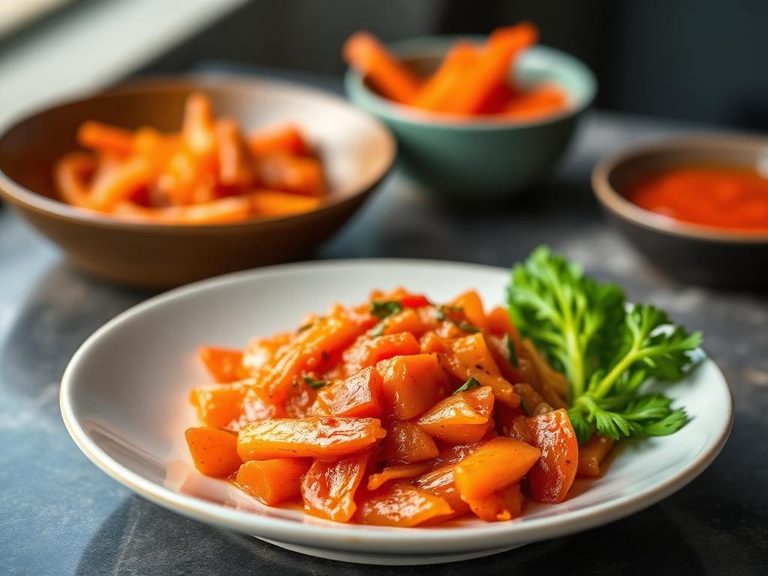
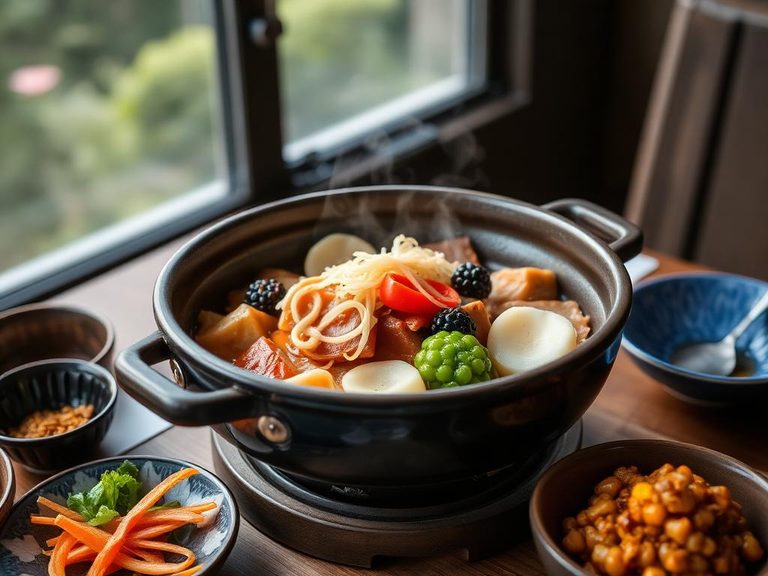
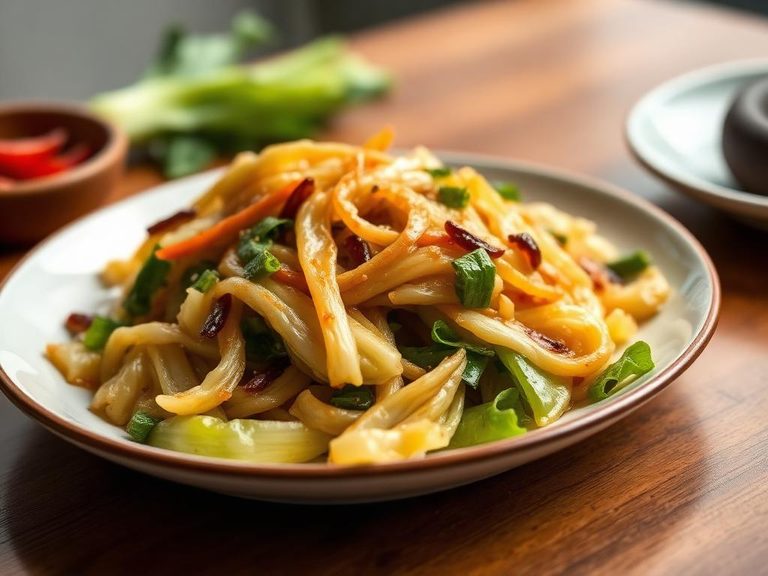
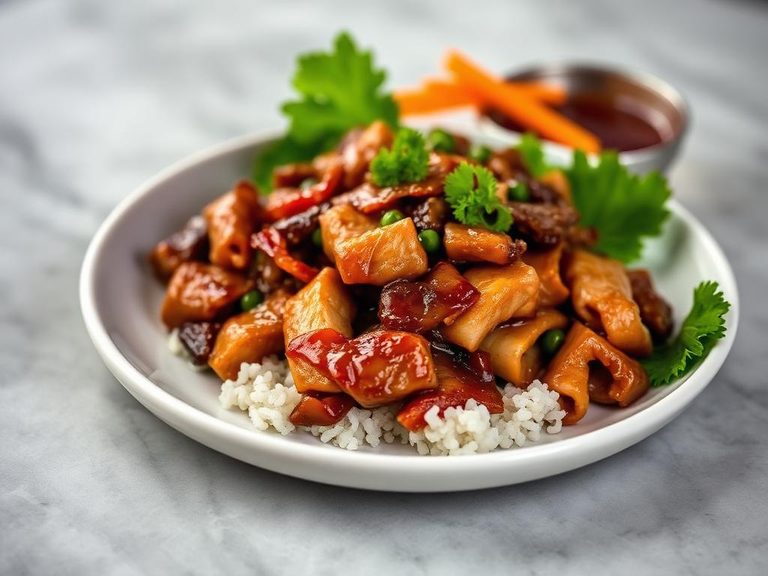
🍽️ Popular dishes
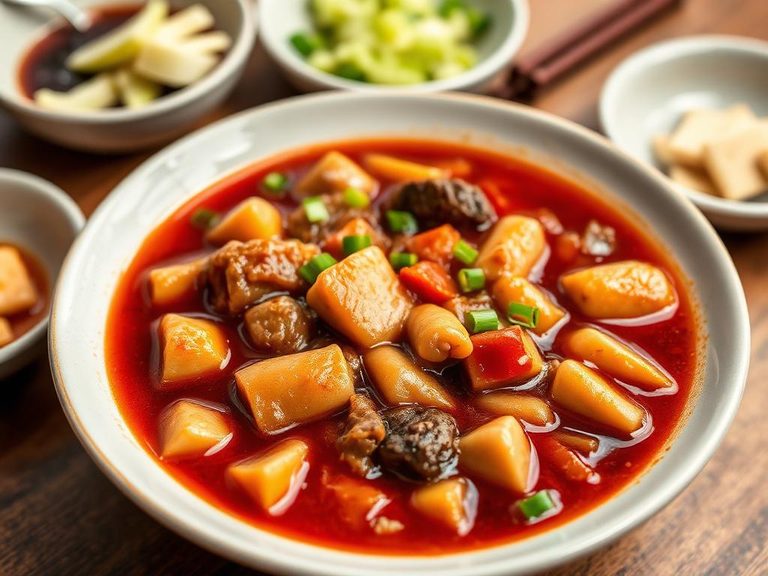
🌍 Where it's eaten
💡 Did you know?
Despite its name, Chinese cabbage is not a true cabbage but belongs to the same species as bok choy (Brassica rapa), making it a close cousin rather than a sibling.
Full nutrition (USDA data · scales with serving)
| Water | 95.2 g |
| Energy | 14.0 kcal |
| Energy | 59.0 kj |
| Protein | 1.5 g |
| Total lipid (fat) | 0.17 g |
| Ash | 0.68 g |
| Carbohydrate, by difference | 2.4 g |
| Fiber, total dietary | 1.7 g |
| Calcium, Ca | 32.0 mg |
| Iron, Fe | 0.30 mg |
| Magnesium, Mg | 10.0 mg |
| Phosphorus, P | 39.0 mg |
| Potassium, K | 225 mg |
| Sodium, Na | 9.0 mg |
| Zinc, Zn | 0.18 mg |
| Copper, Cu | 0.03 mg |
| Manganese, Mn | 0.15 mg |
| Selenium, Se | 0.40 ug |
| Vitamin C, total ascorbic acid | 15.8 mg |
| Thiamin | 0.04 mg |
| Riboflavin | 0.04 mg |
| Niacin | 0.50 mg |
| Pantothenic acid | 0.08 mg |
| Vitamin B-6 | 0.18 mg |
| Folate, total | 53.0 ug |
| Folic acid | 0.00 ug |
| Folate, food | 53.0 ug |
| Folate, DFE | 53.0 ug |
| Vitamin B-12 | 0.00 ug |
| Vitamin A, RAE | 48.0 ug |
| Retinol | 0.00 ug |
| Vitamin A, IU | 967 iu |
| Vitamin D (D2 + D3), International Units | 0.00 iu |
| Vitamin D (D2 + D3) | 0.00 ug |
Fat & fatty acid profile (per 100g)
| Fatty acids, total saturated | 0.04 g |
| SFA 16:0 | 0.03 g |
| SFA 18:0 | 0.00 g |
| Fatty acids, total monounsaturated | 0.02 g |
| MUFA 16:1 | 0.00 g |
| MUFA 18:1 | 0.02 g |
| Fatty acids, total polyunsaturated | 0.06 g |
| PUFA 18:2 | 0.01 g |
| PUFA 18:3 | 0.05 g |
| Fatty acids, total trans | 0.00 g |
| Cholesterol | 0.00 mg |
Amino acid profile (per 100g)
| Tryptophan | 0.01 g |
| Threonine | 0.05 g |
| Isoleucine | 0.09 g |
| Leucine | 0.09 g |
| Lysine | 0.09 g |
| Methionine | 0.01 g |
| Cystine | 0.02 g |
| Phenylalanine | 0.04 g |
| Tyrosine | 0.03 g |
| Valine | 0.07 g |
| Arginine | 0.08 g |
| Histidine | 0.03 g |
| Alanine | 0.09 g |
| Aspartic acid | 0.11 g |
| Glutamic acid | 0.36 g |
| Glycine | 0.04 g |
| Proline | 0.03 g |
| Serine | 0.05 g |
FAQ
What's the difference between Napa cabbage and bok choy?
Both are varieties of Brassica rapa. Napa cabbage (pe-tsai) has an oblong shape with crinkly, pale green leaves and a mild, sweet flavor. Bok choy has smooth, dark green leaves on thick, crunchy white or green stalks with a more peppery taste.
How should I store it?
Wrap the whole head in a plastic bag and store it in the crisper drawer of your refrigerator. It can last for 1-2 weeks. Once cut, wrap the remaining portion tightly and use within a few days.
Is boiled Chinese cabbage nutritious?
Yes, boiling is a healthy, low-fat cooking method that makes its nutrients more digestible. To retain the most water-soluble vitamins (like vitamin C), cook it quickly until just tender and consider using the nutrient-rich cooking liquid in a soup or sauce.
Nutrient density (calculated · NRF9.3)
Nutrient Rich Foods index: beneficial nutrients (protein, fiber, vitamins, minerals) minus saturated fat, added sugar & sodium, per 100 kcal.
NRF9.3 index — Fulgoni, Keast & Drewnowski, 2009. Computed from USDA nutrients.
Weight-loss friendliness (composite index)
Energy density 0.14 kcal/g · 43% calories from protein · 1.7 g fiber · 0.0 g sugar per 100 g.
Composite of energy density (Rolls et al., 1999), protein & fiber satiety, minus sugar. A calculated heuristic — ranks satiety-per-calorie, not a clinical measure.
Dietary load (calculated from USDA values)
Potential renal acid load. Positive = acid-forming, negative = alkaline-forming.
Sodium-to-potassium ratio: 0.04 (lower is better — aim for ≤ 1)
Sodium:potassium per WHO potassium guidance. Computed from USDA nutrients.