

Bloody Mary
Common food

Photo: Wikipedia
The Bloody Mary is a savory, complex cocktail built on a base of tomato juice, vodka, and a punchy blend of Worcestershire sauce, hot sauce, and spices. It boasts a rich, umami-driven flavor profile with a spicy kick and a thick, velvety texture. Nutritionally, it's a low-calorie, low-fat beverage that provides a modest amount of carbohydrates and a touch of fiber from the tomato base.
Calorie split: 13% protein · 76% carbs · 10% fat
↓ Full nutrition💚 Why it's loved
People love the Bloody Mary for its bold, savory complexity and its remarkable versatility—it can be endlessly customized with different spirits, hot sauces, and garnishes. It's also a cultural staple, often enjoyed as a brunch cocktail or a restorative 'hair of the dog' drink, making it a social and ritualistic favorite.
⚠️ Watch-outs & how to enjoy it better
The primary downsides are its high sodium content from tomato juice, Worcestershire sauce, and other condiments, which can be problematic for those with hypertension. Additionally, the sugar content, while moderate, can contribute to blood sugar spikes, and the alcohol can be a concern for some. To counteract sodium, pair it with a low-sodium meal or use a low-sodium tomato juice base; for blood sugar, balance it with a protein-rich snack and practice portion control.
Key benefits
- Low in calories and fat per serving.
- Contains lycopene, a powerful antioxidant from tomatoes.
- Provides a small amount of dietary fiber.
- Can be a source of vitamins A and C from the tomato and vegetable juice base.
- Often used as a hangover remedy due to its electrolyte and nutrient content.
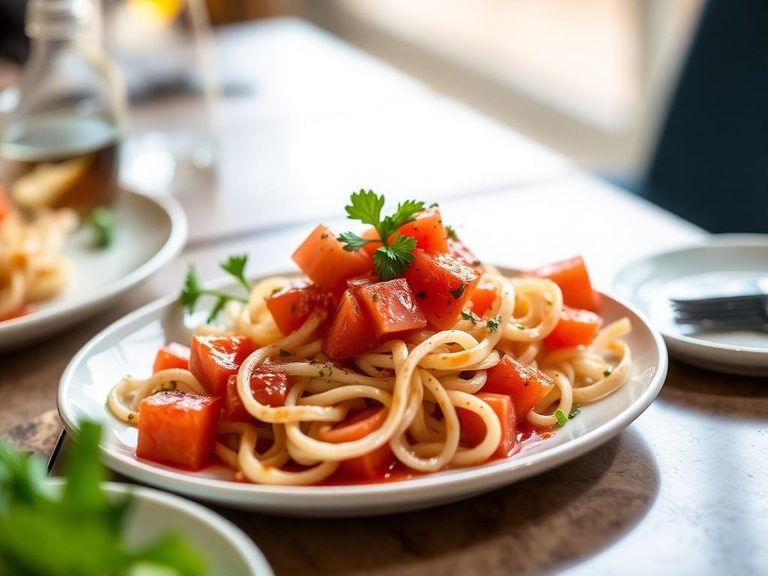
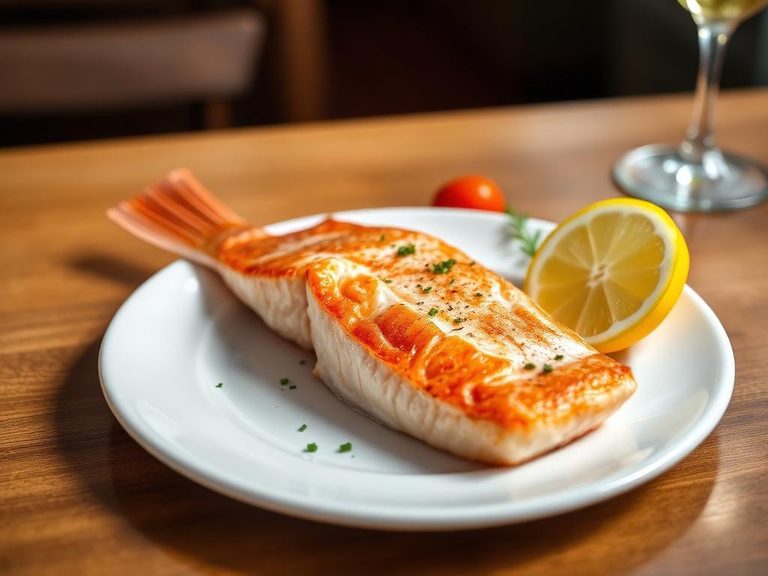
🍽️ Popular dishes




🌍 Where it's eaten
💡 Did you know?
The Bloody Mary's garnish has evolved into an art form, with some restaurants serving it with entire skewers of bacon, shrimp, sliders, or even whole fried chickens.
Full nutrition (USDA data · scales with serving)
| Water | 86.8 g |
| Energy | 73.0 kcal |
| Protein | 0.67 g |
| Total lipid (fat) | 0.23 g |
| Carbohydrate, by difference | 3.8 g |
| Fiber, total dietary | 0.40 g |
| Total Sugars | 2.3 g |
| Calcium, Ca | 10.0 mg |
| Iron, Fe | 0.34 mg |
| Magnesium, Mg | 8.0 mg |
| Phosphorus, P | 17.0 mg |
| Potassium, K | 166 mg |
| Sodium, Na | 200 mg |
| Zinc, Zn | 0.10 mg |
| Copper, Cu | 0.05 mg |
| Selenium, Se | 0.40 ug |
| Vitamin C, total ascorbic acid | 38.6 mg |
| Thiamin | 0.03 mg |
| Riboflavin | 0.06 mg |
| Niacin | 0.11 mg |
| Vitamin B-6 | 0.06 mg |
| Folate, total | 15.0 ug |
| Folic acid | 0.00 ug |
| Folate, food | 15.0 ug |
| Folate, DFE | 15.0 ug |
| Choline, total | 5.2 mg |
| Vitamin B-12 | 0.00 ug |
| Vitamin B-12, added | 0.00 ug |
| Vitamin A, RAE | 17.0 ug |
| Retinol | 0.00 ug |
| Carotene, beta | 202 ug |
| Carotene, alpha | 1.0 ug |
| Cryptoxanthin, beta | 1.0 ug |
| Lycopene | 6425 ug |
| Lutein + zeaxanthin | 56.0 ug |
| Vitamin E (alpha-tocopherol) | 0.24 mg |
| Vitamin E, added | 0.00 mg |
| Vitamin D (D2 + D3) | 0.00 ug |
| Vitamin K (phylloquinone) | 1.9 ug |
| Alcohol, ethyl | 7.8 g |
| Caffeine | 0.00 mg |
| Theobromine | 0.00 mg |
Fat & fatty acid profile (per 100g)
| Fatty acids, total saturated | 0.02 g |
| SFA 4:0 | 0.00 g |
| SFA 6:0 | 0.00 g |
| SFA 8:0 | 0.00 g |
| SFA 10:0 | 0.00 g |
| SFA 12:0 | 0.00 g |
| SFA 14:0 | 0.00 g |
| SFA 16:0 | 0.01 g |
| SFA 18:0 | 0.00 g |
| Fatty acids, total monounsaturated | 0.01 g |
| MUFA 16:1 | 0.00 g |
| MUFA 18:1 | 0.01 g |
| MUFA 20:1 | 0.00 g |
| MUFA 22:1 | 0.00 g |
| Fatty acids, total polyunsaturated | 0.03 g |
| PUFA 18:2 | 0.03 g |
| PUFA 18:3 | 0.01 g |
| PUFA 18:4 | 0.00 g |
| PUFA 20:4 | 0.00 g |
| PUFA 20:5 n-3 (EPA) | 0.00 g |
| PUFA 22:5 n-3 (DPA) | 0.00 g |
| PUFA 22:6 n-3 (DHA) | 0.00 g |
| Cholesterol | 0.00 mg |
FAQ
What is the difference between a Bloody Mary and a Bloody Caesar?
A Bloody Mary is made with tomato juice, while a Bloody Caesar uses Clamato (a blend of tomato juice and clam broth), giving it a distinct, briny flavor.
Can a Bloody Mary be made non-alcoholic?
Yes, a non-alcoholic version is called a Virgin Mary, which omits the vodka and can be made with sparkling water or additional vegetable juice for flavor.
Is a Bloody Mary considered a healthy drink?
While it contains some nutrients from tomato juice, it is high in sodium and often includes added sugars and alcohol, so it should be consumed in moderation.
Nutrient density (calculated · NRF9.3)
Nutrient Rich Foods index: beneficial nutrients (protein, fiber, vitamins, minerals) minus saturated fat, added sugar & sodium, per 100 kcal.
NRF9.3 index — Fulgoni, Keast & Drewnowski, 2009. Computed from USDA nutrients.
Weight-loss friendliness (composite index)
Energy density 0.73 kcal/g · 4% calories from protein · 0.4 g fiber · 2.3 g sugar per 100 g.
Composite of energy density (Rolls et al., 1999), protein & fiber satiety, minus sugar. A calculated heuristic — ranks satiety-per-calorie, not a clinical measure.
Dietary load (calculated from USDA values)
Potential renal acid load. Positive = acid-forming, negative = alkaline-forming.
Sodium-to-potassium ratio: 1.20 (lower is better — aim for ≤ 1)
Sodium:potassium per WHO potassium guidance. Computed from USDA nutrients.