

Rice, white, glutinous, unenriched, uncooked
Whole food · Cereal Grains and Pasta

Photo: Wikipedia
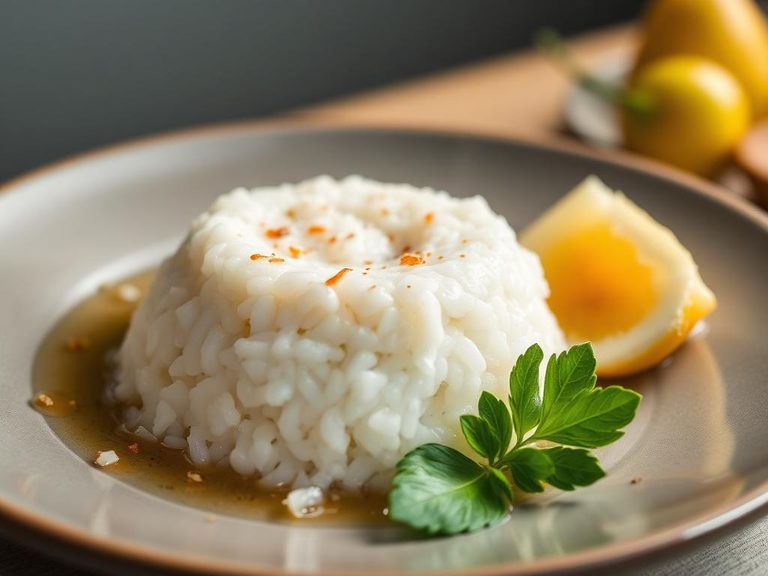
White glutinous rice, often called sticky rice, is a short-grain variety prized for its uniquely adhesive, chewy texture and subtle, sweet flavor. Unlike regular rice, its near-total lack of amylose starch gives it a cohesive, almost glue-like quality when cooked. It's a high-energy, carbohydrate-dense staple, providing 370 kcal per 100g uncooked.
Calorie split: 8% protein · 91% carbs · 1% fat
↓ Full nutrition💚 Why it's loved
People love it for its comforting, chewy texture and its ability to absorb flavors from accompanying sauces and ingredients. It's a versatile canvas in both sweet and savory dishes, deeply embedded in cultural traditions from festivals to daily meals.
⚠️ Watch-outs & how to enjoy it better
Its high glycemic index can cause rapid blood sugar spikes, which is a concern for those managing diabetes. To mitigate this, pair it with protein (like chicken or tofu) and healthy fats (like coconut milk or avocado), and practice portion control. Also, it's very low in fiber and protein, so it should be part of a balanced meal.
Key benefits
- Excellent source of quick energy from complex carbohydrates.
- Naturally gluten-free, making it suitable for those with celiac disease.
- Its sticky texture makes it easy to eat with chopsticks or by hand.
- A foundational ingredient in many traditional and celebratory dishes.
🍽️ Popular dishes
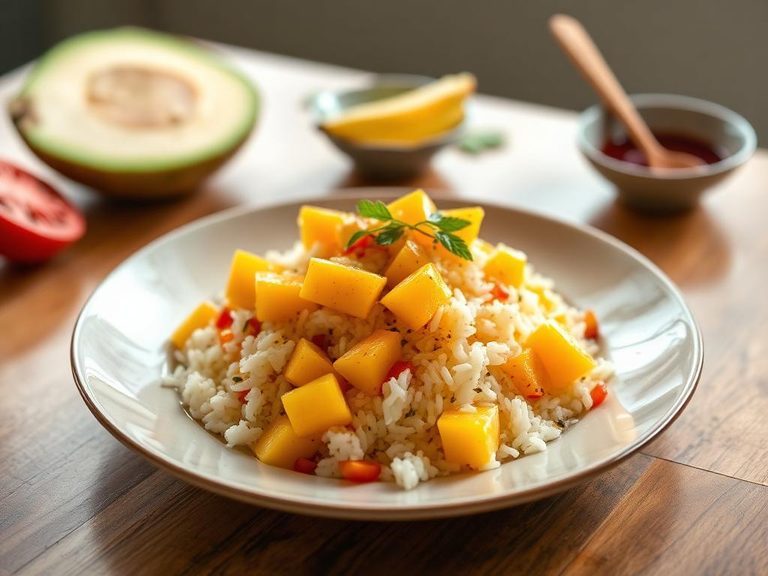
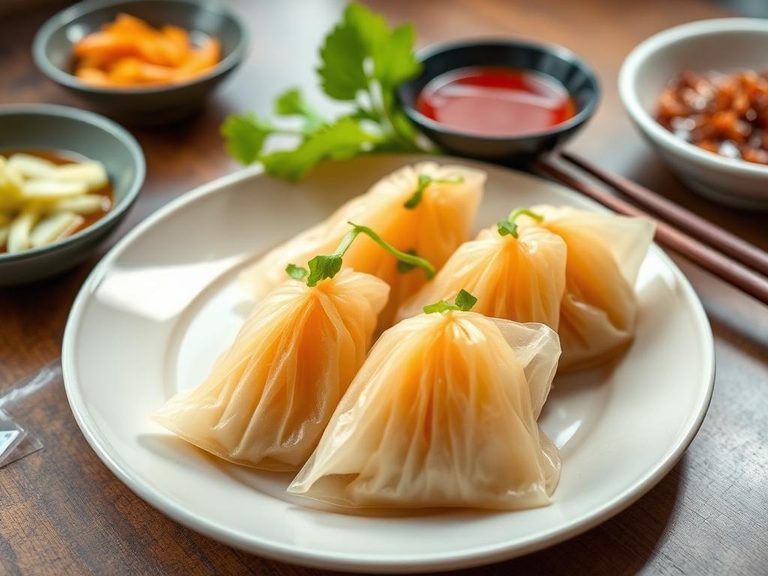
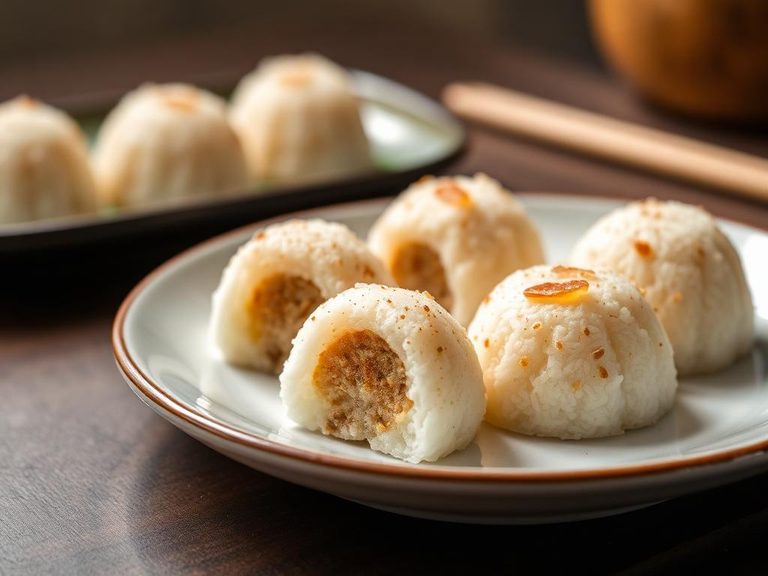

🌍 Where it's eaten
💡 Did you know?
Glutinous rice contains no gluten; its name comes from the glue-like texture it gets when cooked, not from the protein gluten found in wheat.
Full nutrition (USDA data · scales with serving)
| Water | 10.5 g |
| Energy | 370 kcal |
| Energy | 1548 kj |
| Protein | 6.8 g |
| Total lipid (fat) | 0.55 g |
| Ash | 0.49 g |
| Carbohydrate, by difference | 81.7 g |
| Fiber, total dietary | 2.8 g |
| Calcium, Ca | 11.0 mg |
| Iron, Fe | 1.6 mg |
| Magnesium, Mg | 23.0 mg |
| Phosphorus, P | 71.0 mg |
| Potassium, K | 77.0 mg |
| Sodium, Na | 7.0 mg |
| Zinc, Zn | 1.2 mg |
| Copper, Cu | 0.17 mg |
| Manganese, Mn | 0.97 mg |
| Selenium, Se | 15.1 ug |
| Vitamin C, total ascorbic acid | 0.00 mg |
| Thiamin | 0.18 mg |
| Riboflavin | 0.06 mg |
| Niacin | 2.1 mg |
| Pantothenic acid | 0.82 mg |
| Vitamin B-6 | 0.11 mg |
| Folate, total | 7.0 ug |
| Folic acid | 0.00 ug |
| Folate, food | 7.0 ug |
| Folate, DFE | 7.0 ug |
| Vitamin B-12 | 0.00 ug |
| Vitamin A, RAE | 0.00 ug |
| Retinol | 0.00 ug |
| Vitamin A, IU | 0.00 iu |
| Vitamin D (D2 + D3), International Units | 0.00 iu |
| Vitamin D (D2 + D3) | 0.00 ug |
Fat & fatty acid profile (per 100g)
| Fatty acids, total saturated | 0.11 g |
| SFA 12:0 | 0.00 g |
| SFA 14:0 | 0.00 g |
| SFA 16:0 | 0.09 g |
| SFA 18:0 | 0.01 g |
| Fatty acids, total monounsaturated | 0.20 g |
| MUFA 16:1 | 0.00 g |
| MUFA 18:1 | 0.20 g |
| Fatty acids, total polyunsaturated | 0.20 g |
| PUFA 18:2 | 0.19 g |
| PUFA 18:3 | 0.01 g |
| Cholesterol | 0.00 mg |
Amino acid profile (per 100g)
| Tryptophan | 0.08 g |
| Threonine | 0.24 g |
| Isoleucine | 0.29 g |
| Leucine | 0.56 g |
| Lysine | 0.25 g |
| Methionine | 0.16 g |
| Cystine | 0.14 g |
| Phenylalanine | 0.36 g |
| Tyrosine | 0.23 g |
| Valine | 0.42 g |
| Arginine | 0.57 g |
| Histidine | 0.16 g |
| Alanine | 0.40 g |
| Aspartic acid | 0.64 g |
| Glutamic acid | 1.3 g |
| Glycine | 0.31 g |
| Proline | 0.32 g |
| Serine | 0.36 g |
FAQ
Is glutinous rice the same as regular rice?
No, glutinous rice (also called sticky or sweet rice) has a different starch composition, making it chewy and adhesive when cooked, unlike the fluffy texture of regular long-grain rice.
Can I use glutinous rice in a rice cooker?
Yes, but it often requires less water than regular rice. Soaking it for a few hours before cooking can improve its texture.
Is it healthy to eat glutinous rice daily?
While it's a good energy source, its high glycemic index and low nutrient density mean it's best enjoyed in moderation, balanced with protein, vegetables, and healthy fats.
Nutrient density (calculated · NRF9.3)
Nutrient Rich Foods index: beneficial nutrients (protein, fiber, vitamins, minerals) minus saturated fat, added sugar & sodium, per 100 kcal.
NRF9.3 index — Fulgoni, Keast & Drewnowski, 2009. Computed from USDA nutrients.
Weight-loss friendliness (composite index)
Energy density 3.70 kcal/g · 7% calories from protein · 2.8 g fiber · 0.0 g sugar per 100 g.
Composite of energy density (Rolls et al., 1999), protein & fiber satiety, minus sugar. A calculated heuristic — ranks satiety-per-calorie, not a clinical measure.
Dietary load (calculated from USDA values)
Potential renal acid load. Positive = acid-forming, negative = alkaline-forming.
Sodium-to-potassium ratio: 0.09 (lower is better — aim for ≤ 1)
Sodium:potassium per WHO potassium guidance. Computed from USDA nutrients.