

Wheat flour, whole-grain, soft wheat
Whole food · Cereal Grains and Pasta

Photo: Wikipedia
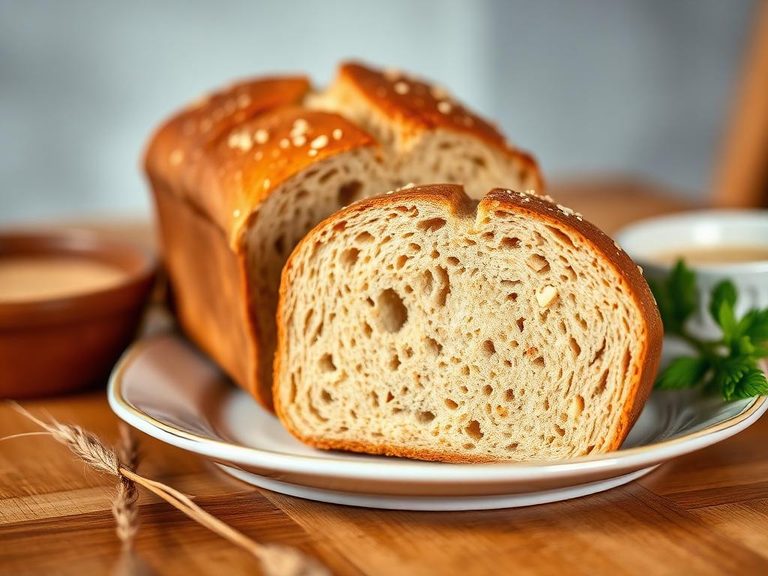
Whole-grain soft wheat flour is a finely milled powder from the entire wheat kernel, retaining its bran and germ. It offers a nutty, slightly sweet flavor with a tender, non-gritty texture ideal for softer baked goods. Nutritionally, it's a powerhouse of fiber (13.1g per 100g) and provides substantial plant-based protein (9.61g per 100g).
Calorie split: 11% protein · 84% carbs · 5% fat
↓ Full nutrition💚 Why it's loved
People love it for its wholesome, nutty taste that adds depth to breads, pancakes, and muffins without being overpowering. Its versatility makes it a staple for health-conscious baking, from rustic loaves to tender cookies.
⚠️ Watch-outs & how to enjoy it better
As a common wheat product, it contains gluten, making it unsuitable for those with celiac disease or gluten sensitivity. Its high fiber content can cause digestive discomfort if introduced too quickly. To counteract, pair with plenty of water, start with small portions, and gradually increase intake to allow your system to adjust.
Key benefits
- High in dietary fiber for digestive health and satiety.
- Good source of plant-based protein for muscle maintenance.
- Rich in B vitamins and minerals like magnesium and iron from the retained germ.
- Lower glycemic impact than refined white flour due to intact fiber.
🍽️ Popular dishes


🌍 Where it's eaten
💡 Did you know?
The 'soft' in soft wheat refers to its lower protein (gluten) content compared to 'hard' wheat, making it the preferred flour for tender pastries, cakes, and biscuits rather than chewy bread.
Full nutrition (USDA data · scales with serving)
| Water | 12.4 g |
| Energy | 332 kcal |
| Energy | 1391 kj |
| Protein | 9.6 g |
| Total lipid (fat) | 1.9 g |
| Ash | 1.5 g |
| Carbohydrate, by difference | 74.5 g |
| Fiber, total dietary | 13.1 g |
| Total Sugars | 1.0 g |
| Calcium, Ca | 33.0 mg |
| Iron, Fe | 3.7 mg |
| Magnesium, Mg | 117 mg |
| Phosphorus, P | 323 mg |
| Potassium, K | 394 mg |
| Sodium, Na | 3.0 mg |
| Zinc, Zn | 3.0 mg |
| Copper, Cu | 0.47 mg |
| Manganese, Mn | 3.4 mg |
| Selenium, Se | 12.7 ug |
| Vitamin C, total ascorbic acid | 0.00 mg |
| Thiamin | 0.30 mg |
| Riboflavin | 0.19 mg |
| Niacin | 5.3 mg |
| Pantothenic acid | 1.0 mg |
| Vitamin B-6 | 0.19 mg |
| Folate, total | 28.0 ug |
| Folic acid | 0.00 ug |
| Folate, food | 28.0 ug |
| Folate, DFE | 28.0 ug |
| Choline, total | 31.2 mg |
| Vitamin A, RAE | 0.00 ug |
| Retinol | 0.00 ug |
| Carotene, beta | 5.0 ug |
| Carotene, alpha | 0.00 ug |
| Cryptoxanthin, beta | 0.00 ug |
| Vitamin A, IU | 9.0 iu |
| Lycopene | 0.00 ug |
| Lutein + zeaxanthin | 220 ug |
| Vitamin E (alpha-tocopherol) | 0.53 mg |
| Vitamin D (D2 + D3), International Units | 0.00 iu |
| Vitamin D (D2 + D3) | 0.00 ug |
| Vitamin K (phylloquinone) | 1.9 ug |
Fat & fatty acid profile (per 100g)
| Fatty acids, total saturated | 0.43 g |
| Fatty acids, total monounsaturated | 0.28 g |
| Fatty acids, total polyunsaturated | 1.2 g |
| Cholesterol | 0.00 mg |
Amino acid profile (per 100g)
Estimated from Cornmeal, yellow, self-rising, bolted, with wheat flour added, enriched — USDA does not publish this profile for Wheat flour.
| Tryptophan | 0.07 g |
| Threonine | 0.30 g |
| Isoleucine | 0.30 g |
| Leucine | 0.97 g |
| Lysine | 0.23 g |
| Methionine | 0.17 g |
| Cystine | 0.15 g |
| Phenylalanine | 0.41 g |
| Tyrosine | 0.33 g |
| Valine | 0.41 g |
| Arginine | 0.41 g |
| Histidine | 0.25 g |
| Alanine | 0.58 g |
| Aspartic acid | 0.56 g |
| Glutamic acid | 1.7 g |
| Glycine | 0.34 g |
| Proline | 0.77 g |
| Serine | 0.40 g |
FAQ
Can I substitute whole wheat flour 1:1 for all-purpose flour?
Not always. Due to its higher fiber and lower gluten, a direct swap can make baked goods dense and heavy. Start by replacing 25-50% of the all-purpose flour with whole wheat, or follow recipes specifically designed for 100% whole wheat.
Why is my whole wheat bread so dense?
The bran in whole wheat flour can cut gluten strands, limiting rise. Using vital wheat gluten, allowing a longer rise time, or adding a bit of honey or oil can help create a lighter texture.
How should I store it?
Store in an airtight container in a cool, dark place for short-term use, or in the freezer for up to 6 months to prevent the natural oils in the germ from going rancid.
Nutrient density (calculated · NRF9.3)
Nutrient Rich Foods index: beneficial nutrients (protein, fiber, vitamins, minerals) minus saturated fat, added sugar & sodium, per 100 kcal.
NRF9.3 index — Fulgoni, Keast & Drewnowski, 2009. Computed from USDA nutrients.
Weight-loss friendliness (composite index)
Energy density 3.32 kcal/g · 12% calories from protein · 13.1 g fiber · 1.0 g sugar per 100 g.
Composite of energy density (Rolls et al., 1999), protein & fiber satiety, minus sugar. A calculated heuristic — ranks satiety-per-calorie, not a clinical measure.
Dietary load (calculated from USDA values)
Potential renal acid load. Positive = acid-forming, negative = alkaline-forming.
Sodium-to-potassium ratio: 0.01 (lower is better — aim for ≤ 1)
Sodium:potassium per WHO potassium guidance. Computed from USDA nutrients.