

Wheat, durum
Whole food · Cereal Grains and Pasta

Photo: Wikipedia
Durum wheat is a hard, amber-hued variety of wheat prized for its high protein content and robust gluten, which gives it a distinctively firm, 'al dente' texture when cooked. Its nutty, slightly sweet flavor and golden color are the hallmarks of authentic pasta and couscous. Nutritionally, it's a dense source of energy and plant-based protein, making it a staple for sustained fuel.
Calorie split: 15% protein · 79% carbs · 6% fat
↓ Full nutrition💚 Why it's loved
People love durum wheat for its unparalleled ability to hold its shape and firm texture in dishes like pasta and couscous, delivering a satisfying chew. Its mild, nutty flavor serves as a perfect canvas for a world of sauces, spices, and seasonings, making it incredibly versatile across cuisines.
⚠️ Watch-outs & how to enjoy it better
As a gluten-containing grain, it is unsafe for those with celiac disease or gluten sensitivity. Its high carbohydrate density can cause blood sugar spikes if consumed in large, isolated portions. To counteract this, pair it with protein (like legumes or cheese) and healthy fats (like olive oil) to slow digestion, and practice portion control.
Key benefits
- Excellent source of plant-based protein (13.68g per 100g)
- Provides complex carbohydrates for sustained energy release
- Contains B vitamins like niacin and thiamine for metabolism
- Rich in minerals such as magnesium, phosphorus, and zinc
- The high-protein, low-fat profile supports muscle maintenance
🍽️ Popular dishes

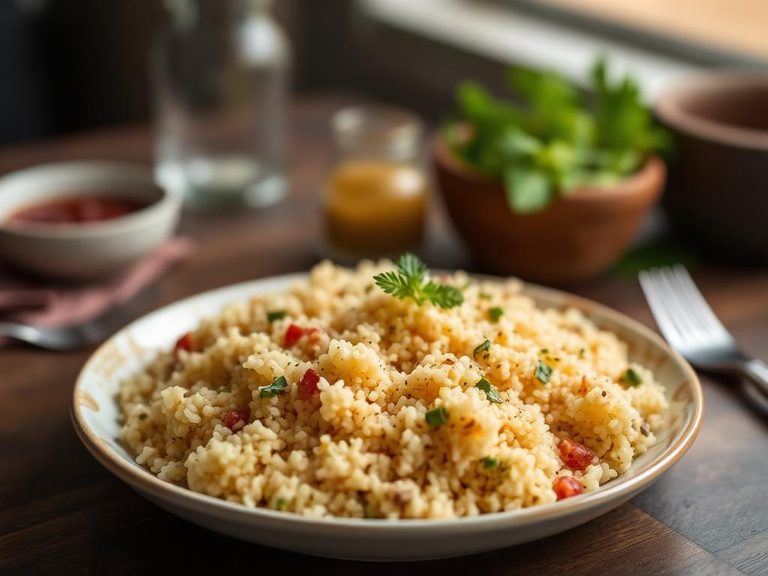
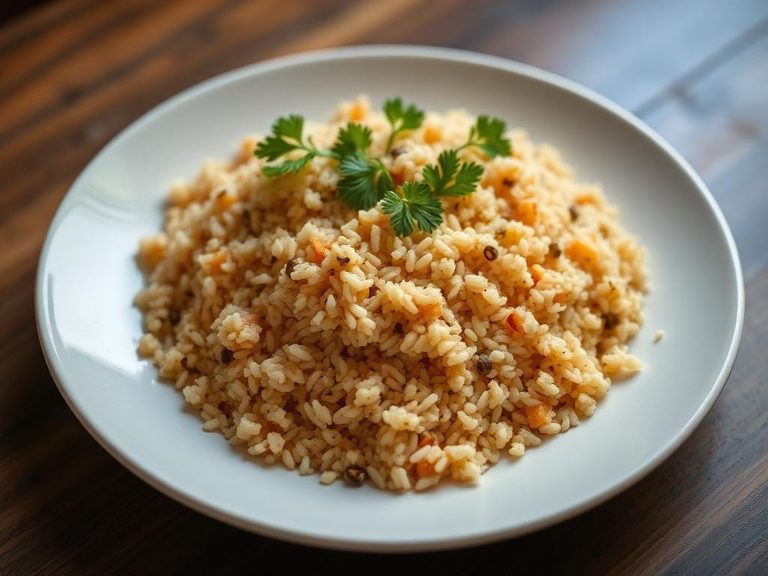


🌍 Where it's eaten
💡 Did you know?
The name 'durum' comes from the Latin word for 'hard,' referring to the exceptionally hard endosperm of the grain, which is why it's milled into coarse semolina rather than fine flour for pasta.
Full nutrition (USDA data · scales with serving)
| Water | 10.9 g |
| Energy | 339 kcal |
| Energy | 1418 kj |
| Protein | 13.7 g |
| Total lipid (fat) | 2.5 g |
| Ash | 1.8 g |
| Carbohydrate, by difference | 71.1 g |
| Calcium, Ca | 34.0 mg |
| Iron, Fe | 3.5 mg |
| Magnesium, Mg | 144 mg |
| Phosphorus, P | 508 mg |
| Potassium, K | 431 mg |
| Sodium, Na | 2.0 mg |
| Zinc, Zn | 4.2 mg |
| Copper, Cu | 0.55 mg |
| Manganese, Mn | 3.0 mg |
| Selenium, Se | 89.4 ug |
| Vitamin C, total ascorbic acid | 0.00 mg |
| Thiamin | 0.42 mg |
| Riboflavin | 0.12 mg |
| Niacin | 6.7 mg |
| Pantothenic acid | 0.94 mg |
| Vitamin B-6 | 0.42 mg |
| Folate, total | 43.0 ug |
| Folic acid | 0.00 ug |
| Folate, food | 43.0 ug |
| Folate, DFE | 43.0 ug |
| Vitamin B-12 | 0.00 ug |
| Vitamin A, RAE | 0.00 ug |
| Retinol | 0.00 ug |
| Vitamin A, IU | 0.00 iu |
| Vitamin D (D2 + D3), International Units | 0.00 iu |
| Vitamin D (D2 + D3) | 0.00 ug |
Fat & fatty acid profile (per 100g)
| Fatty acids, total saturated | 0.45 g |
| SFA 14:0 | 0.00 g |
| SFA 16:0 | 0.42 g |
| SFA 18:0 | 0.02 g |
| Fatty acids, total monounsaturated | 0.34 g |
| MUFA 16:1 | 0.01 g |
| MUFA 18:1 | 0.34 g |
| Fatty acids, total polyunsaturated | 0.98 g |
| PUFA 18:2 | 0.93 g |
| PUFA 18:3 | 0.05 g |
| Cholesterol | 0.00 mg |
Amino acid profile (per 100g)
| Tryptophan | 0.18 g |
| Threonine | 0.37 g |
| Isoleucine | 0.53 g |
| Leucine | 0.93 g |
| Lysine | 0.30 g |
| Methionine | 0.22 g |
| Cystine | 0.29 g |
| Phenylalanine | 0.68 g |
| Tyrosine | 0.36 g |
| Valine | 0.59 g |
| Arginine | 0.48 g |
| Histidine | 0.32 g |
| Alanine | 0.43 g |
| Aspartic acid | 0.62 g |
| Glutamic acid | 4.7 g |
| Glycine | 0.49 g |
| Proline | 1.5 g |
| Serine | 0.67 g |
FAQ
What is the difference between durum wheat and regular wheat?
Durum wheat is a distinct species with a harder kernel, higher protein, and stronger gluten than common bread wheat. This makes it ideal for pasta that holds its shape, while bread wheat is better for leavened, chewy breads.
Is durum wheat the same as semolina?
Not exactly. Semolina is the coarse flour produced by grinding the endosperm of durum wheat. So, semolina is a product of durum wheat, and they are often used interchangeably in cooking contexts.
Is durum wheat pasta healthier than regular pasta?
Durum wheat pasta typically has a higher protein content and a lower glycemic index than pasta made from refined common wheat, due to its denser structure. However, the overall healthiness depends on the entire product and portion size.
Nutrient density (calculated · NRF9.3)
Nutrient Rich Foods index: beneficial nutrients (protein, fiber, vitamins, minerals) minus saturated fat, added sugar & sodium, per 100 kcal.
NRF9.3 index — Fulgoni, Keast & Drewnowski, 2009. Computed from USDA nutrients.
Weight-loss friendliness (composite index)
Energy density 3.39 kcal/g · 16% calories from protein · 0.0 g fiber · 0.0 g sugar per 100 g.
Composite of energy density (Rolls et al., 1999), protein & fiber satiety, minus sugar. A calculated heuristic — ranks satiety-per-calorie, not a clinical measure.
Dietary load (calculated from USDA values)
Potential renal acid load. Positive = acid-forming, negative = alkaline-forming.
Sodium-to-potassium ratio: 0.00 (lower is better — aim for ≤ 1)
Sodium:potassium per WHO potassium guidance. Computed from USDA nutrients.