

Bulgur wheat
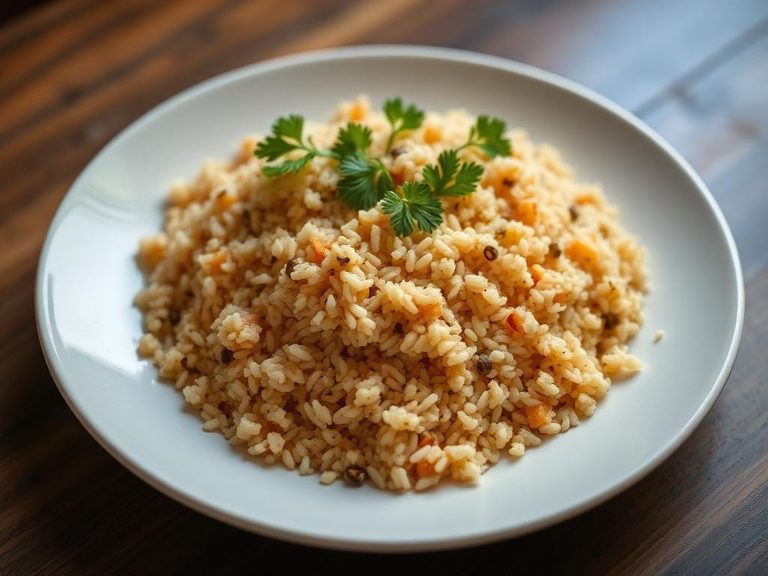
Bulgur wheat is a whole grain dish made from cracked, parboiled, and dried wheat berries, typically served as a side or base for salads like tabbouleh. It's a staple in Middle Eastern, Mediterranean, and Armenian cuisines, often prepared with water or broth and seasoned with herbs, lemon, and olive oil.
🍽️ Nutrition at a glance
Bulgur is a high-carbohydrate, low-fat food that provides a good source of plant-based protein and dietary fiber. A typical serving offers around 150-200 calories, along with essential nutrients like manganese, magnesium, and B vitamins.
Nutrition breakdown
| Calories | 151 kcal |
| Protein | 5.6 g |
| Carbs | 33.8 g |
| Fat | 0.4 g |
| Fiber | 8.2 g |
| Sugar | 0.4 g |
| Sodium | 10 mg |
| Manganese | 1.1 mg |
| Magnesium | 58 mg |
| Phosphorus | 106 mg |
| Niacin (B3) | 2.6 mg |
| Iron | 1.8 mg |
| Zinc | 1.3 mg |
| Folate | 32 mcg |
| Selenium | 2.7 mcg |
Per 1 cup cooked (182 g) · estimated, varies by recipe
💡 What's interesting
Culturally, bulgur has been a dietary cornerstone for millennia, valued for its long shelf life and quick cooking time. Nutritionally, its intact bran layer makes it a more nutrient-dense and fiber-rich alternative to refined grains like white rice or couscous.
🍽️ Related dishes



AI estimate may be inaccurate · Terms