

Couscous
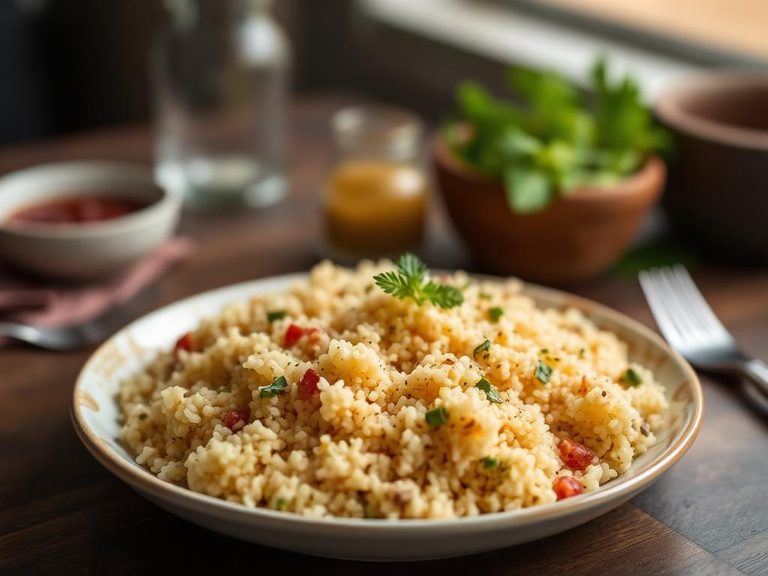
Couscous is a tiny granule of crushed durum wheat semolina, a foundational staple across North Africa, particularly in Morocco, Algeria, Tunisia, and Libya. It is traditionally steamed in a special two-tiered pot called a couscoussier and is typically served as a bed for rich, aromatic stews of meat and vegetables.
🍳 View the full Couscous recipe →
🍽️ Nutrition at a glance
As a wheat-based product, couscous is primarily a source of complex carbohydrates for energy, with a moderate amount of plant-based protein and minimal fat. A standard one-cup serving provides around 176 calories, along with B vitamins and minerals like selenium.
Nutrition breakdown
| Calories | 176 kcal |
| Protein | 6 g |
| Carbs | 36.5 g |
| Fat | 0.3 g |
| Fiber | 2.2 g |
| Sugar | 0.2 g |
| Sodium | 5 mg |
| Selenium | 44.5 mcg |
| Manganese | 0.5 mg |
| Thiamin (B1) | 0.06 mg |
| Folate | 36 mcg |
| Phosphorus | 31 mg |
| Magnesium | 8 mg |
| Copper | 0.1 mg |
| Iron | 0.8 mg |
Per 1 cup cooked (173 g) · estimated, varies by recipe
💡 What's interesting
Its unique preparation involves steaming, not boiling, which allows the grains to become incredibly light and fluffy while absorbing the flavors of the stew below. In 2020, UNESCO recognized the knowledge, skills, and practices related to the production and consumption of couscous in Algeria, Mauritania, Morocco, and Tunisia as an Intangible Cultural Heritage of Humanity.
🍽️ Related dishes


AI estimate may be inaccurate · Terms