

Vodka and soda
Common food

Photo: Wikipedia
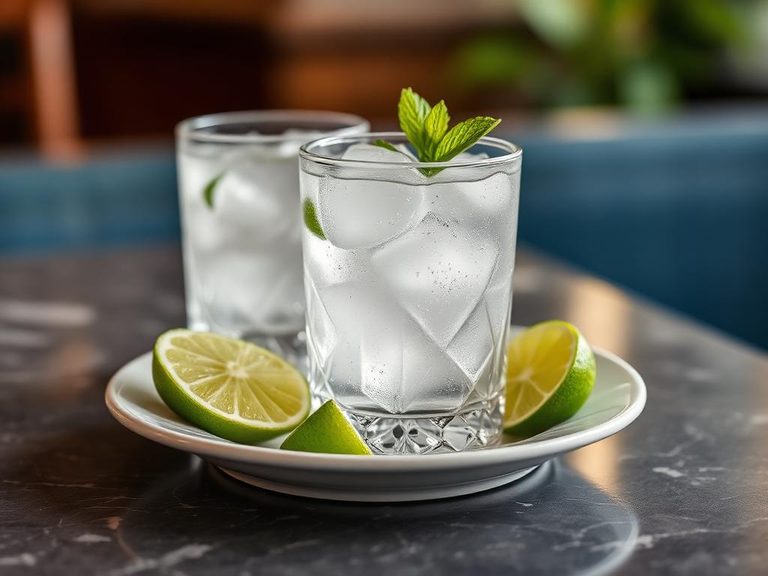
A crisp, effervescent highball combining clean, neutral vodka with bubbly club soda, delivering a sharp, refreshing sip with virtually zero calories. It is the ultimate minimalist cocktail, offering a pure, unadulterated spirit-forward taste with a clean finish. Nutritionally, it is a zero-calorie, zero-carb, zero-fat beverage, making it a popular choice for those tracking macros or seeking a light drink.
💚 Why it's loved
People love it for its crisp, clean, and refreshing profile that doesn't weigh them down, making it ideal for hot weather or as a palate cleanser. Its extreme versatility allows for endless customization with a squeeze of lime, a dash of bitters, or a splash of cranberry juice.
⚠️ Watch-outs & how to enjoy it better
The primary downside is the risk of dehydration and hangovers from alcohol consumption, as it lacks sugars or electrolytes to mitigate the diuretic effect. To counteract this, it's wise to alternate with a glass of water, consume it with a meal containing electrolytes, and practice strict portion control.
Key benefits
- Extremely low in calories (59 kcal per 100g)
- Zero carbohydrates, sugar, and fat
- Highly hydrating due to the soda water component
- Simple to prepare with minimal ingredients
- A popular choice for low-carb or keto diets
🍽️ Popular dishes





🌍 Where it's eaten
💡 Did you know?
The modern vodka soda's popularity surged in the 1950s and 60s, partly because it was the preferred drink of the Rat Pack (Frank Sinatra, Dean Martin, etc.) and was seen as a sophisticated, 'clean' alternative to heavier cocktails.
Full nutrition (USDA data · scales with serving)
| Water | 91.5 g |
| Energy | 59.0 kcal |
| Protein | 0.00 g |
| Total lipid (fat) | 0.00 g |
| Carbohydrate, by difference | 0.00 g |
| Fiber, total dietary | 0.00 g |
| Total Sugars | 0.00 g |
| Calcium, Ca | 4.0 mg |
| Iron, Fe | 0.02 mg |
| Magnesium, Mg | 1.0 mg |
| Phosphorus, P | 1.0 mg |
| Potassium, K | 2.0 mg |
| Sodium, Na | 16.0 mg |
| Zinc, Zn | 0.08 mg |
| Copper, Cu | 0.01 mg |
| Selenium, Se | 0.00 ug |
| Vitamin C, total ascorbic acid | 0.00 mg |
| Thiamin | 0.00 mg |
| Riboflavin | 0.00 mg |
| Niacin | 0.00 mg |
| Vitamin B-6 | 0.00 mg |
| Folate, total | 0.00 ug |
| Folic acid | 0.00 ug |
| Folate, food | 0.00 ug |
| Folate, DFE | 0.00 ug |
| Choline, total | 0.00 mg |
| Vitamin B-12 | 0.00 ug |
| Vitamin B-12, added | 0.00 ug |
| Vitamin A, RAE | 0.00 ug |
| Retinol | 0.00 ug |
| Carotene, beta | 0.00 ug |
| Carotene, alpha | 0.00 ug |
| Cryptoxanthin, beta | 0.00 ug |
| Lycopene | 0.00 ug |
| Lutein + zeaxanthin | 0.00 ug |
| Vitamin E (alpha-tocopherol) | 0.00 mg |
| Vitamin E, added | 0.00 mg |
| Vitamin D (D2 + D3) | 0.00 ug |
| Vitamin K (phylloquinone) | 0.00 ug |
| Alcohol, ethyl | 8.5 g |
| Caffeine | 0.00 mg |
| Theobromine | 0.00 mg |
Fat & fatty acid profile (per 100g)
| Fatty acids, total saturated | 0.00 g |
| SFA 4:0 | 0.00 g |
| SFA 6:0 | 0.00 g |
| SFA 8:0 | 0.00 g |
| SFA 10:0 | 0.00 g |
| SFA 12:0 | 0.00 g |
| SFA 14:0 | 0.00 g |
| SFA 16:0 | 0.00 g |
| SFA 18:0 | 0.00 g |
| Fatty acids, total monounsaturated | 0.00 g |
| MUFA 16:1 | 0.00 g |
| MUFA 18:1 | 0.00 g |
| MUFA 20:1 | 0.00 g |
| MUFA 22:1 | 0.00 g |
| Fatty acids, total polyunsaturated | 0.00 g |
| PUFA 18:2 | 0.00 g |
| PUFA 18:3 | 0.00 g |
| PUFA 18:4 | 0.00 g |
| PUFA 20:4 | 0.00 g |
| PUFA 20:5 n-3 (EPA) | 0.00 g |
| PUFA 22:5 n-3 (DPA) | 0.00 g |
| PUFA 22:6 n-3 (DHA) | 0.00 g |
| Cholesterol | 0.00 mg |
FAQ
Is vodka soda a healthy drink?
Compared to sugary cocktails, it is a very low-calorie, low-carb option with no sugar or fat. However, alcohol itself is not considered healthy, and moderation is key.
What is the difference between a vodka soda and a vodka tonic?
A vodka soda uses plain, unsweetened club soda or seltzer water, while a vodka tonic uses tonic water, which contains sugar and quinine, adding calories and a distinct bitter-sweet flavor.
Can I make a vodka soda with flavored vodka?
Absolutely. Flavored vodkas (like citrus, cucumber, or berry) can add complexity and flavor without adding significant calories or carbs, making it a popular variation.
Nutrient density (calculated · NRF9.3)
Nutrient Rich Foods index: beneficial nutrients (protein, fiber, vitamins, minerals) minus saturated fat, added sugar & sodium, per 100 kcal.
NRF9.3 index — Fulgoni, Keast & Drewnowski, 2009. Computed from USDA nutrients.
Weight-loss friendliness (composite index)
Energy density 0.59 kcal/g · 0% calories from protein · 0.0 g fiber · 0.0 g sugar per 100 g.
Composite of energy density (Rolls et al., 1999), protein & fiber satiety, minus sugar. A calculated heuristic — ranks satiety-per-calorie, not a clinical measure.
Dietary load (calculated from USDA values)
Potential renal acid load. Positive = acid-forming, negative = alkaline-forming.
Sodium-to-potassium ratio: 8.00 (lower is better — aim for ≤ 1)
Sodium:potassium per WHO potassium guidance. Computed from USDA nutrients.