

Tomato and vegetable juice, 100%
Common food

Photo: Wikipedia
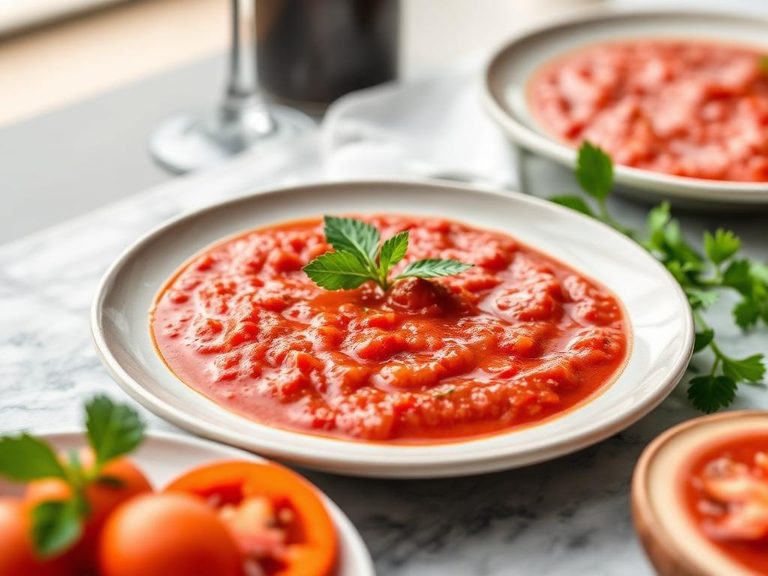
Tomato and vegetable juice is a vibrant, savory blend of pureed vegetables, predominantly tomato, offering a smooth, slightly pulpy texture. It delivers a concentrated, tangy, and umami-rich flavor profile with a low-calorie count, making it a refreshing and nutrient-dense beverage. Its nutritional highlight is its rich content of vitamins A and C, along with the antioxidant lycopene, all while being virtually fat-free.
Calorie split: 17% protein · 70% carbs · 13% fat
↓ Full nutrition💚 Why it's loved
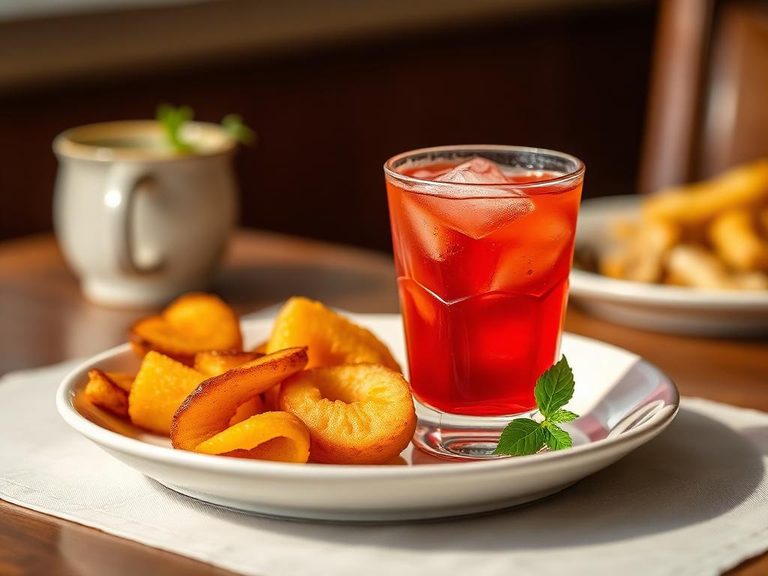
People love it for its bold, savory flavor that serves as a refreshing alternative to sweet juices, and its versatility as a base for cocktails like the Bloody Mary or a quick, nutrient-packed drink on its own.
⚠️ Watch-outs & how to enjoy it better
It can be high in sodium, which is a concern for those monitoring blood pressure; look for low-sodium versions. The natural sugars, while low, can contribute to blood sugar spikes if consumed in large quantities. To counteract this, pair it with a protein or healthy fat like a handful of nuts or a cheese stick to slow sugar absorption.
Key benefits
- Excellent source of the antioxidant lycopene, linked to heart health.
- Rich in vitamins A and C, supporting immune function.
- Low in calories and fat, aiding in weight management.
- Provides a quick, hydrating source of electrolytes like potassium.
- May support skin health due to its high vitamin and antioxidant content.
🍽️ Popular dishes


🌍 Where it's eaten
💡 Did you know?
The lycopene in tomato juice is actually more bioavailable (easier for your body to absorb) when the tomatoes are processed and heated, as in juice, compared to raw tomatoes.
Full nutrition (USDA data · scales with serving)
| Water | 94.1 g |
| Energy | 22.0 kcal |
| Protein | 0.93 g |
| Total lipid (fat) | 0.31 g |
| Carbohydrate, by difference | 3.9 g |
| Fiber, total dietary | 0.50 g |
| Total Sugars | 2.8 g |
| Calcium, Ca | 14.0 mg |
| Iron, Fe | 0.28 mg |
| Magnesium, Mg | 11.0 mg |
| Phosphorus, P | 19.0 mg |
| Potassium, K | 185 mg |
| Sodium, Na | 169 mg |
| Zinc, Zn | 0.12 mg |
| Copper, Cu | 0.07 mg |
| Selenium, Se | 0.20 ug |
| Vitamin C, total ascorbic acid | 54.3 mg |
| Thiamin | 0.05 mg |
| Riboflavin | 0.03 mg |
| Niacin | 0.72 mg |
| Vitamin B-6 | 0.07 mg |
| Folate, total | 21.0 ug |
| Folic acid | 0.00 ug |
| Folate, food | 21.0 ug |
| Folate, DFE | 21.0 ug |
| Choline, total | 8.1 mg |
| Vitamin B-12 | 0.00 ug |
| Vitamin B-12, added | 0.00 ug |
| Vitamin A, RAE | 35.0 ug |
| Retinol | 0.00 ug |
| Carotene, beta | 377 ug |
| Carotene, alpha | 93.0 ug |
| Cryptoxanthin, beta | 0.00 ug |
| Lycopene | 7119 ug |
| Lutein + zeaxanthin | 278 ug |
| Vitamin E (alpha-tocopherol) | 1.0 mg |
| Vitamin E, added | 0.00 mg |
| Vitamin D (D2 + D3) | 0.00 ug |
| Vitamin K (phylloquinone) | 6.1 ug |
| Alcohol, ethyl | 0.00 g |
| Caffeine | 0.00 mg |
| Theobromine | 0.00 mg |
Fat & fatty acid profile (per 100g)
| Fatty acids, total saturated | 0.09 g |
| SFA 4:0 | 0.00 g |
| SFA 6:0 | 0.00 g |
| SFA 8:0 | 0.00 g |
| SFA 10:0 | 0.00 g |
| SFA 12:0 | 0.00 g |
| SFA 14:0 | 0.00 g |
| SFA 16:0 | 0.06 g |
| SFA 18:0 | 0.02 g |
| Fatty acids, total monounsaturated | 0.06 g |
| MUFA 16:1 | 0.00 g |
| MUFA 18:1 | 0.06 g |
| MUFA 20:1 | 0.00 g |
| MUFA 22:1 | 0.00 g |
| Fatty acids, total polyunsaturated | 0.08 g |
| PUFA 18:2 | 0.06 g |
| PUFA 18:3 | 0.01 g |
| PUFA 18:4 | 0.00 g |
| PUFA 20:4 | 0.00 g |
| PUFA 20:5 n-3 (EPA) | 0.00 g |
| PUFA 22:5 n-3 (DPA) | 0.00 g |
| PUFA 22:6 n-3 (DHA) | 0.00 g |
| Cholesterol | 0.00 mg |
FAQ
Is tomato and vegetable juice the same as V8?
While V8 is a famous brand of vegetable juice, not all tomato and vegetable juices are the same. V8 typically contains a blend of eight vegetables (tomato, carrot, celery, beet, lettuce, parsley, watercress, and spinach). Other brands may use different vegetable blends or be primarily tomato-based.
Can I drink this juice if I'm on a low-sodium diet?
Many commercial tomato and vegetable juices are high in sodium for flavor and preservation. You should check the label carefully and opt for a 'low-sodium' or 'no salt added' version. Alternatively, you can make your own fresh juice at home to control the sodium content.
Is it good for post-workout recovery?
Yes, it can be a good post-workout drink. It provides fluids for rehydration, electrolytes like potassium to replenish what's lost in sweat, and carbohydrates for energy recovery. However, it lacks significant protein, so pairing it with a protein source is ideal.
Nutrient density (calculated · NRF9.3)
Nutrient Rich Foods index: beneficial nutrients (protein, fiber, vitamins, minerals) minus saturated fat, added sugar & sodium, per 100 kcal.
NRF9.3 index — Fulgoni, Keast & Drewnowski, 2009. Computed from USDA nutrients.
Weight-loss friendliness (composite index)
Energy density 0.22 kcal/g · 17% calories from protein · 0.5 g fiber · 2.8 g sugar per 100 g.
Composite of energy density (Rolls et al., 1999), protein & fiber satiety, minus sugar. A calculated heuristic — ranks satiety-per-calorie, not a clinical measure.
Dietary load (calculated from USDA values)
Potential renal acid load. Positive = acid-forming, negative = alkaline-forming.
Sodium-to-potassium ratio: 0.91 (lower is better — aim for ≤ 1)
Sodium:potassium per WHO potassium guidance. Computed from USDA nutrients.