

Taro, tahitian, raw
Whole food · Vegetables and Vegetable Products

Photo: Wikipedia
Tahitian taro, a starchy root with a striking purple-tinged flesh, offers a subtly sweet, nutty flavor and a creamy, dense texture when cooked. Unlike many starches, it provides a notable protein boost for a root vegetable, making it a satisfying and energy-dense staple. Its unique anthocyanin pigments give it a beautiful, jewel-toned color that makes dishes visually appealing.
Calorie split: 23% protein · 58% carbs · 18% fat
↓ Full nutrition💚 Why it's loved
People cherish Tahitian taro for its rich, earthy sweetness and velvety texture that elevates simple meals. It's a cultural cornerstone in Polynesian cuisine, symbolizing abundance and connection to the land.
⚠️ Watch-outs & how to enjoy it better
Raw taro contains calcium oxalate crystals, which can cause mouth and throat irritation; it must always be cooked thoroughly. Its dense starch can impact blood sugar, so those monitoring glucose should practice portion control and pair it with protein or healthy fats to slow absorption.
Key benefits
- Good source of plant-based protein for a root vegetable
- Provides sustained energy from complex carbohydrates
- Contains anthocyanin antioxidants from its purple hue
- Naturally gluten-free and suitable for various diets
- Versatile base for both sweet and savory dishes
🍽️ Popular dishes
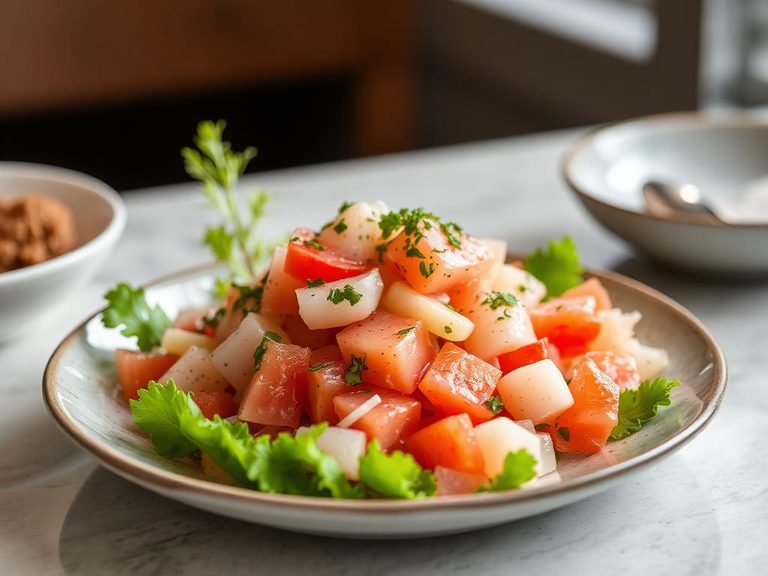
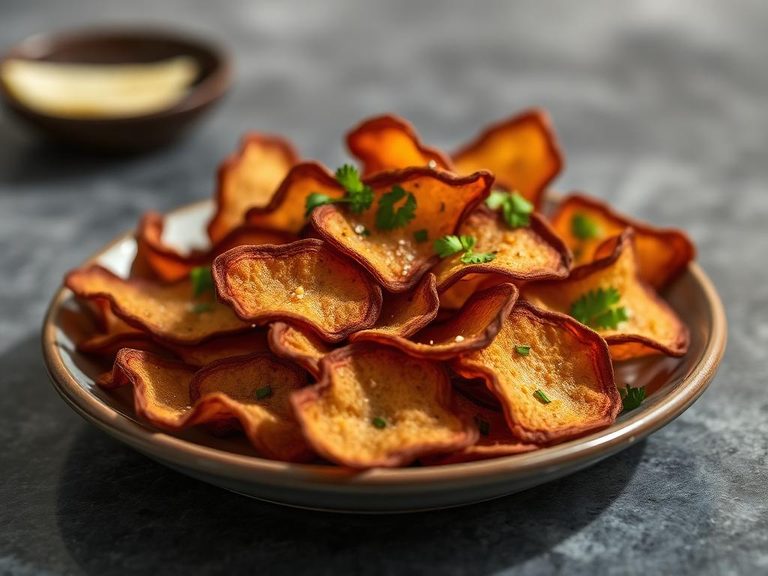
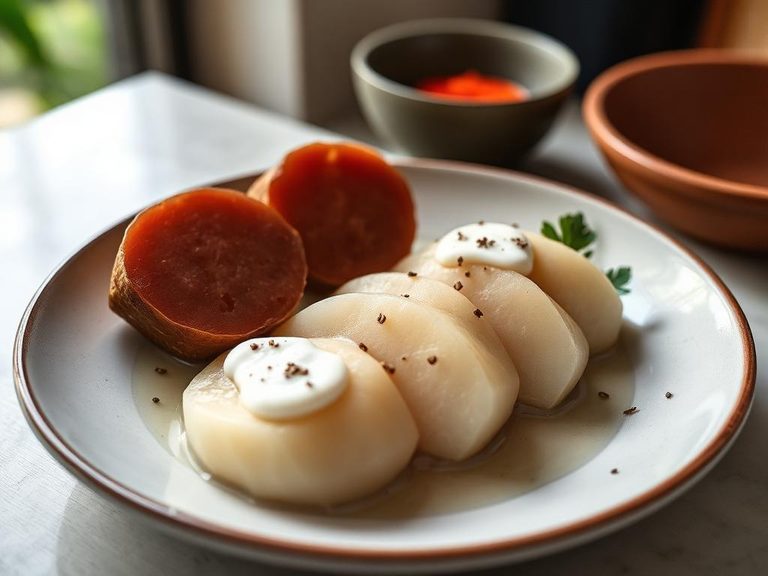
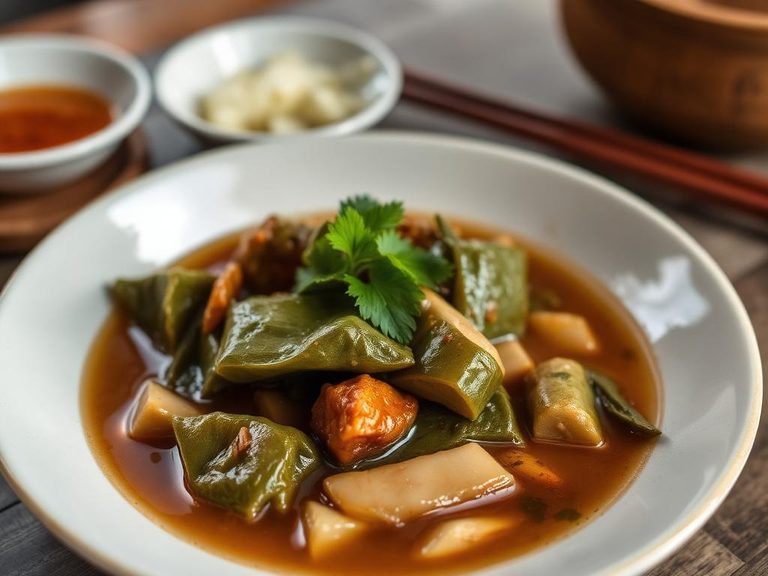
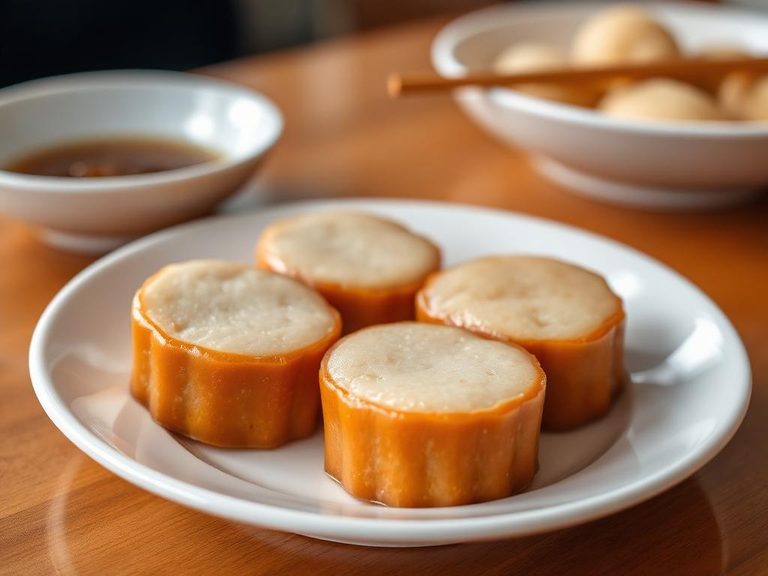
🌍 Where it's eaten
💡 Did you know?
The purple color in Tahitian taro comes from anthocyanins, the same antioxidants found in blueberries and red cabbage.
Full nutrition (USDA data · scales with serving)
| Water | 88.0 g |
| Energy | 44.0 kcal |
| Energy | 184 kj |
| Protein | 2.8 g |
| Total lipid (fat) | 0.97 g |
| Ash | 1.4 g |
| Carbohydrate, by difference | 6.9 g |
| Calcium, Ca | 129 mg |
| Iron, Fe | 1.3 mg |
| Magnesium, Mg | 47.0 mg |
| Phosphorus, P | 45.0 mg |
| Potassium, K | 606 mg |
| Sodium, Na | 50.0 mg |
| Zinc, Zn | 0.09 mg |
| Copper, Cu | 0.07 mg |
| Manganese, Mn | 0.16 mg |
| Selenium, Se | 0.70 ug |
| Vitamin C, total ascorbic acid | 96.0 mg |
| Thiamin | 0.06 mg |
| Riboflavin | 0.24 mg |
| Niacin | 0.99 mg |
| Pantothenic acid | 0.12 mg |
| Vitamin B-6 | 0.12 mg |
| Folate, total | 9.0 ug |
| Folic acid | 0.00 ug |
| Folate, food | 9.0 ug |
| Folate, DFE | 9.0 ug |
| Vitamin B-12 | 0.00 ug |
| Vitamin A, RAE | 102 ug |
| Retinol | 0.00 ug |
| Vitamin A, IU | 2045 iu |
| Vitamin D (D2 + D3), International Units | 0.00 iu |
| Vitamin D (D2 + D3) | 0.00 ug |
Fat & fatty acid profile (per 100g)
| Fatty acids, total saturated | 0.20 g |
| SFA 16:0 | 0.17 g |
| SFA 18:0 | 0.03 g |
| Fatty acids, total monounsaturated | 0.08 g |
| MUFA 18:1 | 0.08 g |
| Fatty acids, total polyunsaturated | 0.40 g |
| PUFA 18:2 | 0.28 g |
| PUFA 18:3 | 0.12 g |
| Fatty acids, total trans | 0.00 g |
| Cholesterol | 0.00 mg |
Amino acid profile (per 100g)
Estimated from Taro, cooked, without salt — USDA does not publish this profile for Taro.
| Tryptophan | 0.01 g |
| Threonine | 0.02 g |
| Isoleucine | 0.02 g |
| Leucine | 0.04 g |
| Lysine | 0.02 g |
| Methionine | 0.01 g |
| Cystine | 0.01 g |
| Phenylalanine | 0.03 g |
| Tyrosine | 0.02 g |
| Valine | 0.03 g |
| Arginine | 0.04 g |
| Histidine | 0.01 g |
| Alanine | 0.03 g |
| Aspartic acid | 0.07 g |
| Glutamic acid | 0.06 g |
| Glycine | 0.03 g |
| Proline | 0.02 g |
| Serine | 0.03 g |
FAQ
How is Tahitian taro different from regular taro?
Tahitian taro (often a cultivar of *Colocasia esculenta*) is prized for its distinct purple flesh and slightly sweeter, nuttier flavor compared to the more common white-fleshed varieties.
Can I eat it raw?
No, never eat taro raw. It must be cooked (boiled, baked, steamed, or fried) to neutralize the irritating calcium oxalate crystals and to make its starches digestible.
What does it taste like?
When cooked, it has a mild, sweet, and earthy flavor reminiscent of a cross between a potato and a sweet potato, with a dense, creamy, and slightly sticky texture.
Nutrient density (calculated · NRF9.3)
Nutrient Rich Foods index: beneficial nutrients (protein, fiber, vitamins, minerals) minus saturated fat, added sugar & sodium, per 100 kcal.
NRF9.3 index — Fulgoni, Keast & Drewnowski, 2009. Computed from USDA nutrients.
Weight-loss friendliness (composite index)
Energy density 0.44 kcal/g · 25% calories from protein · 0.0 g fiber · 0.0 g sugar per 100 g.
Composite of energy density (Rolls et al., 1999), protein & fiber satiety, minus sugar. A calculated heuristic — ranks satiety-per-calorie, not a clinical measure.
Dietary load (calculated from USDA values)
Potential renal acid load. Positive = acid-forming, negative = alkaline-forming.
Sodium-to-potassium ratio: 0.08 (lower is better — aim for ≤ 1)
Sodium:potassium per WHO potassium guidance. Computed from USDA nutrients.