

Taro Cake
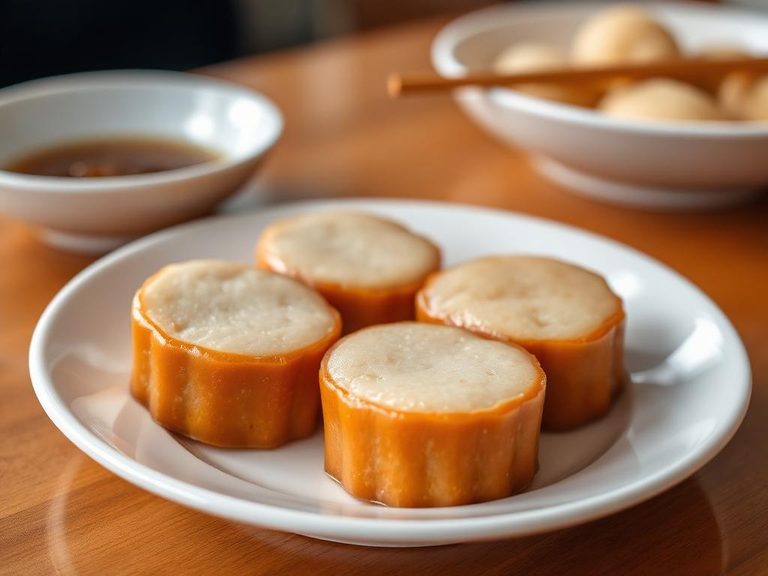
Taro cake, or wu tau gou, is a savory steamed dim sum dish originating from Cantonese cuisine, made from shredded taro root mixed with rice flour, dried shrimp, Chinese sausage, and mushrooms, then steamed and often pan-fried before serving. It has a soft, slightly chewy interior with a crispy exterior when fried, and is typically enjoyed with soy sauce or chili sauce. This dish is a staple in dim sum restaurants across Guangdong, Hong Kong, and Chinese communities worldwide.
🍳 View the full Taro Cake recipe →
🍽️ Nutrition at a glance
Taro cake is moderate in carbohydrates from the taro and rice flour, with some fat from the sausage and oil used in frying, and a small amount of protein from the dried shrimp and sausage. A typical serving (around 100-150 grams) provides roughly 150-250 calories, along with dietary fiber, potassium, and some B vitamins from the taro.
Nutrition breakdown
| Calories | 210 kcal |
| Protein | 3.5 g |
| Carbs | 32 g |
| Fat | 8 g |
| Fiber | 2.5 g |
| Sugar | 1.5 g |
| Sodium | 480 mg |
| Potassium | 220 mg |
| Calcium | 45 mg |
| Iron | 1.8 mg |
| Vitamin C | 4 mg |
| Vitamin B6 | 0.15 mg |
| Magnesium | 30 mg |
| Phosphorus | 85 mg |
| Zinc | 0.6 mg |
Per 1 piece (100 g) · estimated, varies by recipe
💡 What's interesting
Culturally, taro cake symbolizes good fortune and is often served during festivals like Chinese New Year, as the word for taro in some dialects sounds similar to words for 'good luck' or 'prosperity.' Nutritionally, taro is a good source of resistant starch, which can support gut health and help regulate blood sugar levels.
🍽️ Related dishes

AI estimate may be inaccurate · Terms