

Taco sauce
Common food

Photo: Wikipedia
Taco sauce is a thin, tangy, and mildly spicy condiment, typically tomato-based, with a smooth, pourable consistency. It delivers a bright, zesty kick of flavor with a hint of chili warmth and a subtle sweetness. Nutritionally, it's very low-calorie, providing a burst of flavor for minimal energy cost.
Calorie split: 34% protein · 21% carbs · 45% fat
↓ Full nutrition💚 Why it's loved
People love taco sauce for its perfect balance of tangy, savory, and mildly spicy notes that elevate simple dishes. Its incredible versatility makes it a go-to condiment for everything from tacos and eggs to burgers and fries.
⚠️ Watch-outs & how to enjoy it better
Some commercial brands can be high in sodium, which is a consideration for those monitoring blood pressure. The acidity might also be a concern for individuals with acid reflux. To counteract sodium, look for low-sodium versions or use it sparingly; pairing it with potassium-rich foods like avocado can help balance electrolytes.
Key benefits
- Extremely low in calories (11 kcal per 100g).
- Adds significant flavor without added fats.
- Contains a small amount of dietary fiber.
- Provides a source of lycopene from its tomato base.
- Can enhance meal enjoyment and adherence to healthy eating.
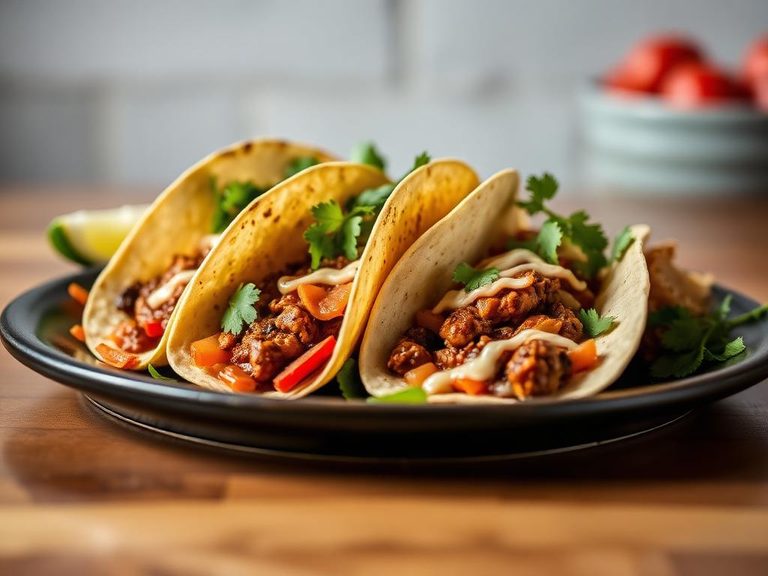
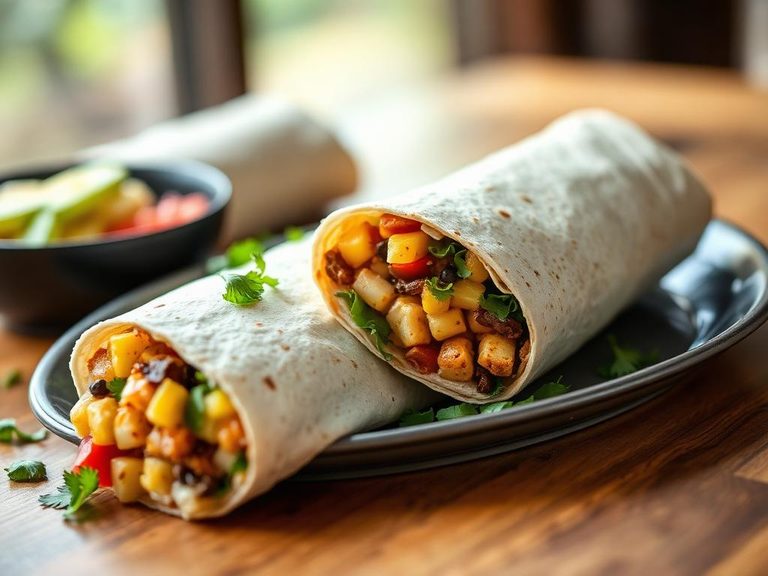
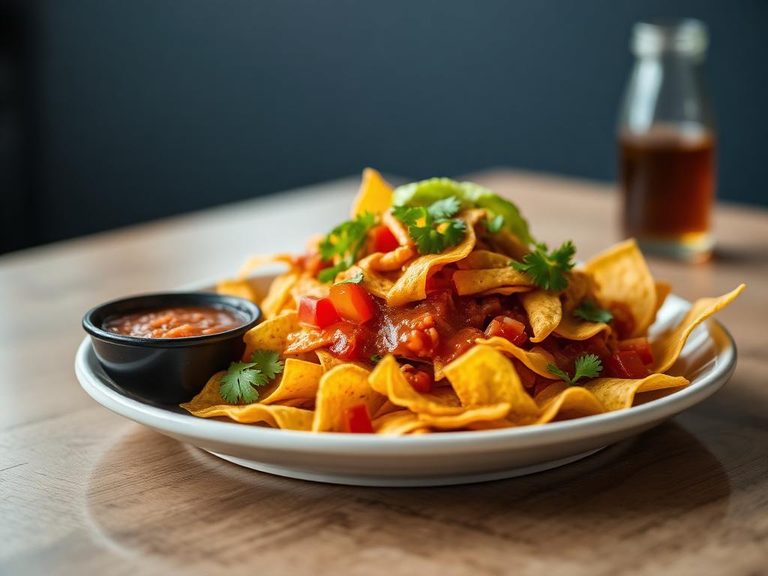
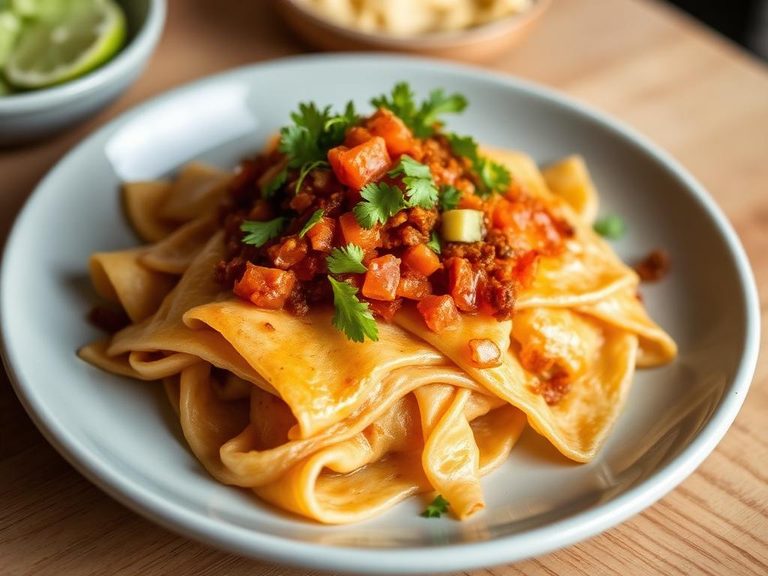
🍽️ Popular dishes

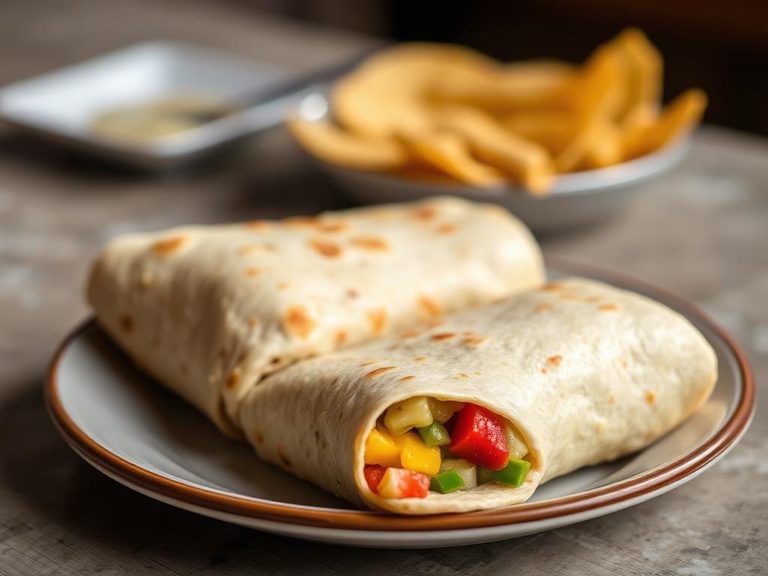
🌍 Where it's eaten
💡 Did you know?
The term 'salsa' in Spanish simply means 'sauce,' so technically, taco sauce is a type of salsa, but in English, 'salsa' often refers to chunkier, fresher pico de gallo-style preparations.
Full nutrition (USDA data · scales with serving)
| Water | 95.6 g |
| Energy | 11.0 kcal |
| Protein | 1.2 g |
| Total lipid (fat) | 0.68 g |
| Carbohydrate, by difference | 0.72 g |
| Fiber, total dietary | 0.50 g |
| Total Sugars | 0.12 g |
| Calcium, Ca | 11.0 mg |
| Iron, Fe | 1.0 mg |
| Magnesium, Mg | 11.0 mg |
| Phosphorus, P | 21.0 mg |
| Potassium, K | 115 mg |
| Sodium, Na | 570 mg |
| Zinc, Zn | 0.14 mg |
| Copper, Cu | 0.07 mg |
| Selenium, Se | 0.40 ug |
| Vitamin C, total ascorbic acid | 4.0 mg |
| Thiamin | 0.03 mg |
| Riboflavin | 0.08 mg |
| Niacin | 0.16 mg |
| Vitamin B-6 | 0.14 mg |
| Folate, total | 1.0 ug |
| Folic acid | 1.0 ug |
| Folate, food | 0.00 ug |
| Folate, DFE | 2.0 ug |
| Choline, total | 0.00 mg |
| Vitamin B-12 | 0.00 ug |
| Vitamin B-12, added | 0.00 ug |
| Vitamin A, RAE | 74.0 ug |
| Retinol | 0.00 ug |
| Carotene, beta | 827 ug |
| Carotene, alpha | 56.0 ug |
| Cryptoxanthin, beta | 61.0 ug |
| Lycopene | 0.00 ug |
| Lutein + zeaxanthin | 9.0 ug |
| Vitamin E (alpha-tocopherol) | 0.01 mg |
| Vitamin E, added | 0.00 mg |
| Vitamin D (D2 + D3) | 0.00 ug |
| Vitamin K (phylloquinone) | 0.20 ug |
| Alcohol, ethyl | 0.00 g |
| Caffeine | 0.00 mg |
| Theobromine | 0.00 mg |
Fat & fatty acid profile (per 100g)
| Fatty acids, total saturated | 0.10 g |
| SFA 4:0 | 0.00 g |
| SFA 6:0 | 0.00 g |
| SFA 8:0 | 0.00 g |
| SFA 10:0 | 0.00 g |
| SFA 12:0 | 0.00 g |
| SFA 14:0 | 0.00 g |
| SFA 16:0 | 0.08 g |
| SFA 18:0 | 0.01 g |
| Fatty acids, total monounsaturated | 0.06 g |
| MUFA 16:1 | 0.00 g |
| MUFA 18:1 | 0.05 g |
| MUFA 20:1 | 0.00 g |
| MUFA 22:1 | 0.00 g |
| Fatty acids, total polyunsaturated | 0.36 g |
| PUFA 18:2 | 0.36 g |
| PUFA 18:3 | 0.00 g |
| PUFA 18:4 | 0.00 g |
| PUFA 20:4 | 0.00 g |
| PUFA 20:5 n-3 (EPA) | 0.00 g |
| PUFA 22:5 n-3 (DPA) | 0.00 g |
| PUFA 22:6 n-3 (DHA) | 0.00 g |
| Cholesterol | 0.00 mg |
FAQ
Is taco sauce the same as salsa?
Not exactly. While both are tomato-based, taco sauce is typically smoother, thinner, and more uniformly seasoned. Salsa, especially 'salsa roja' or 'salsa verde,' often has a chunkier texture with visible pieces of onion, cilantro, and other ingredients.
Can I use taco sauce for cooking, or just as a topping?
It's fantastic for both! Use it as a topping, but also try simmering it with beans, using it as a base for a quick soup, or as a marinade for chicken or fish to infuse flavor before cooking.
How should I store an opened bottle of taco sauce?
Always store it in the refrigerator after opening. This helps preserve its fresh flavor and color, and it will typically last for several months. Check the label for a specific 'refrigerate after opening' date.
Nutrient density (calculated · NRF9.3)
Nutrient Rich Foods index: beneficial nutrients (protein, fiber, vitamins, minerals) minus saturated fat, added sugar & sodium, per 100 kcal.
NRF9.3 index — Fulgoni, Keast & Drewnowski, 2009. Computed from USDA nutrients.
Weight-loss friendliness (composite index)
Energy density 0.11 kcal/g · 42% calories from protein · 0.5 g fiber · 0.1 g sugar per 100 g.
Composite of energy density (Rolls et al., 1999), protein & fiber satiety, minus sugar. A calculated heuristic — ranks satiety-per-calorie, not a clinical measure.
Dietary load (calculated from USDA values)
Potential renal acid load. Positive = acid-forming, negative = alkaline-forming.
Sodium-to-potassium ratio: 4.96 (lower is better — aim for ≤ 1)
Sodium:potassium per WHO potassium guidance. Computed from USDA nutrients.