

Sushi, NFS
Common food
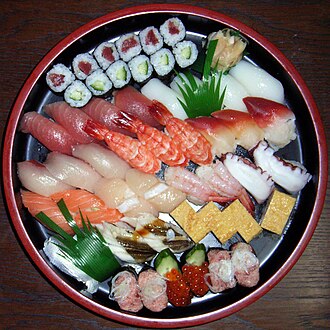
Photo: Wikipedia
Sushi, NFS (Not Further Specified) is a broad category of Japanese rice-based dishes, typically featuring vinegared short-grain rice paired with seafood, vegetables, or egg. Its taste is a delicate balance of sweet, savory, and umami, with textures ranging from the soft, sticky rice to the tender or crisp fillings. Nutritionally, it is a light, low-fat option that provides quick energy from carbohydrates, with a modest protein boost from its fillings.
Calorie split: 13% protein · 81% carbs · 7% fat
↓ Full nutrition💚 Why it's loved
People love sushi for its clean, fresh flavors and the satisfying contrast between the soft, seasoned rice and the varied textures of its fillings. It's also celebrated for its versatility and cultural significance, often enjoyed as a social dining experience or a quick, healthy meal.
⚠️ Watch-outs & how to enjoy it better
Sushi can be high in sodium from soy sauce and rice vinegar, and the refined carbohydrates in white rice may cause blood sugar spikes. To counteract this, pair sushi with extra protein (like edamame) or healthy fats (like avocado), use low-sodium soy sauce, and opt for brown rice or veggie-heavy rolls. Those with fish allergies should avoid traditional sushi or choose vegetarian options.
Key benefits
- Low in fat and calories, making it a light meal option
- Provides quick energy from complex carbohydrates in rice
- Contains lean protein from fish or other fillings
- Often includes vegetables, offering fiber and vitamins
- The vinegar in rice can aid digestion
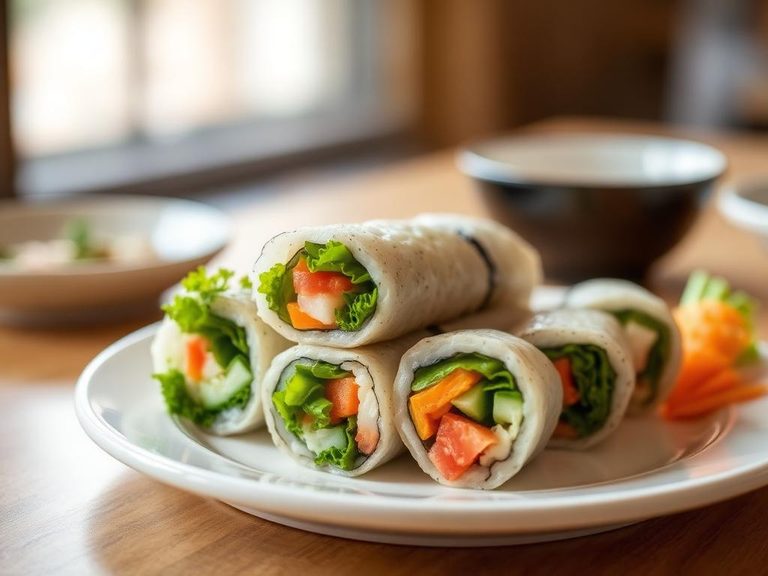
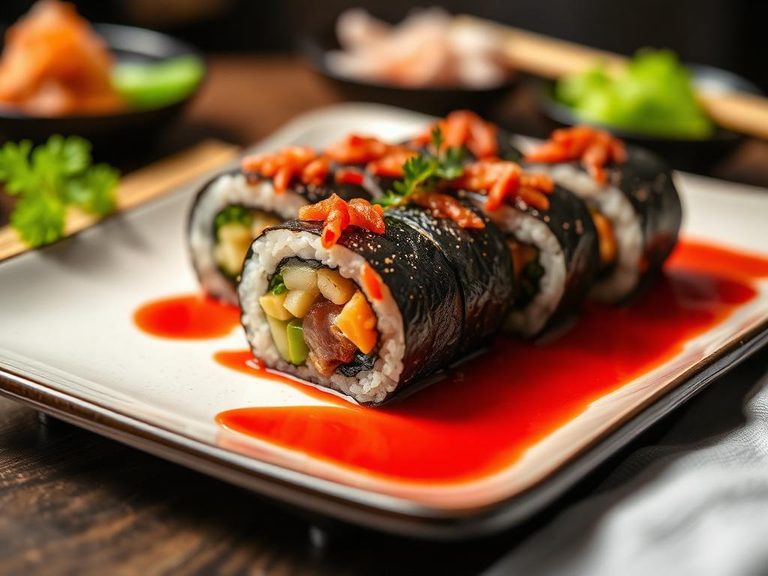
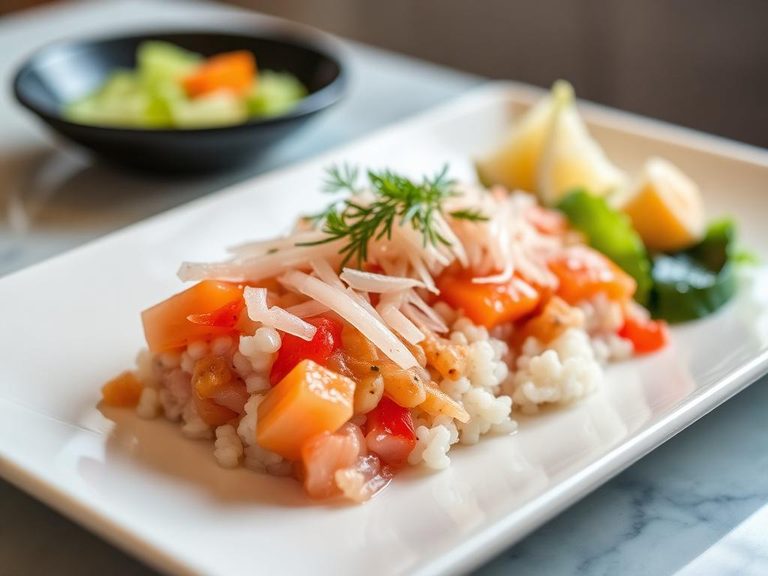
🍽️ Popular dishes
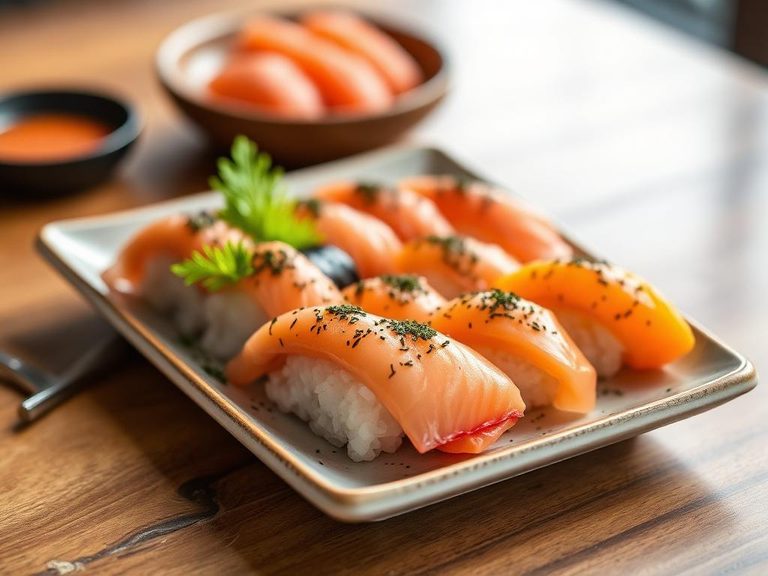
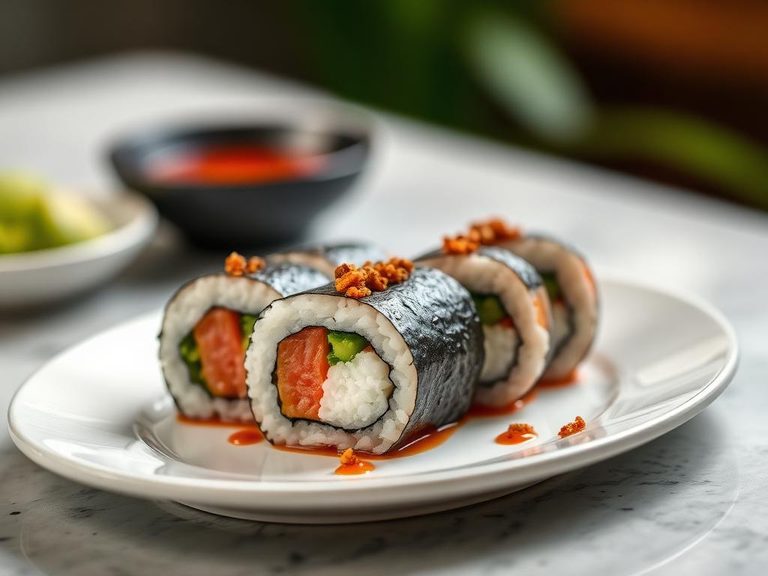
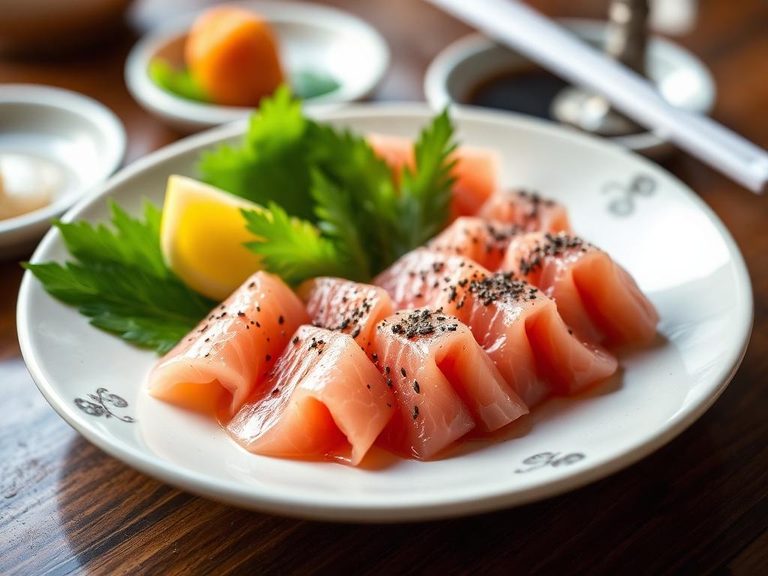
🌍 Where it's eaten
💡 Did you know?
The word 'sushi' refers to the vinegared rice, not the fish; it's a common misconception that sushi always contains raw seafood.
Full nutrition (USDA data · scales with serving)
| Water | 76.4 g |
| Energy | 94.0 kcal |
| Protein | 2.9 g |
| Total lipid (fat) | 0.67 g |
| Carbohydrate, by difference | 18.4 g |
| Fiber, total dietary | 1.0 g |
| Total Sugars | 2.1 g |
| Calcium, Ca | 6.0 mg |
| Iron, Fe | 0.21 mg |
| Magnesium, Mg | 13.0 mg |
| Phosphorus, P | 60.0 mg |
| Potassium, K | 48.0 mg |
| Sodium, Na | 428 mg |
| Zinc, Zn | 0.38 mg |
| Copper, Cu | 0.05 mg |
| Selenium, Se | 8.0 ug |
| Vitamin C, total ascorbic acid | 0.90 mg |
| Thiamin | 0.02 mg |
| Riboflavin | 0.03 mg |
| Niacin | 0.39 mg |
| Vitamin B-6 | 0.05 mg |
| Folate, total | 5.0 ug |
| Folic acid | 0.00 ug |
| Folate, food | 5.0 ug |
| Folate, DFE | 5.0 ug |
| Choline, total | 4.6 mg |
| Vitamin B-12 | 0.10 ug |
| Vitamin B-12, added | 0.00 ug |
| Vitamin A, RAE | 4.0 ug |
| Retinol | 0.00 ug |
| Carotene, beta | 41.0 ug |
| Carotene, alpha | 1.0 ug |
| Cryptoxanthin, beta | 2.0 ug |
| Lycopene | 0.00 ug |
| Lutein + zeaxanthin | 9.0 ug |
| Vitamin E (alpha-tocopherol) | 0.14 mg |
| Vitamin E, added | 0.00 mg |
| Vitamin D (D2 + D3) | 0.00 ug |
| Vitamin K (phylloquinone) | 1.5 ug |
| Alcohol, ethyl | 0.00 g |
| Caffeine | 0.00 mg |
| Theobromine | 0.00 mg |
Fat & fatty acid profile (per 100g)
| Fatty acids, total saturated | 0.13 g |
| SFA 4:0 | 0.00 g |
| SFA 6:0 | 0.00 g |
| SFA 8:0 | 0.00 g |
| SFA 10:0 | 0.00 g |
| SFA 12:0 | 0.00 g |
| SFA 14:0 | 0.00 g |
| SFA 16:0 | 0.11 g |
| SFA 18:0 | 0.01 g |
| Fatty acids, total monounsaturated | 0.40 g |
| MUFA 16:1 | 0.03 g |
| MUFA 18:1 | 0.34 g |
| MUFA 20:1 | 0.00 g |
| MUFA 22:1 | 0.00 g |
| Fatty acids, total polyunsaturated | 0.13 g |
| PUFA 18:2 | 0.10 g |
| PUFA 18:3 | 0.01 g |
| PUFA 18:4 | 0.00 g |
| PUFA 20:4 | 0.00 g |
| PUFA 20:5 n-3 (EPA) | 0.00 g |
| PUFA 22:5 n-3 (DPA) | 0.00 g |
| PUFA 22:6 n-3 (DHA) | 0.01 g |
| Cholesterol | 4.0 mg |
FAQ
Is sushi always raw fish?
No, sushi is defined by its vinegared rice. Many types, like tempura rolls or cooked eel (unagi), use cooked ingredients. Sashimi is raw fish without rice.
What makes sushi rice sticky?
Sushi rice is made from short-grain Japanese rice, which has a higher starch content. It's seasoned with a mixture of rice vinegar, sugar, and salt, which helps it stick together.
Is sushi a healthy meal choice?
Generally, yes. It's low in fat and provides protein and carbs. However, it can be high in sodium and carbs from rice. Opting for brown rice, vegetable rolls, or sashimi can make it even healthier.
Nutrient density (calculated · NRF9.3)
Nutrient Rich Foods index: beneficial nutrients (protein, fiber, vitamins, minerals) minus saturated fat, added sugar & sodium, per 100 kcal.
NRF9.3 index — Fulgoni, Keast & Drewnowski, 2009. Computed from USDA nutrients.
Weight-loss friendliness (composite index)
Energy density 0.94 kcal/g · 12% calories from protein · 1.0 g fiber · 2.1 g sugar per 100 g.
Composite of energy density (Rolls et al., 1999), protein & fiber satiety, minus sugar. A calculated heuristic — ranks satiety-per-calorie, not a clinical measure.
Dietary load (calculated from USDA values)
Potential renal acid load. Positive = acid-forming, negative = alkaline-forming.
Sodium-to-potassium ratio: 8.92 (lower is better — aim for ≤ 1)
Sodium:potassium per WHO potassium guidance. Computed from USDA nutrients.