

Uramaki
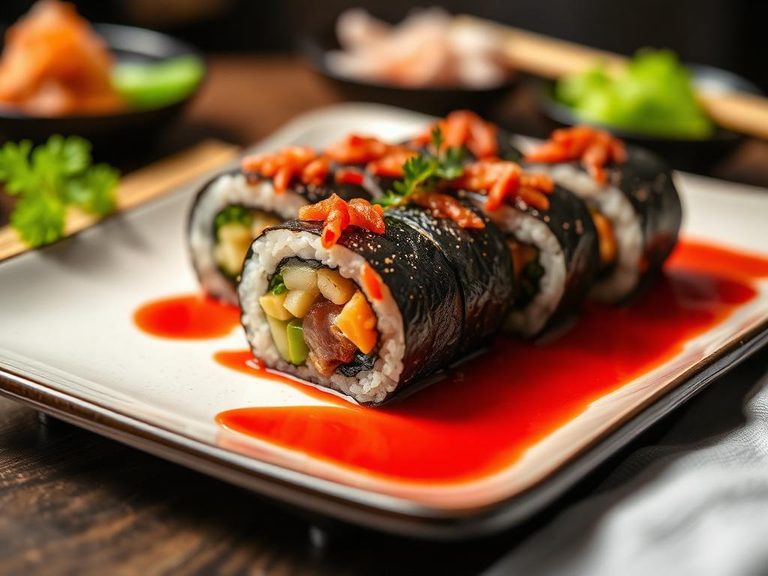
Uramaki, or 'inside-out roll,' is a modern style of sushi where the rice is on the outside, typically coated with sesame seeds or fish roe, and the nori (seaweed) wraps the fillings inside. Common ingredients include vinegared sushi rice, nori, and a variety of fillings like avocado, cucumber, crab, or raw fish. This style originated in North America, particularly in Los Angeles, as a creative adaptation of traditional Japanese sushi to appeal to Western tastes.
🍳 View the full Uramaki recipe →
🍽️ Nutrition at a glance
Uramaki is generally moderate in carbohydrates from the sushi rice, with a balanced mix of protein and fat depending on the fillings, such as fish or avocado. A typical two-piece serving provides roughly 200-300 calories, along with key nutrients like omega-3 fatty acids (if using fish), fiber, and some vitamins from vegetables.
Nutrition breakdown
| Calories | 350 kcal |
| Protein | 12 g |
| Carbs | 45 g |
| Fat | 14 g |
| Fiber | 3 g |
| Sugar | 5 g |
| Sodium | 680 mg |
| Potassium | 280 mg |
| Iron | 2.5 mg |
| Calcium | 45 mg |
| Magnesium | 35 mg |
| Phosphorus | 150 mg |
| Zinc | 1.8 mg |
| Vitamin B12 | 1.5 µg |
| Vitamin D | 0.5 µg |
Per 1 roll (approx. 250 g) · estimated, varies by recipe
💡 What's interesting
Culturally, uramaki represents a fusion of Japanese technique and American innovation, famously exemplified by the California Roll. Nutritionally, it can be a lighter alternative to traditional rolls if filled with vegetables and lean proteins, though the outer rice layer increases the carbohydrate content.
AI estimate may be inaccurate · Terms