

Squash, winter, butternut, frozen, cooked, boiled, without salt
Whole food · Vegetables and Vegetable Products

Photo: Wikipedia
This is winter butternut squash that has been peeled, cubed, frozen, and then boiled until tender. It offers a sweet, nutty flavor with a smooth, creamy, and slightly dense texture. Nutritionally, it's a low-calorie, carbohydrate-rich vegetable that provides a good source of beta-carotene (vitamin A) and potassium.
Calorie split: 11% protein · 88% carbs · 1% fat
↓ Full nutrition💚 Why it's loved
People love it for its natural, comforting sweetness and velvety texture that blends seamlessly into both savory and sweet dishes. It's a versatile, convenient staple that brings warmth and a boost of nutrients to meals, especially in autumn and winter.
⚠️ Watch-outs & how to enjoy it better
Its high carbohydrate content (about 10g per 100g) can cause a quicker rise in blood sugar compared to non-starchy vegetables, which is a consideration for individuals managing diabetes. To mitigate this, pair it with a source of protein (like chicken or beans) or healthy fat (like olive oil or nuts) to slow digestion and create a more balanced meal.
Key benefits
- Excellent source of beta-carotene, which the body converts to vitamin A.
- Provides potassium, important for fluid balance and muscle function.
- Low in calories and fat, making it suitable for calorie-conscious diets.
- Contains antioxidants like vitamin C and beta-carotene.
- A good source of complex carbohydrates for sustained energy.
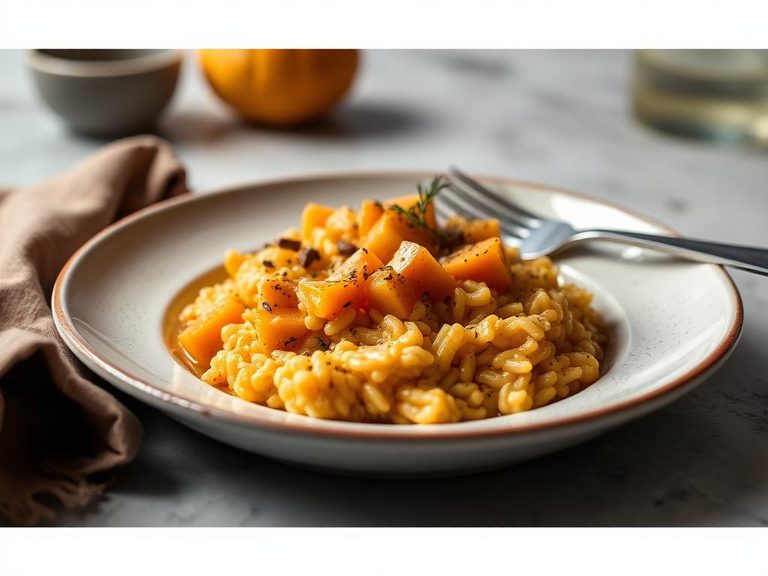
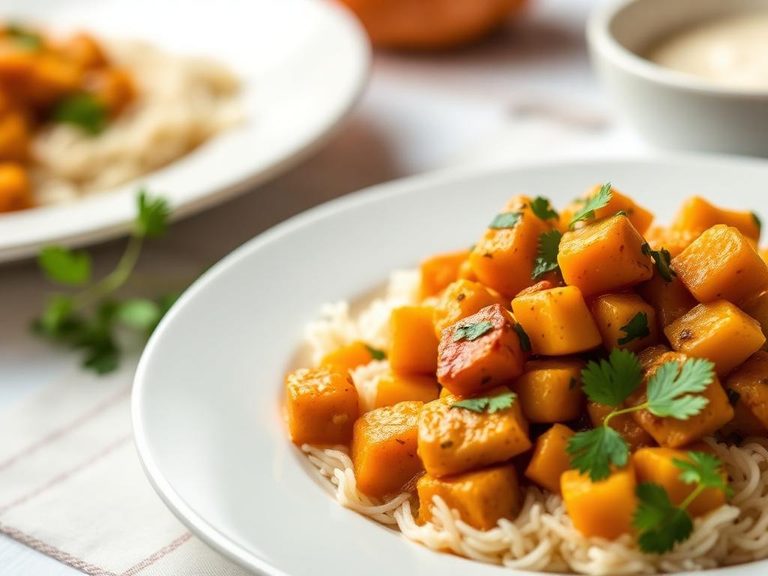
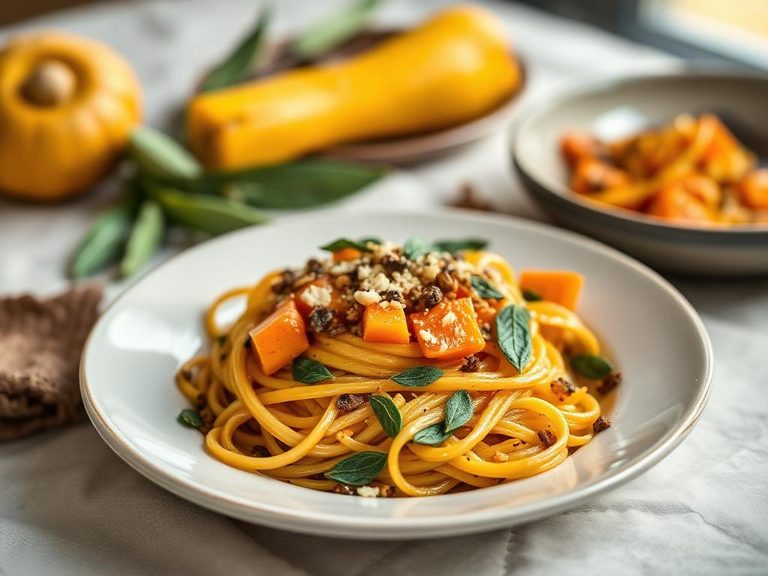
🍽️ Popular dishes

🌍 Where it's eaten
💡 Did you know?
The butternut squash is a cultivar of winter squash that was developed in the 1940s by Charles Leggett in Massachusetts, who crossed a gooseneck pumpkin with a tan pumpkin to create its signature shape and sweet flavor.
Full nutrition (USDA data · scales with serving)
| Water | 87.8 g |
| Energy | 39.0 kcal |
| Energy | 163 kj |
| Protein | 1.2 g |
| Total lipid (fat) | 0.07 g |
| Ash | 0.86 g |
| Carbohydrate, by difference | 10.1 g |
| Calcium, Ca | 19.0 mg |
| Iron, Fe | 0.58 mg |
| Magnesium, Mg | 9.0 mg |
| Phosphorus, P | 14.0 mg |
| Potassium, K | 133 mg |
| Sodium, Na | 2.0 mg |
| Zinc, Zn | 0.12 mg |
| Copper, Cu | 0.04 mg |
| Manganese, Mn | 0.17 mg |
| Selenium, Se | 0.50 ug |
| Vitamin C, total ascorbic acid | 3.5 mg |
| Thiamin | 0.05 mg |
| Riboflavin | 0.04 mg |
| Niacin | 0.46 mg |
| Pantothenic acid | 0.15 mg |
| Vitamin B-6 | 0.07 mg |
| Folate, total | 16.0 ug |
| Folic acid | 0.00 ug |
| Folate, food | 16.0 ug |
| Folate, DFE | 16.0 ug |
| Vitamin B-12 | 0.00 ug |
| Vitamin A, RAE | 167 ug |
| Retinol | 0.00 ug |
| Vitamin A, IU | 3339 iu |
| Vitamin D (D2 + D3), International Units | 0.00 iu |
| Vitamin D (D2 + D3) | 0.00 ug |
Fat & fatty acid profile (per 100g)
| Fatty acids, total saturated | 0.01 g |
| SFA 12:0 | 0.00 g |
| SFA 14:0 | 0.00 g |
| SFA 16:0 | 0.01 g |
| SFA 18:0 | 0.00 g |
| Fatty acids, total monounsaturated | 0.01 g |
| MUFA 16:1 | 0.00 g |
| MUFA 18:1 | 0.01 g |
| Fatty acids, total polyunsaturated | 0.03 g |
| PUFA 18:2 | 0.01 g |
| PUFA 18:3 | 0.02 g |
| Fatty acids, total trans | 0.00 g |
| Cholesterol | 0.00 mg |
Amino acid profile (per 100g)
| Tryptophan | 0.02 g |
| Threonine | 0.04 g |
| Isoleucine | 0.05 g |
| Leucine | 0.07 g |
| Lysine | 0.04 g |
| Methionine | 0.01 g |
| Cystine | 0.01 g |
| Phenylalanine | 0.05 g |
| Tyrosine | 0.04 g |
| Valine | 0.05 g |
| Arginine | 0.07 g |
| Histidine | 0.02 g |
| Alanine | 0.05 g |
| Aspartic acid | 0.13 g |
| Glutamic acid | 0.21 g |
| Glycine | 0.04 g |
| Proline | 0.04 g |
| Serine | 0.05 g |
FAQ
Is frozen butternut squash as nutritious as fresh?
Yes, it can be equally nutritious. The flash-freezing process locks in nutrients shortly after harvest, often preserving vitamins and minerals effectively. The boiling step for cooking may leach some water-soluble vitamins, but it remains a healthy choice.
Why is there no sugar listed if it tastes sweet?
The sweetness comes from naturally occurring complex carbohydrates and starches in the squash, which break down into sugars during cooking. The '0g sugar' on the label refers to added sugars, not the natural sugars present in the vegetable itself.
Can I use this directly in recipes without further cooking?
Since it's pre-cooked (boiled), you can add it directly to soups, stews, or sauces to heat through. For dishes requiring a firmer texture or caramelization, like roasting, it's best to pat it dry and roast it separately to avoid sogginess.
Nutrient density (calculated · NRF9.3)
Nutrient Rich Foods index: beneficial nutrients (protein, fiber, vitamins, minerals) minus saturated fat, added sugar & sodium, per 100 kcal.
NRF9.3 index — Fulgoni, Keast & Drewnowski, 2009. Computed from USDA nutrients.
Weight-loss friendliness (composite index)
Energy density 0.39 kcal/g · 13% calories from protein · 0.0 g fiber · 0.0 g sugar per 100 g.
Composite of energy density (Rolls et al., 1999), protein & fiber satiety, minus sugar. A calculated heuristic — ranks satiety-per-calorie, not a clinical measure.
Dietary load (calculated from USDA values)
Potential renal acid load. Positive = acid-forming, negative = alkaline-forming.
Sodium-to-potassium ratio: 0.02 (lower is better — aim for ≤ 1)
Sodium:potassium per WHO potassium guidance. Computed from USDA nutrients.