

Sorghum flour, refined, unenriched
Whole food · Cereal Grains and Pasta

Photo: Wikipedia
Refined sorghum flour is a creamy, off-white powder with a mild, slightly sweet, and earthy flavor, often compared to whole wheat but without the bitterness. Its texture is fine and smooth, making it ideal for soft, tender baked goods. Nutritionally, it's a carbohydrate-rich, low-fat flour that provides a solid source of plant-based protein.
Calorie split: 11% protein · 86% carbs · 3% fat
↓ Full nutrition💚 Why it's loved
People love it for its neutral, adaptable flavor that blends seamlessly into breads, porridges, and pancakes without overpowering other ingredients. It's a cherished staple in many cuisines, valued for its ability to create hearty, satisfying meals.
⚠️ Watch-outs & how to enjoy it better
The refined version has a high glycemic load, which can cause rapid blood-sugar spikes, making portion control important for diabetics. To counteract this, pair it with protein (like eggs or legumes) and healthy fats (like avocado or nuts) to slow digestion. Its low fiber content (1.9g) compared to whole sorghum also means it's less filling.
Key benefits
- Naturally gluten-free, suitable for celiac diets
- Good source of plant-based protein (9.53g per 100g)
- Contains resistant starch, which may support gut health
- Rich in antioxidants, particularly in darker varieties
- Versatile for both sweet and savory applications
🍽️ Popular dishes
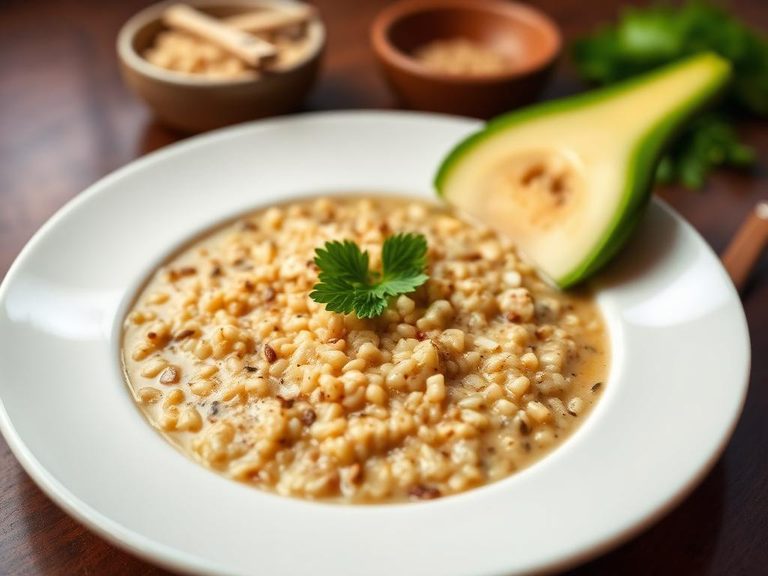





🌍 Where it's eaten
💡 Did you know?
Sorghum is the fifth most important cereal crop in the world and is uniquely drought-resistant, thriving in arid conditions where other grains fail.
Full nutrition (USDA data · scales with serving)
| Water | 11.9 g |
| Energy | 357 kcal |
| Energy | 1492 kj |
| Protein | 9.5 g |
| Total lipid (fat) | 1.2 g |
| Ash | 0.47 g |
| Carbohydrate, by difference | 76.8 g |
| Fiber, total dietary | 1.9 g |
| Sucrose | 0.00 g |
| Glucose | 0.34 g |
| Fructose | 0.00 g |
| Lactose | 0.00 g |
| Maltose | 0.00 g |
| Calcium, Ca | 6.0 mg |
| Iron, Fe | 0.97 mg |
| Magnesium, Mg | 31.0 mg |
| Phosphorus, P | 87.0 mg |
| Potassium, K | 145 mg |
| Sodium, Na | 1.0 mg |
| Zinc, Zn | 0.47 mg |
| Copper, Cu | 0.01 mg |
| Manganese, Mn | 0.43 mg |
| Vitamin C, total ascorbic acid | 0.60 mg |
| Thiamin | 0.09 mg |
| Riboflavin | 0.01 mg |
| Niacin | 1.3 mg |
| Pantothenic acid | 0.18 mg |
| Vitamin B-6 | 0.07 mg |
| Retinol | 0.00 ug |
Fat & fatty acid profile (per 100g)
| Fatty acids, total saturated | 0.30 g |
| SFA 15:0 | 0.00 g |
| SFA 16:0 | 0.27 g |
| SFA 17:0 | 0.00 g |
| SFA 18:0 | 0.03 g |
| SFA 20:0 | 0.00 g |
| SFA 24:0 | 0.00 g |
| Fatty acids, total monounsaturated | 0.39 g |
| MUFA 16:1 | 0.01 g |
| MUFA 18:1 | 0.38 g |
| MUFA 20:1 | 0.00 g |
| Fatty acids, total polyunsaturated | 0.47 g |
| PUFA 18:2 | 0.47 g |
| Fatty acids, total trans | 0.00 g |
| Fatty acids, total trans-monoenoic | 0.00 g |
| TFA 16:1 t | 0.00 g |
Amino acid profile (per 100g)
Estimated from Sorghum flour, whole-grain — USDA does not publish this profile for Sorghum flour.
| Tryptophan | 0.11 g |
| Threonine | 0.31 g |
| Isoleucine | 0.31 g |
| Leucine | 1.1 g |
| Lysine | 0.17 g |
| Methionine | 0.14 g |
| Cystine | 0.17 g |
| Phenylalanine | 0.44 g |
| Tyrosine | 0.23 g |
| Valine | 0.39 g |
| Arginine | 0.33 g |
| Histidine | 0.17 g |
| Alanine | 0.76 g |
| Aspartic acid | 0.56 g |
| Glutamic acid | 1.7 g |
| Glycine | 0.31 g |
| Proline | 0.65 g |
| Serine | 0.41 g |
FAQ
Can I substitute sorghum flour 1:1 for wheat flour?
Not directly. It lacks gluten, so for baking, you'll typically need a blend (with starches like tapioca) and a binder like xanthan gum to achieve proper structure and rise.
Is refined sorghum flour less nutritious than whole grain?
Yes. The refining process removes the bran and germ, reducing fiber, vitamins, and minerals. However, it retains more protein and antioxidants than many other refined grains.
How should I store it?
Keep it in an airtight container in a cool, dark pantry for up to 3 months, or in the freezer for up to a year to prevent rancidity of its natural oils.
Nutrient density (calculated · NRF9.3)
Nutrient Rich Foods index: beneficial nutrients (protein, fiber, vitamins, minerals) minus saturated fat, added sugar & sodium, per 100 kcal.
NRF9.3 index — Fulgoni, Keast & Drewnowski, 2009. Computed from USDA nutrients.
Weight-loss friendliness (composite index)
Energy density 3.57 kcal/g · 11% calories from protein · 1.9 g fiber · 0.0 g sugar per 100 g.
Composite of energy density (Rolls et al., 1999), protein & fiber satiety, minus sugar. A calculated heuristic — ranks satiety-per-calorie, not a clinical measure.
Dietary load (calculated from USDA values)
Potential renal acid load. Positive = acid-forming, negative = alkaline-forming.
Sodium-to-potassium ratio: 0.01 (lower is better — aim for ≤ 1)
Sodium:potassium per WHO potassium guidance. Computed from USDA nutrients.