

Indian bhakri
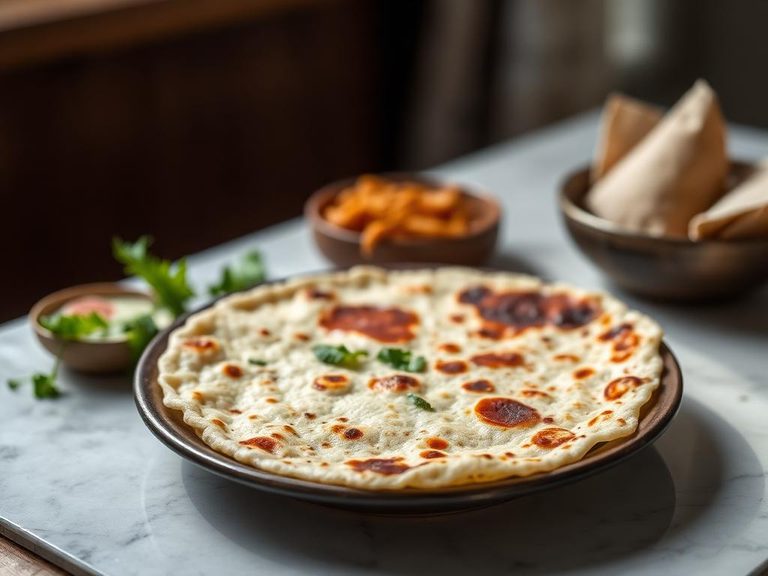
Bhakri is a traditional unleavened flatbread from Western India, particularly popular in Maharashtra, Gujarat, and Rajasthan. It is typically made from coarse grains like millet (jowar or bajra), sorghum, or rice flour, mixed with water and salt, then rolled and cooked on a hot griddle. The dish is a staple accompaniment to curries, dals, and vegetable dishes in regional Indian cuisine.
🍽️ Nutrition at a glance
Bhakri is primarily a high-carbohydrate food, providing sustained energy from whole grains, with a moderate amount of dietary fiber. A typical serving offers around 150-200 calories, along with essential minerals like iron and magnesium from the millet or sorghum base.
Nutrition breakdown
| Calories | 180 kcal |
| Protein | 4 g |
| Carbs | 35 g |
| Fat | 2 g |
| Fiber | 5 g |
| Sugar | 1 g |
| Sodium | 150 mg |
| Iron | 2.5 mg |
| Magnesium | 45 mg |
| Phosphorus | 80 mg |
| Potassium | 120 mg |
| Thiamine (B1) | 0.1 mg |
| Niacin (B3) | 1.2 mg |
| Zinc | 0.8 mg |
| Selenium | 3 µg |
Per 1 medium bhakri (approx. 80 g) · estimated, varies by recipe
💡 What's interesting
Culturally, bhakri is a symbol of rustic, home-style cooking in rural Maharashtra, often made with freshly ground flour for maximum flavor. Nutritionally, its use of ancient grains like bajra (pearl millet) makes it naturally gluten-free and rich in antioxidants, setting it apart from common wheat-based breads.
🍽️ Related dishes
AI estimate may be inaccurate · Terms