

Snow cone, no sugar added
Common food

Photo: Wikipedia
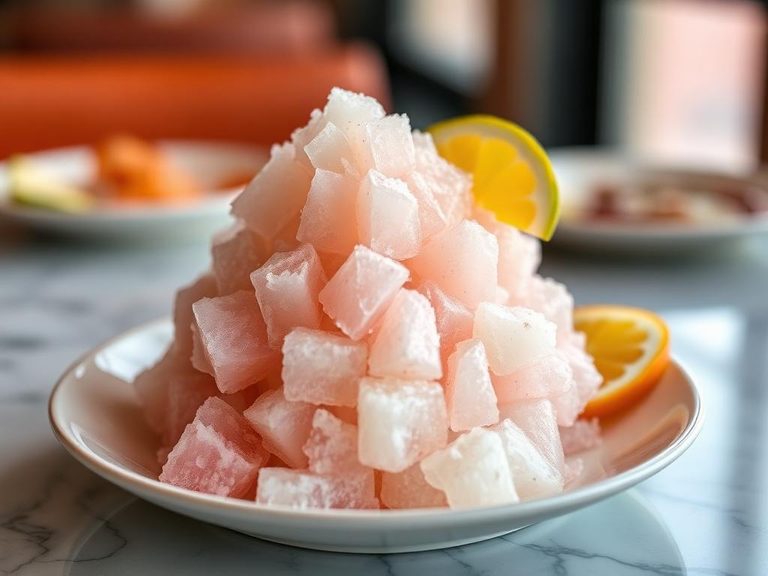
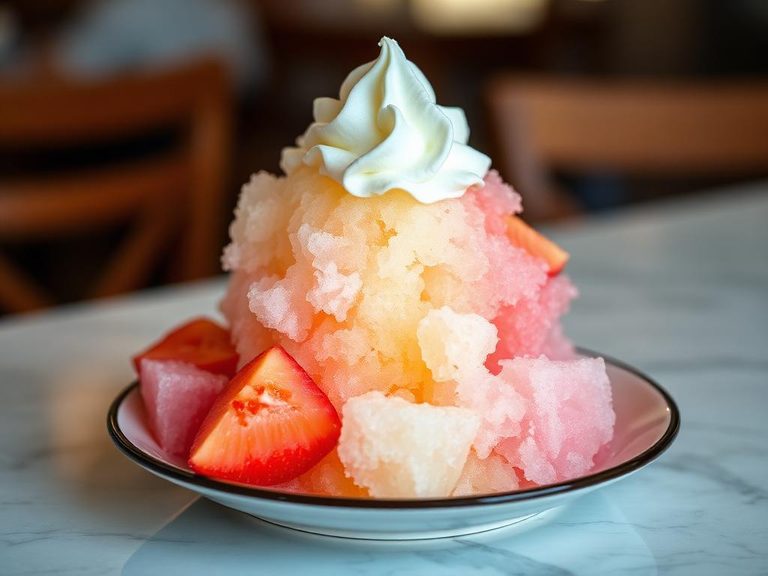
A snow cone is a refreshing treat made of finely shaved ice, saturated with a vibrant, fruit-flavored syrup. In this no-sugar-added version, the syrup is sweetened with non-nutritive sweeteners, resulting in a light, icy texture with a burst of artificial fruit flavor. Nutritionally, it's essentially a source of simple carbohydrates from the small amount of sugar in the syrup, with negligible protein, fat, or fiber.
Calorie split: 0% protein · 100% carbs · 0% fat
↓ Full nutrition💚 Why it's loved
People love snow cones for their intensely sweet, fruity flavors and the satisfying, slushy texture that instantly cools you down. They are a staple of summer street fairs, carnivals, and childhood memories, offering a customizable and playful way to enjoy a cold snack.
⚠️ Watch-outs & how to enjoy it better
The primary concern is the use of artificial sweeteners, which some people may prefer to avoid or which can cause digestive discomfort in sensitive individuals. The syrup can also be highly acidic, potentially contributing to dental erosion if consumed frequently. To counteract this, consider rinsing your mouth with water afterward and enjoying the treat in moderation as an occasional indulgence rather than a daily habit.
Key benefits
- Extremely low in calories (24 kcal per 100g)
- Fat-free and cholesterol-free
- Provides quick hydration in hot weather
- A fun, nostalgic treat for celebrations and fairs
- Can be made with various sugar-free flavorings
🍽️ Popular dishes
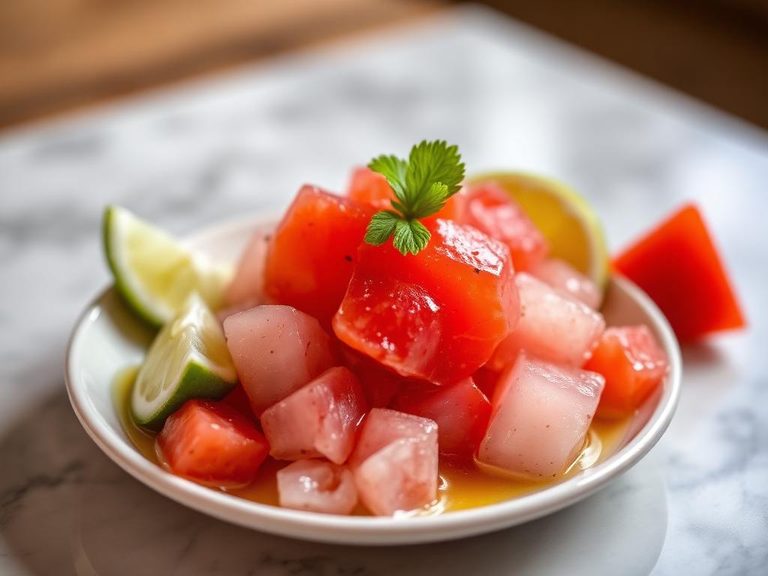
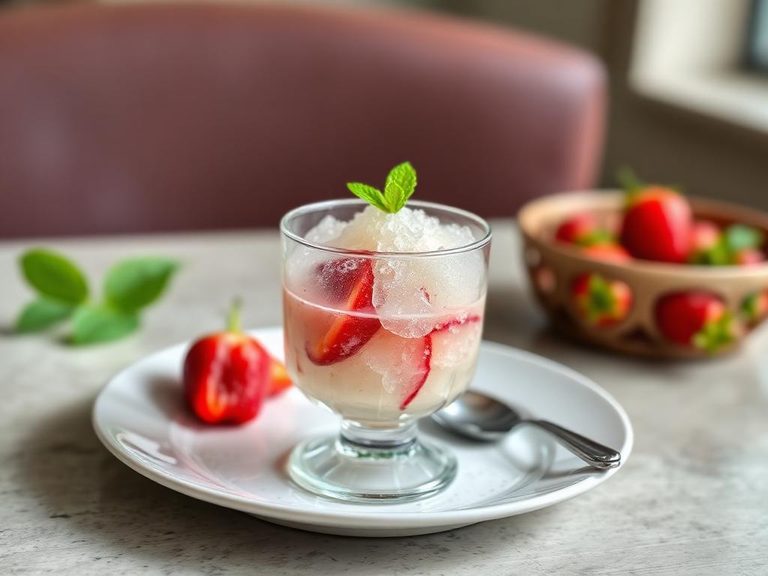
🌍 Where it's eaten
💡 Did you know?
The texture of the ice is crucial; a true 'snow cone' uses coarse, crushed ice, while a 'shave ice' or 'snow' uses a finer, powder-like shaved ice that absorbs the syrup more evenly.
Full nutrition (USDA data · scales with serving)
| Water | 94.0 g |
| Energy | 24.0 kcal |
| Protein | 0.00 g |
| Total lipid (fat) | 0.00 g |
| Carbohydrate, by difference | 5.9 g |
| Fiber, total dietary | 0.00 g |
| Total Sugars | 1.5 g |
| Calcium, Ca | 0.00 mg |
| Iron, Fe | 0.67 mg |
| Magnesium, Mg | 1.0 mg |
| Phosphorus, P | 0.00 mg |
| Potassium, K | 11.0 mg |
| Sodium, Na | 10.0 mg |
| Zinc, Zn | 0.47 mg |
| Copper, Cu | 0.00 mg |
| Selenium, Se | 0.00 ug |
| Vitamin C, total ascorbic acid | 10.4 mg |
| Thiamin | 0.00 mg |
| Riboflavin | 0.00 mg |
| Niacin | 0.00 mg |
| Vitamin B-6 | 0.00 mg |
| Folate, total | 0.00 ug |
| Folic acid | 0.00 ug |
| Folate, food | 0.00 ug |
| Folate, DFE | 0.00 ug |
| Choline, total | 0.00 mg |
| Vitamin B-12 | 0.00 ug |
| Vitamin B-12, added | 0.00 ug |
| Vitamin A, RAE | 0.00 ug |
| Retinol | 0.00 ug |
| Carotene, beta | 0.00 ug |
| Carotene, alpha | 0.00 ug |
| Cryptoxanthin, beta | 0.00 ug |
| Lycopene | 0.00 ug |
| Lutein + zeaxanthin | 0.00 ug |
| Vitamin E (alpha-tocopherol) | 0.00 mg |
| Vitamin E, added | 0.00 mg |
| Vitamin D (D2 + D3) | 0.00 ug |
| Vitamin K (phylloquinone) | 0.00 ug |
| Alcohol, ethyl | 0.00 g |
| Caffeine | 0.00 mg |
| Theobromine | 0.00 mg |
Fat & fatty acid profile (per 100g)
| Fatty acids, total saturated | 0.00 g |
| SFA 4:0 | 0.00 g |
| SFA 6:0 | 0.00 g |
| SFA 8:0 | 0.00 g |
| SFA 10:0 | 0.00 g |
| SFA 12:0 | 0.00 g |
| SFA 14:0 | 0.00 g |
| SFA 16:0 | 0.00 g |
| SFA 18:0 | 0.00 g |
| Fatty acids, total monounsaturated | 0.00 g |
| MUFA 16:1 | 0.00 g |
| MUFA 18:1 | 0.00 g |
| MUFA 20:1 | 0.00 g |
| MUFA 22:1 | 0.00 g |
| Fatty acids, total polyunsaturated | 0.00 g |
| PUFA 18:2 | 0.00 g |
| PUFA 18:3 | 0.00 g |
| PUFA 18:4 | 0.00 g |
| PUFA 20:4 | 0.00 g |
| PUFA 20:5 n-3 (EPA) | 0.00 g |
| PUFA 22:5 n-3 (DPA) | 0.00 g |
| PUFA 22:6 n-3 (DHA) | 0.00 g |
| Cholesterol | 0.00 mg |
FAQ
Is a no-sugar-added snow cone healthy?
It's a low-calorie, fat-free treat, but it offers little nutritional value beyond hydration and a quick energy boost from carbohydrates. It's best enjoyed as an occasional fun snack.
What's the difference between a snow cone and shave ice?
A snow cone typically uses crushed ice, which is crunchier, while shave ice uses a finer, fluffier ice that absorbs syrup more thoroughly, creating a smoother texture.
Can I make this at home?
Yes, you can use a home ice shaver or blender to crush ice, then mix sugar-free syrup concentrates with water according to the package instructions to pour over the ice.
Nutrient density (calculated · NRF9.3)
Nutrient Rich Foods index: beneficial nutrients (protein, fiber, vitamins, minerals) minus saturated fat, added sugar & sodium, per 100 kcal.
NRF9.3 index — Fulgoni, Keast & Drewnowski, 2009. Computed from USDA nutrients.
Weight-loss friendliness (composite index)
Energy density 0.24 kcal/g · 0% calories from protein · 0.0 g fiber · 1.5 g sugar per 100 g.
Composite of energy density (Rolls et al., 1999), protein & fiber satiety, minus sugar. A calculated heuristic — ranks satiety-per-calorie, not a clinical measure.
Dietary load (calculated from USDA values)
Potential renal acid load. Positive = acid-forming, negative = alkaline-forming.
Sodium-to-potassium ratio: 0.91 (lower is better — aim for ≤ 1)
Sodium:potassium per WHO potassium guidance. Computed from USDA nutrients.