

Italian granita
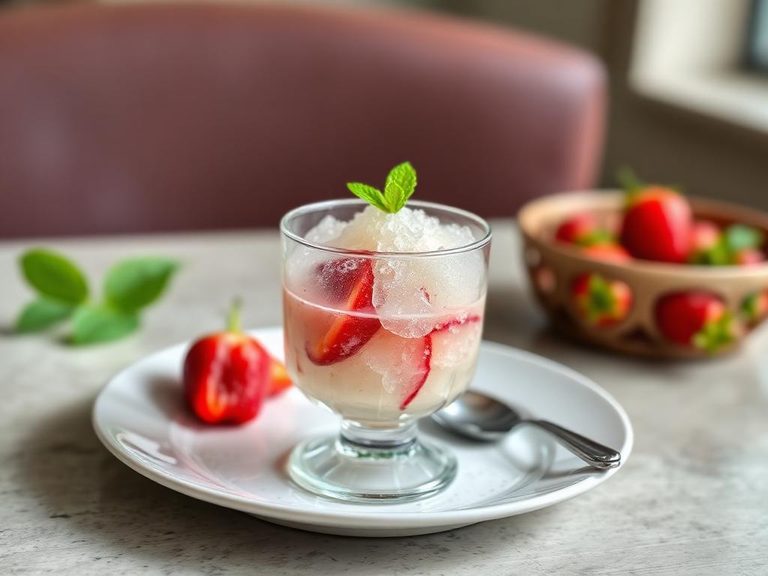
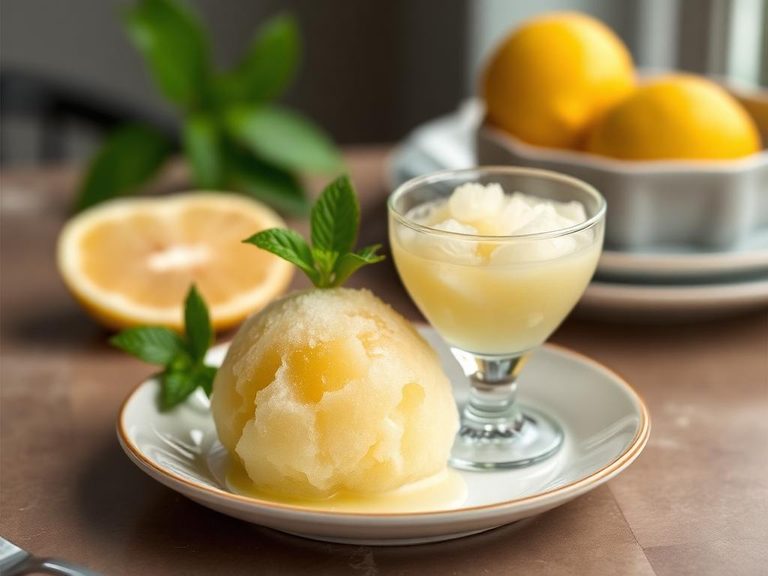
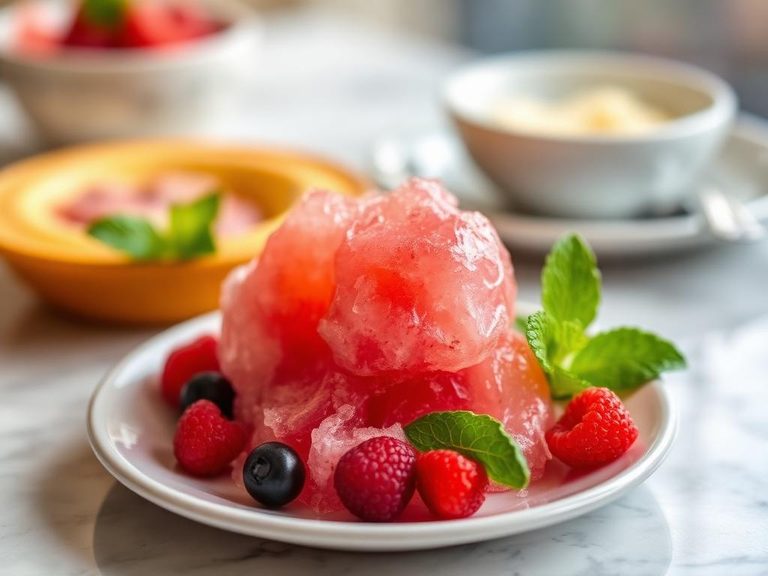
Italian granita is a semi-frozen dessert made from sugar, water, and various flavorings, traditionally originating from Sicily. It has a crystalline, flaky texture that is coarser than sorbet or Italian ice, and is most famously flavored with lemon, coffee, or almonds.
🍽️ Nutrition at a glance
Granita is primarily a source of simple carbohydrates from sugar, with negligible fat and protein. A typical serving provides a quick energy boost and may offer small amounts of vitamins or minerals depending on the fruit used, but is generally low in other essential nutrients.
Nutrition breakdown
| Calories | 200 kcal |
| Protein | 0.5 g |
| Carbs | 52 g |
| Fat | 0 g |
| Fiber | 0.5 g |
| Sugar | 50 g |
| Sodium | 10 mg |
| Vitamin C | 15 mg |
| Potassium | 30 mg |
| Calcium | 10 mg |
| Magnesium | 5 mg |
| Iron | 0.2 mg |
| Phosphorus | 5 mg |
Per 1 cup (240 g) · estimated, varies by recipe
💡 What's interesting
Culturally, granita is a staple of Sicilian breakfast, often enjoyed with a brioche bun. Its unique, granular texture is achieved through a specific freezing and scraping process, setting it apart from smoother frozen desserts.
🍽️ Related dishes
AI estimate may be inaccurate · Terms