

Shellfish mixture and vegetables excluding carrots, broccoli, and dark-green leafy; no potatoes, soy-based sauce
Common food
This is a vibrant, protein-rich stir-fry or sauté featuring tender pieces of mixed shellfish (like shrimp, squid, and mussels) with crisp, colorful vegetables such as bell peppers, zucchini, and onions. The texture is a delightful contrast of succulent seafood and crunchy veggies, all coated in a light, savory sauce. It's a lean, low-calorie dish that packs a significant protein punch while keeping carbohydrates and fats in check.
Calorie split: 32% protein · 19% carbs · 49% fat
↓ Full nutrition💚 Why it's loved
People love it for its fresh, oceanic flavors and the satisfying, varied textures in every bite. It's a versatile dish that can be adapted to many cuisines, from a simple garlic-herb sauté to a spicy tomato-based stew, making it a quick and impressive weeknight meal.
⚠️ Watch-outs & how to enjoy it better
Shellfish is a common and potent allergen, so it must be avoided by those with allergies. The dish can be high in sodium depending on the sauce used, which is a concern for those monitoring blood pressure. To counteract this, use low-sodium broth or tamari, and pair the dish with a potassium-rich side like a plain sweet potato to help balance sodium levels.
Key benefits
- Excellent source of high-quality, lean protein for muscle maintenance.
- Low in calories and carbohydrates, suitable for weight management diets.
- Rich in essential minerals like zinc, selenium, and iodine from the shellfish.
- Provides a good variety of vitamins from the mixed vegetables.
- High in satiety due to the protein and fiber content.
🍽️ Popular dishes
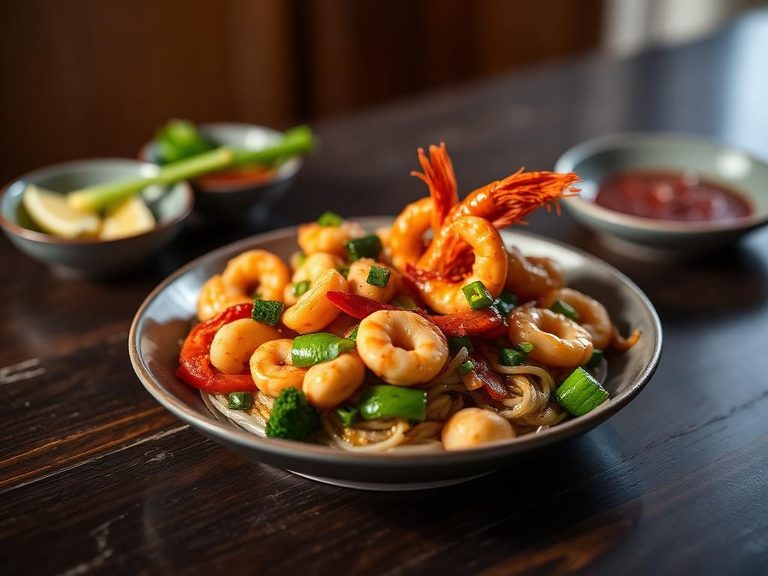
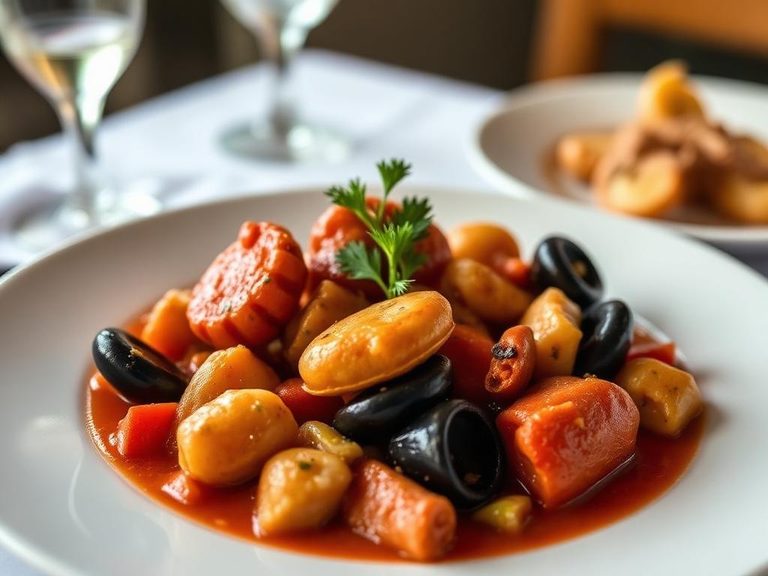
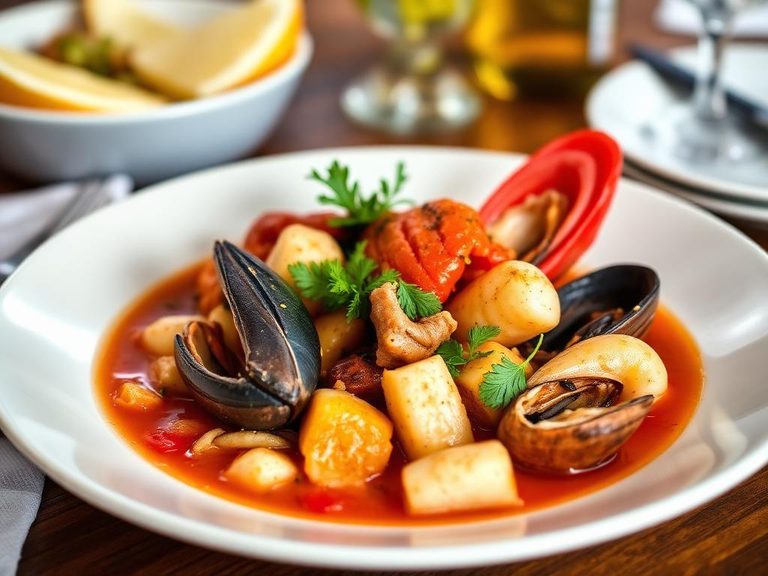
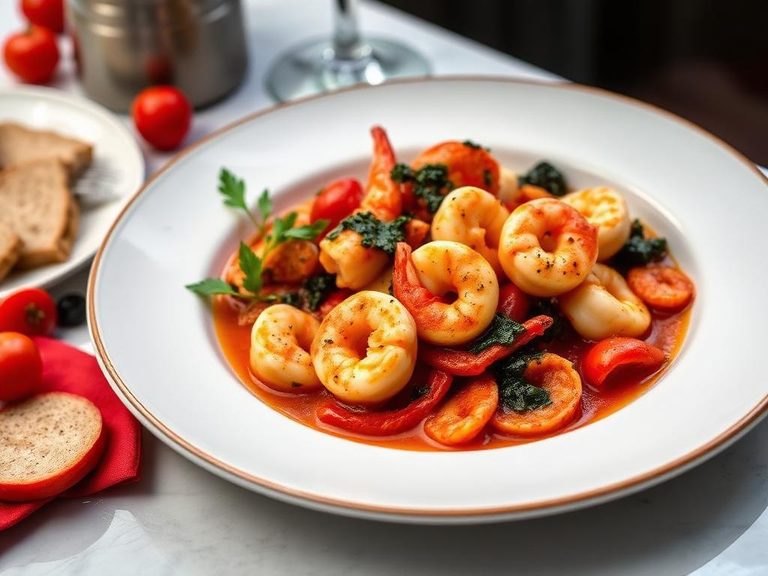
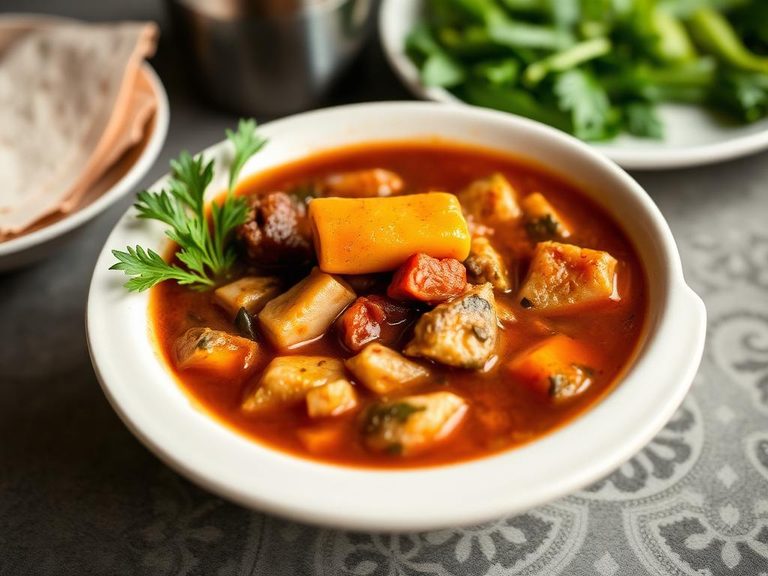
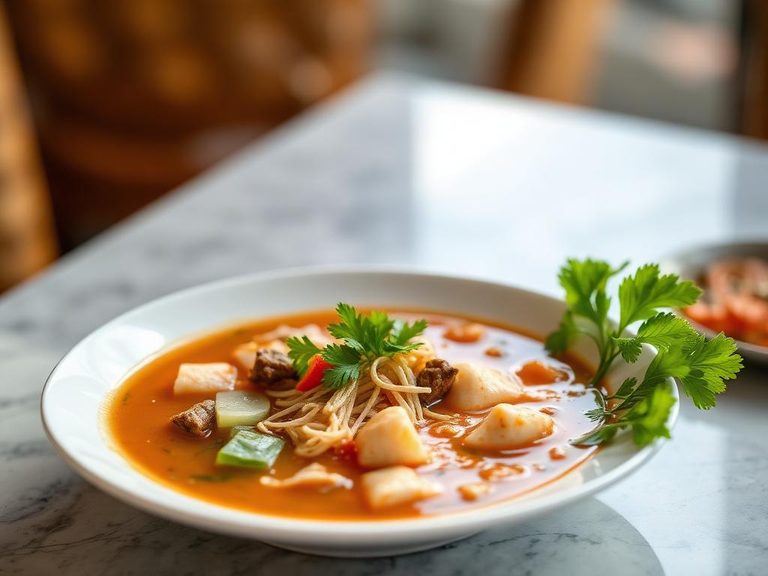
🌍 Where it's eaten
💡 Did you know?
Squid, a common component in shellfish mixes, has a unique protein structure that makes it tender when cooked quickly but turns rubbery if overcooked for even 30 seconds too long.
Full nutrition (USDA data · scales with serving)
| Water | 76.2 g |
| Energy | 122 kcal |
| Protein | 9.7 g |
| Total lipid (fat) | 6.6 g |
| Carbohydrate, by difference | 5.6 g |
| Fiber, total dietary | 1.0 g |
| Total Sugars | 1.6 g |
| Calcium, Ca | 44.0 mg |
| Iron, Fe | 0.86 mg |
| Magnesium, Mg | 23.0 mg |
| Phosphorus, P | 146 mg |
| Potassium, K | 292 mg |
| Sodium, Na | 242 mg |
| Zinc, Zn | 0.62 mg |
| Copper, Cu | 0.13 mg |
| Selenium, Se | 19.4 ug |
| Vitamin C, total ascorbic acid | 13.2 mg |
| Thiamin | 0.04 mg |
| Riboflavin | 0.08 mg |
| Niacin | 1.2 mg |
| Vitamin B-6 | 0.14 mg |
| Folate, total | 18.0 ug |
| Folic acid | 0.00 ug |
| Folate, food | 18.0 ug |
| Folate, DFE | 18.0 ug |
| Choline, total | 49.5 mg |
| Vitamin B-12 | 3.7 ug |
| Vitamin B-12, added | 0.00 ug |
| Vitamin A, RAE | 51.0 ug |
| Retinol | 42.0 ug |
| Carotene, beta | 96.0 ug |
| Carotene, alpha | 10.0 ug |
| Cryptoxanthin, beta | 1.0 ug |
| Lycopene | 0.00 ug |
| Lutein + zeaxanthin | 167 ug |
| Vitamin E (alpha-tocopherol) | 1.9 mg |
| Vitamin E, added | 0.00 mg |
| Vitamin D (D2 + D3) | 0.00 ug |
| Vitamin K (phylloquinone) | 21.6 ug |
| Alcohol, ethyl | 0.00 g |
| Caffeine | 0.00 mg |
| Theobromine | 0.00 mg |
Fat & fatty acid profile (per 100g)
| Fatty acids, total saturated | 0.97 g |
| SFA 4:0 | 0.00 g |
| SFA 6:0 | 0.00 g |
| SFA 8:0 | 0.00 g |
| SFA 10:0 | 0.00 g |
| SFA 12:0 | 0.00 g |
| SFA 14:0 | 0.01 g |
| SFA 16:0 | 0.67 g |
| SFA 18:0 | 0.22 g |
| Fatty acids, total monounsaturated | 2.6 g |
| MUFA 16:1 | 0.04 g |
| MUFA 18:1 | 2.5 g |
| MUFA 20:1 | 0.04 g |
| MUFA 22:1 | 0.00 g |
| Fatty acids, total polyunsaturated | 2.5 g |
| PUFA 18:2 | 2.1 g |
| PUFA 18:3 | 0.27 g |
| PUFA 18:4 | 0.00 g |
| PUFA 20:4 | 0.02 g |
| PUFA 20:5 n-3 (EPA) | 0.04 g |
| PUFA 22:5 n-3 (DPA) | 0.01 g |
| PUFA 22:6 n-3 (DHA) | 0.05 g |
| Cholesterol | 46.0 mg |
FAQ
How do I prevent the vegetables from getting soggy?
Cook the vegetables separately in a very hot pan until just crisp-tender, then remove them. Cook the shellfish quickly, and combine everything at the very end to toss with sauce. This preserves their texture.
Can I use frozen shellfish mix?
Yes, absolutely. Thaw it completely under cold running water and pat it very dry with paper towels before cooking. Excess water will steam the seafood instead of searing it, leading to a rubbery texture.
What's a good substitute if I don't have shellfish?
For a similar texture and protein content, you can use firm tofu cubes (pressed and pan-fried) or diced chicken breast. For a vegetarian version, use a mix of king oyster mushrooms and hearts of palm.
Nutrient density (calculated · NRF9.3)
Nutrient Rich Foods index: beneficial nutrients (protein, fiber, vitamins, minerals) minus saturated fat, added sugar & sodium, per 100 kcal.
NRF9.3 index — Fulgoni, Keast & Drewnowski, 2009. Computed from USDA nutrients.
Weight-loss friendliness (composite index)
Energy density 1.22 kcal/g · 32% calories from protein · 1.0 g fiber · 1.6 g sugar per 100 g.
Composite of energy density (Rolls et al., 1999), protein & fiber satiety, minus sugar. A calculated heuristic — ranks satiety-per-calorie, not a clinical measure.
Dietary load (calculated from USDA values)
Potential renal acid load. Positive = acid-forming, negative = alkaline-forming.
Sodium-to-potassium ratio: 0.83 (lower is better — aim for ≤ 1)
Sodium:potassium per WHO potassium guidance. Computed from USDA nutrients.