

Shellfish mixture and vegetables including carrots, broccoli, and/or dark-green leafy; no potatoes, soy-based sauce
Common food

Photo: Wikipedia
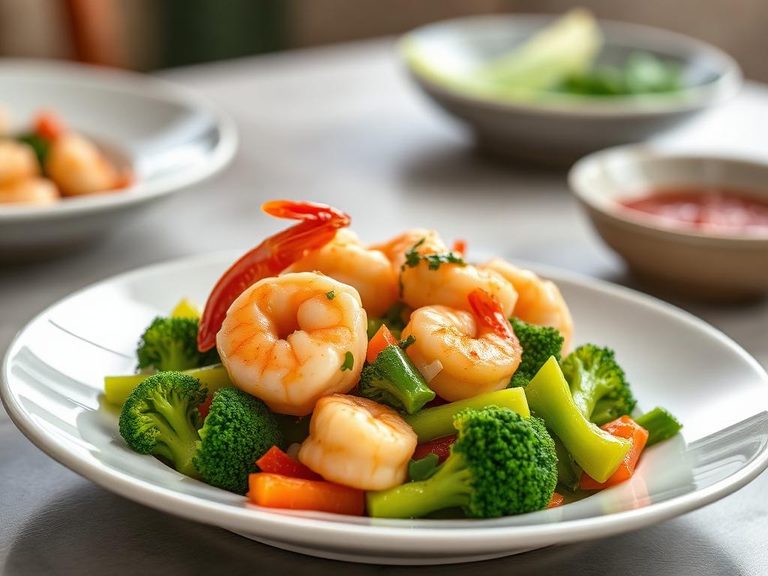
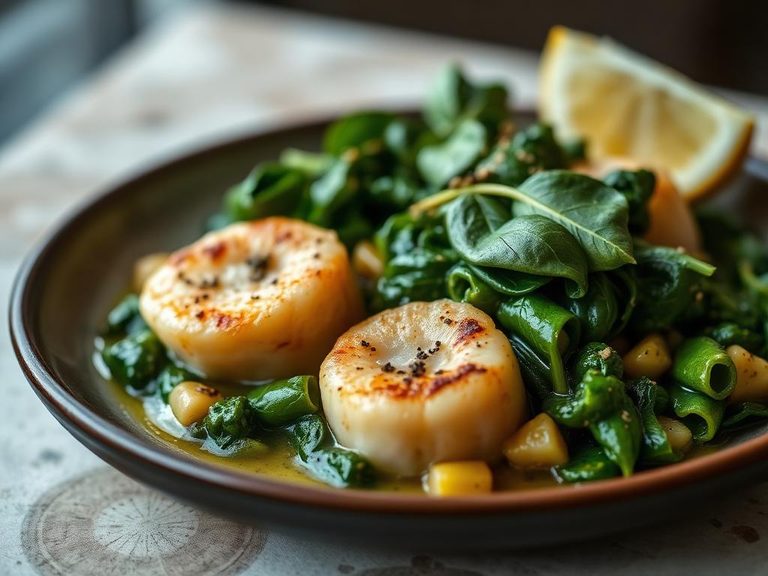
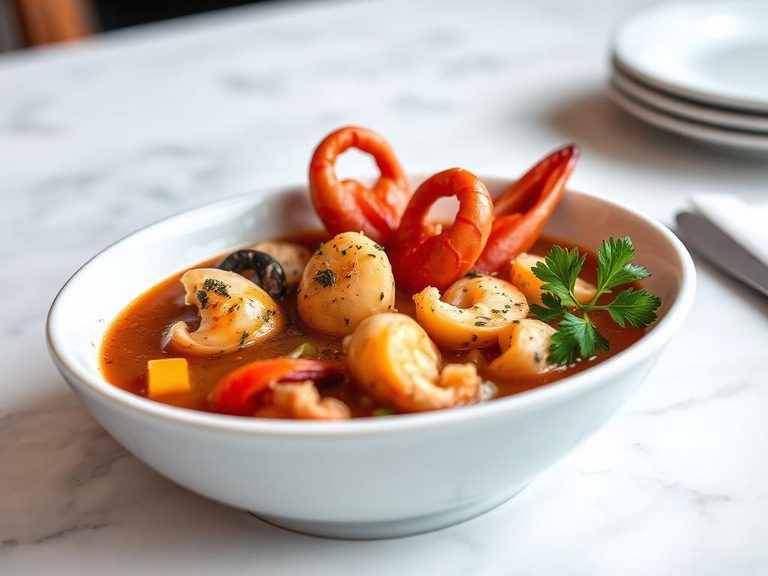
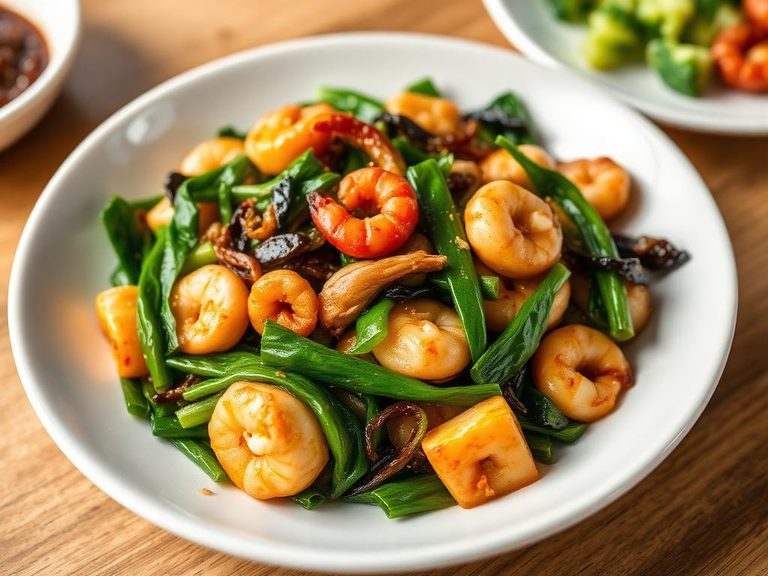
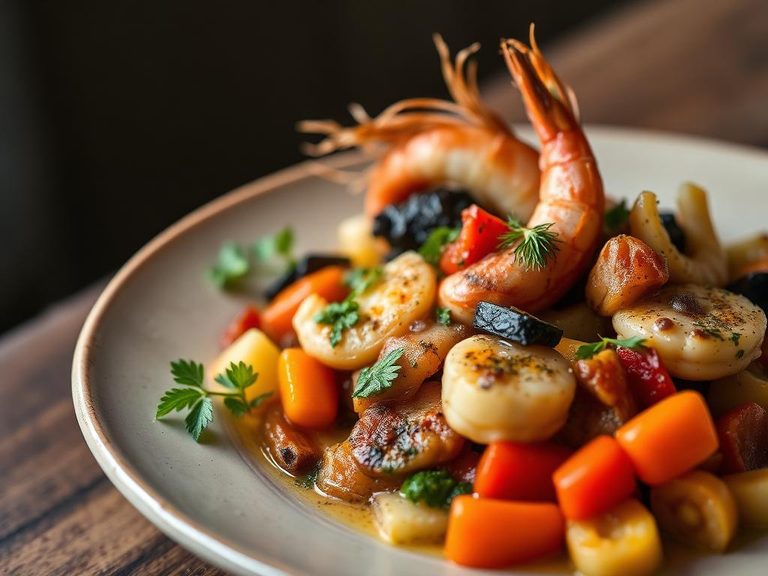
This is a vibrant, protein-rich medley of tender shellfish (like shrimp, scallops, or chopped squid) tossed with crisp-tender carrots, broccoli florets, and dark greens such as spinach or bok choy. The dish offers a satisfying contrast of textures—briny, succulent seafood against the fresh crunch and earthy sweetness of vegetables—with a light, savory flavor profile. Notably, it delivers a high protein-to-calorie ratio, making it a nutrient-dense choice for muscle maintenance and satiety.
Calorie split: 32% protein · 20% carbs · 48% fat
↓ Full nutrition💚 Why it's loved
People adore this dish for its clean, ocean-forward flavor that's enhanced, not masked, by the vegetables' natural sweetness and crunch. It's incredibly versatile—equally at home in a quick stir-fry, a light sauté, or a chilled salad, making it a staple in coastal cuisines worldwide.
⚠️ Watch-outs & how to enjoy it better
Shellfish is a common allergen and must be avoided by those with related sensitivities. The dish can be high in sodium depending on seasoning, and some dark greens contain oxalates which may affect mineral absorption. To counteract, choose low-sodium cooking methods (like steaming or using herbs), and pair with a calcium-rich food or vary your greens to manage oxalate intake.
Key benefits
- High-quality protein for muscle repair and satiety
- Rich in vitamins A, C, and K from colorful vegetables
- Good source of dietary fiber for digestive health
- Low in sugar and naturally low-glycemic
- Contains omega-3 fatty acids from shellfish
🍽️ Popular dishes
🌍 Where it's eaten
💡 Did you know?
The beta-carotene in carrots becomes more bioavailable to your body when cooked and paired with a small amount of fat, like the natural fats in shellfish.
Full nutrition (USDA data · scales with serving)
| Water | 76.5 g |
| Energy | 120 kcal |
| Protein | 9.4 g |
| Total lipid (fat) | 6.4 g |
| Carbohydrate, by difference | 5.9 g |
| Fiber, total dietary | 1.2 g |
| Total Sugars | 1.5 g |
| Calcium, Ca | 49.0 mg |
| Iron, Fe | 0.86 mg |
| Magnesium, Mg | 23.0 mg |
| Phosphorus, P | 144 mg |
| Potassium, K | 295 mg |
| Sodium, Na | 247 mg |
| Zinc, Zn | 0.62 mg |
| Copper, Cu | 0.10 mg |
| Selenium, Se | 17.7 ug |
| Vitamin C, total ascorbic acid | 14.7 mg |
| Thiamin | 0.05 mg |
| Riboflavin | 0.06 mg |
| Niacin | 1.0 mg |
| Vitamin B-6 | 0.14 mg |
| Folate, total | 21.0 ug |
| Folic acid | 0.00 ug |
| Folate, food | 21.0 ug |
| Folate, DFE | 21.0 ug |
| Choline, total | 48.6 mg |
| Vitamin B-12 | 3.5 ug |
| Vitamin B-12, added | 0.00 ug |
| Vitamin A, RAE | 176 ug |
| Retinol | 41.0 ug |
| Carotene, beta | 1328 ug |
| Carotene, alpha | 584 ug |
| Cryptoxanthin, beta | 0.00 ug |
| Lycopene | 0.00 ug |
| Lutein + zeaxanthin | 270 ug |
| Vitamin E (alpha-tocopherol) | 1.9 mg |
| Vitamin E, added | 0.00 mg |
| Vitamin D (D2 + D3) | 0.00 ug |
| Vitamin K (phylloquinone) | 34.3 ug |
| Alcohol, ethyl | 0.00 g |
| Caffeine | 0.00 mg |
| Theobromine | 0.00 mg |
Fat & fatty acid profile (per 100g)
| Fatty acids, total saturated | 0.93 g |
| SFA 4:0 | 0.00 g |
| SFA 6:0 | 0.00 g |
| SFA 8:0 | 0.00 g |
| SFA 10:0 | 0.00 g |
| SFA 12:0 | 0.00 g |
| SFA 14:0 | 0.01 g |
| SFA 16:0 | 0.65 g |
| SFA 18:0 | 0.21 g |
| Fatty acids, total monounsaturated | 2.5 g |
| MUFA 16:1 | 0.04 g |
| MUFA 18:1 | 2.4 g |
| MUFA 20:1 | 0.04 g |
| MUFA 22:1 | 0.00 g |
| Fatty acids, total polyunsaturated | 2.4 g |
| PUFA 18:2 | 2.0 g |
| PUFA 18:3 | 0.26 g |
| PUFA 18:4 | 0.00 g |
| PUFA 20:4 | 0.02 g |
| PUFA 20:5 n-3 (EPA) | 0.04 g |
| PUFA 22:5 n-3 (DPA) | 0.01 g |
| PUFA 22:6 n-3 (DHA) | 0.05 g |
| Cholesterol | 44.0 mg |
FAQ
Can I use frozen vegetables for this dish?
Yes, frozen carrots, broccoli, and spinach are excellent choices. They're flash-frozen at peak ripeness, retaining nutrients well, and their slightly softer texture after thawing works perfectly in stir-fries and sautés.
How do I prevent the shellfish from becoming rubbery?
Cook shellfish quickly over high heat just until they turn opaque and curl slightly. Overcooking is the main cause of toughness. For shrimp, this often takes only 2-3 minutes per side.
Is this dish suitable for a low-carb diet?
Absolutely. With only about 5.9g of carbs per 100g and no added sugars or starches, it's very low in carbohydrates, making it ideal for keto or low-carb meal plans.
Nutrient density (calculated · NRF9.3)
Nutrient Rich Foods index: beneficial nutrients (protein, fiber, vitamins, minerals) minus saturated fat, added sugar & sodium, per 100 kcal.
NRF9.3 index — Fulgoni, Keast & Drewnowski, 2009. Computed from USDA nutrients.
Weight-loss friendliness (composite index)
Energy density 1.20 kcal/g · 31% calories from protein · 1.2 g fiber · 1.5 g sugar per 100 g.
Composite of energy density (Rolls et al., 1999), protein & fiber satiety, minus sugar. A calculated heuristic — ranks satiety-per-calorie, not a clinical measure.
Dietary load (calculated from USDA values)
Potential renal acid load. Positive = acid-forming, negative = alkaline-forming.
Sodium-to-potassium ratio: 0.84 (lower is better — aim for ≤ 1)
Sodium:potassium per WHO potassium guidance. Computed from USDA nutrients.