

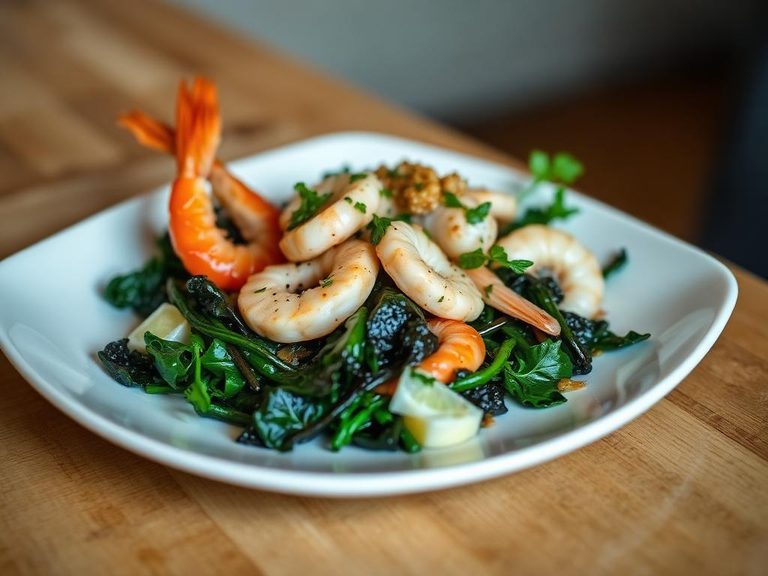
Shellfish mixture and vegetables including carrots, broccoli, and/or dark-green leafy; no potatoes, mushroom sauce
Common food

Photo: Wikipedia
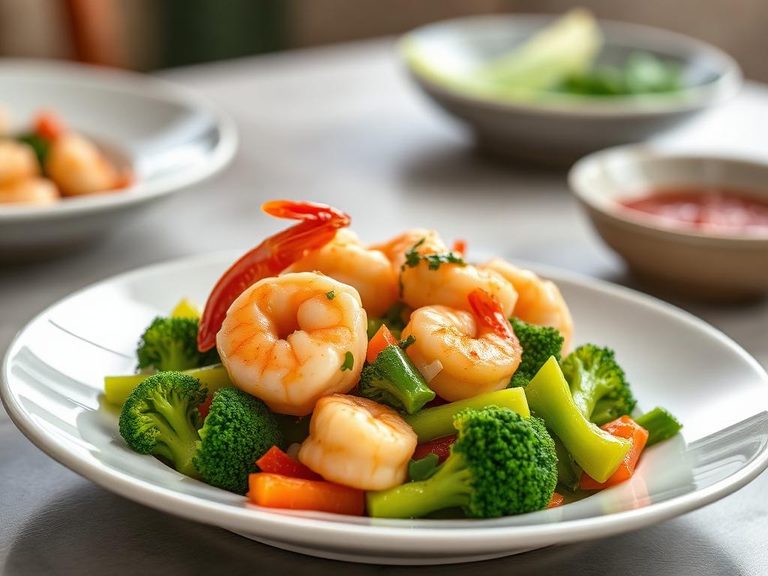
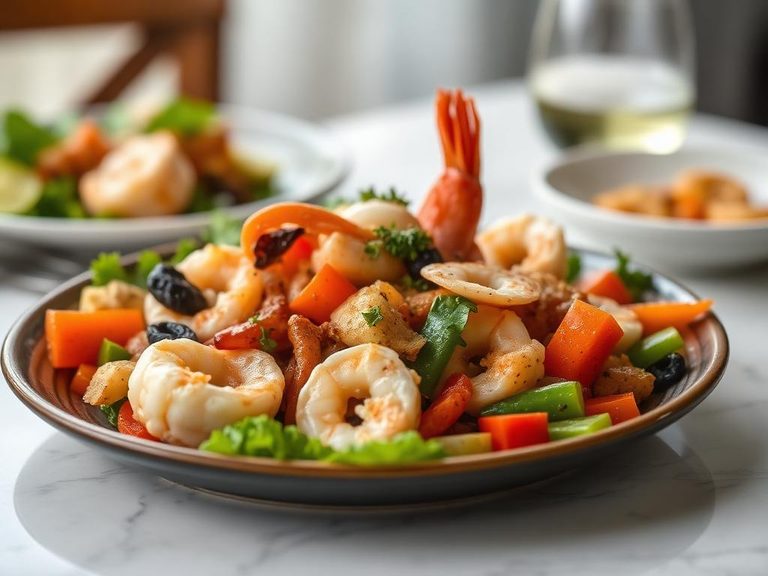
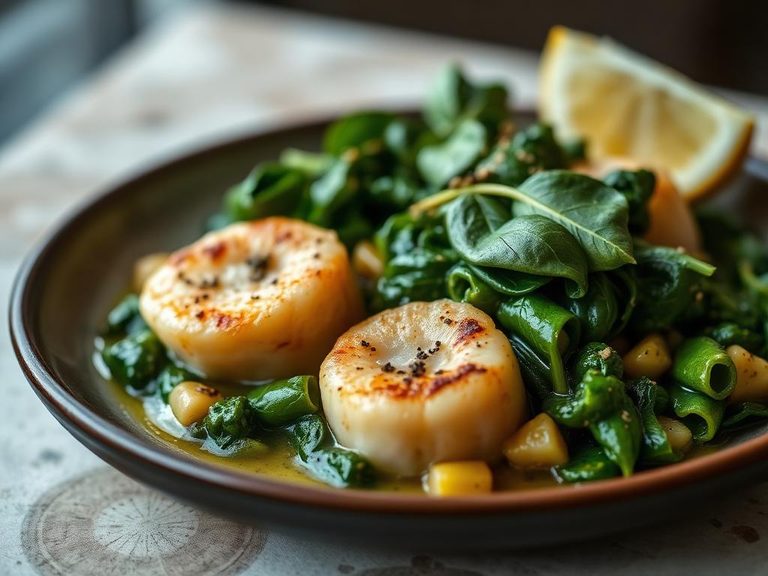
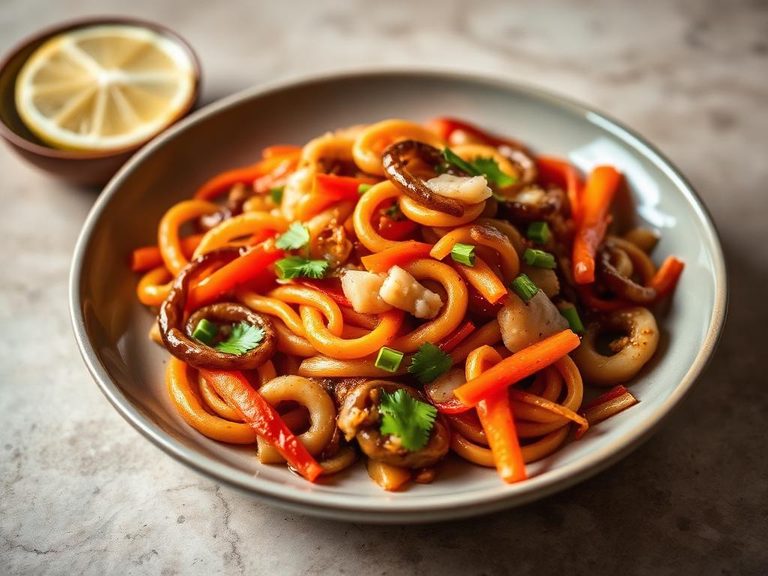
This is a vibrant, stir-fried medley of tender shellfish—like shrimp, scallops, or squid—tossed with crisp carrots, broccoli, and dark leafy greens in a light, savory sauce. The texture is a delightful contrast of succulent seafood and snappy vegetables, with a clean, oceanic flavor that's bright and satisfying. It's a nutrient-dense, low-calorie dish that packs a protein punch while keeping carbs and sugars minimal.
Calorie split: 23% protein · 21% carbs · 56% fat
↓ Full nutrition💚 Why it's loved
People love this dish for its fresh, oceanic flavors and the satisfying crunch of vegetables, which make it feel both indulgent and wholesome. It's also incredibly versatile, easily adapted to various cuisines and dietary preferences, and often evokes the comforting, communal experience of a shared stir-fry or seafood stew.
⚠️ Watch-outs & how to enjoy it better
The dish can be high in sodium from soy sauce or shellfish, which may be a concern for those with hypertension. Shellfish is a common allergen, and the high oxalate content in dark greens like spinach can affect mineral absorption in some individuals. To counteract, use low-sodium soy sauce or tamari, limit portions to 100-150g, and pair with calcium-rich foods like yogurt or cheese to mitigate oxalate effects.
Key benefits
- High in lean protein from shellfish for muscle maintenance and satiety.
- Rich in fiber and micronutrients from dark greens and broccoli.
- Low in calories and sugar, making it suitable for weight management.
- Provides healthy fats and omega-3s from shellfish and vegetable oils.
- Contains antioxidants like beta-carotene from carrots and vitamin C from broccoli.
🍽️ Popular dishes
🌍 Where it's eaten
💡 Did you know?
Shellfish like shrimp and scallops are among the most efficient converters of plant-based energy into protein, making them a sustainable choice for protein-rich diets.
Full nutrition (USDA data · scales with serving)
| Water | 79.3 g |
| Energy | 111 kcal |
| Protein | 6.3 g |
| Total lipid (fat) | 6.9 g |
| Carbohydrate, by difference | 5.9 g |
| Fiber, total dietary | 1.1 g |
| Total Sugars | 1.6 g |
| Calcium, Ca | 47.0 mg |
| Iron, Fe | 0.54 mg |
| Magnesium, Mg | 13.0 mg |
| Phosphorus, P | 98.0 mg |
| Potassium, K | 173 mg |
| Sodium, Na | 317 mg |
| Zinc, Zn | 0.44 mg |
| Copper, Cu | 0.06 mg |
| Selenium, Se | 11.7 ug |
| Vitamin C, total ascorbic acid | 5.7 mg |
| Thiamin | 0.03 mg |
| Riboflavin | 0.05 mg |
| Niacin | 0.60 mg |
| Vitamin B-6 | 0.07 mg |
| Folate, total | 13.0 ug |
| Folic acid | 0.00 ug |
| Folate, food | 13.0 ug |
| Folate, DFE | 13.0 ug |
| Choline, total | 34.3 mg |
| Vitamin B-12 | 2.1 ug |
| Vitamin B-12, added | 0.00 ug |
| Vitamin A, RAE | 154 ug |
| Retinol | 33.0 ug |
| Carotene, beta | 1188 ug |
| Carotene, alpha | 504 ug |
| Cryptoxanthin, beta | 0.00 ug |
| Lycopene | 0.00 ug |
| Lutein + zeaxanthin | 241 ug |
| Vitamin E (alpha-tocopherol) | 1.6 mg |
| Vitamin E, added | 0.00 mg |
| Vitamin D (D2 + D3) | 0.20 ug |
| Vitamin K (phylloquinone) | 25.8 ug |
| Alcohol, ethyl | 0.00 g |
| Caffeine | 0.00 mg |
| Theobromine | 0.00 mg |
Fat & fatty acid profile (per 100g)
| Fatty acids, total saturated | 1.2 g |
| SFA 4:0 | 0.01 g |
| SFA 6:0 | 0.01 g |
| SFA 8:0 | 0.00 g |
| SFA 10:0 | 0.01 g |
| SFA 12:0 | 0.01 g |
| SFA 14:0 | 0.05 g |
| SFA 16:0 | 0.78 g |
| SFA 18:0 | 0.27 g |
| Fatty acids, total monounsaturated | 2.3 g |
| MUFA 16:1 | 0.03 g |
| MUFA 18:1 | 2.2 g |
| MUFA 20:1 | 0.04 g |
| MUFA 22:1 | 0.00 g |
| Fatty acids, total polyunsaturated | 2.9 g |
| PUFA 18:2 | 2.5 g |
| PUFA 18:3 | 0.33 g |
| PUFA 18:4 | 0.00 g |
| PUFA 20:4 | 0.01 g |
| PUFA 20:5 n-3 (EPA) | 0.02 g |
| PUFA 22:5 n-3 (DPA) | 0.00 g |
| PUFA 22:6 n-3 (DHA) | 0.03 g |
| Cholesterol | 28.0 mg |
FAQ
Is this dish suitable for a low-carb diet?
Yes, with only 5.92g of carbs per 100g, it's a great option for low-carb diets, especially when paired with non-starchy vegetables.
Can I make this dish without shellfish?
Absolutely, you can substitute with tofu, chicken, or other proteins to make it shellfish-free while maintaining the vegetable medley.
How can I reduce the sodium content?
Use low-sodium soy sauce or tamari, and avoid adding extra salt. You can also enhance flavor with herbs, garlic, or ginger.
Nutrient density (calculated · NRF9.3)
Nutrient Rich Foods index: beneficial nutrients (protein, fiber, vitamins, minerals) minus saturated fat, added sugar & sodium, per 100 kcal.
NRF9.3 index — Fulgoni, Keast & Drewnowski, 2009. Computed from USDA nutrients.
Weight-loss friendliness (composite index)
Energy density 1.11 kcal/g · 23% calories from protein · 1.1 g fiber · 1.6 g sugar per 100 g.
Composite of energy density (Rolls et al., 1999), protein & fiber satiety, minus sugar. A calculated heuristic — ranks satiety-per-calorie, not a clinical measure.
Dietary load (calculated from USDA values)
Potential renal acid load. Positive = acid-forming, negative = alkaline-forming.
Sodium-to-potassium ratio: 1.83 (lower is better — aim for ≤ 1)
Sodium:potassium per WHO potassium guidance. Computed from USDA nutrients.