

Shellfish mixture and vegetables excluding carrots, broccoli, and dark-green leafy; no potatoes, mushroom sauce
Common food

Photo: Wikipedia
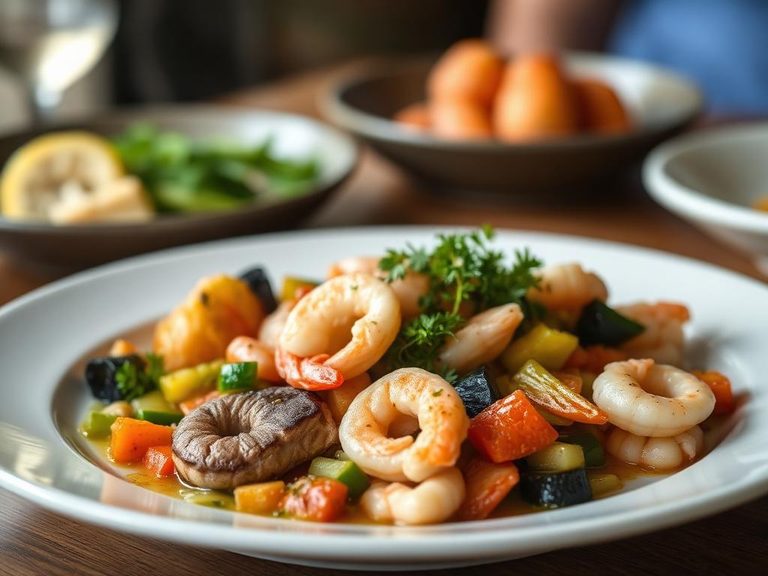
This is a light, savory stir-fry or salad base combining tender shellfish—like shrimp, scallops, or squid—with crisp, colorful vegetables such as bell peppers, zucchini, and onions. The texture is a delightful contrast between the soft, briny seafood and the fresh, crunchy veggies, all lightly coated in a subtle, savory sauce. Nutritionally, it's a lean, low-calorie dish that delivers a solid protein punch with minimal carbs, making it a smart choice for a light meal.
Calorie split: 21% protein · 26% carbs · 53% fat
↓ Full nutrition💚 Why it's loved
People love it for its clean, ocean-fresh flavor and the satisfying textural contrast between tender seafood and crisp vegetables. It's incredibly versatile, easily adapting to various cuisines from a simple garlic-butter sauté to a zesty Asian-inspired stir-fry.
⚠️ Watch-outs & how to enjoy it better
Shellfish is a common and potent allergen, requiring strict avoidance for those with sensitivities. The dish can also be high in sodium if prepared with soy sauce or pre-made broths. To counteract this, use low-sodium tamari, rinse canned ingredients, and balance the meal with a potassium-rich side like unsalted steamed sweet potato.
Key benefits
- High-quality protein from shellfish supports muscle maintenance.
- Low in calories and carbohydrates, suitable for calorie-conscious diets.
- Provides essential minerals like zinc and selenium from seafood.
- Contains fiber from vegetables for digestive health.
- Naturally low in saturated fat.
🍽️ Popular dishes
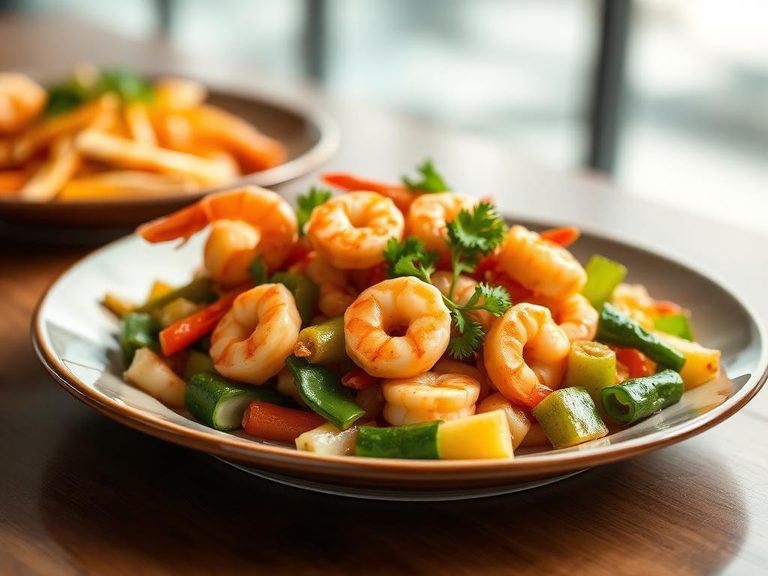
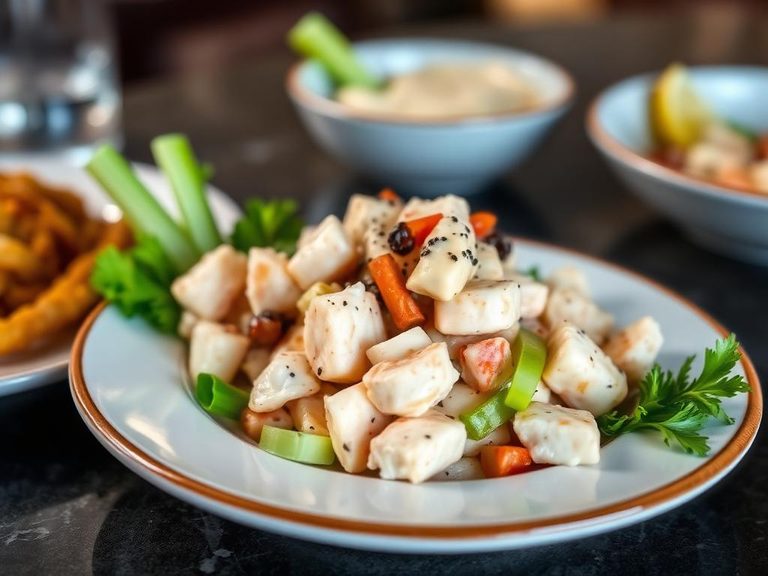
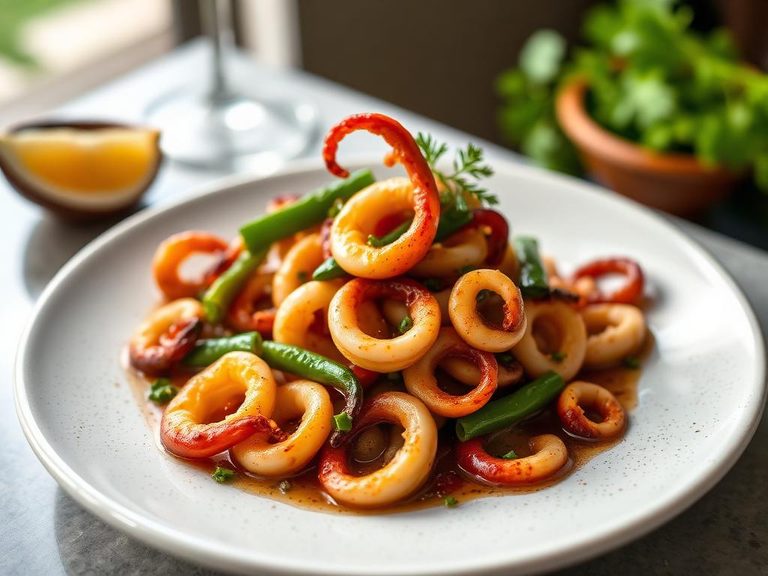
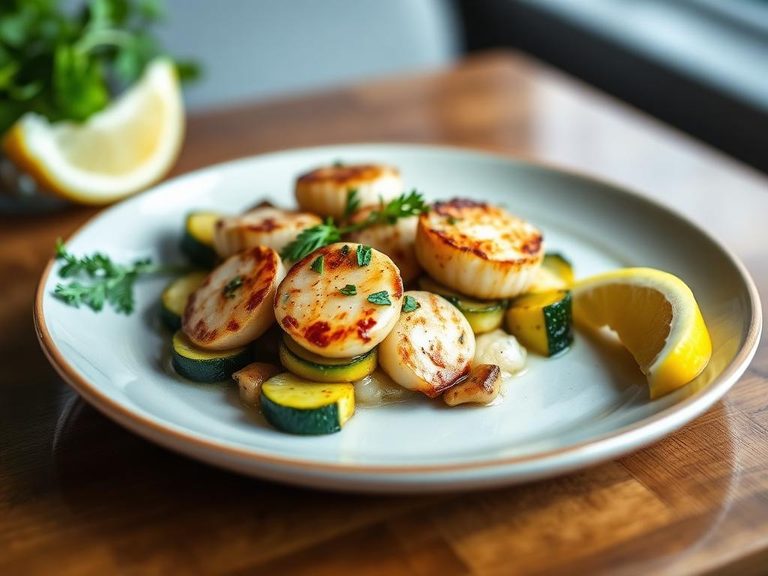
🌍 Where it's eaten
💡 Did you know?
The combination of shellfish and vegetables is a classic example of 'surf and turf' in its lightest form, a concept that originally referred to pairing seafood with red meat but has evolved to include any pairing of sea and land ingredients.
Full nutrition (USDA data · scales with serving)
| Water | 77.6 g |
| Energy | 117 kcal |
| Protein | 6.3 g |
| Total lipid (fat) | 6.9 g |
| Carbohydrate, by difference | 7.6 g |
| Fiber, total dietary | 1.0 g |
| Total Sugars | 1.5 g |
| Calcium, Ca | 44.0 mg |
| Iron, Fe | 0.54 mg |
| Magnesium, Mg | 16.0 mg |
| Phosphorus, P | 102 mg |
| Potassium, K | 181 mg |
| Sodium, Na | 308 mg |
| Zinc, Zn | 0.47 mg |
| Copper, Cu | 0.06 mg |
| Selenium, Se | 11.7 ug |
| Vitamin C, total ascorbic acid | 1.0 mg |
| Thiamin | 0.03 mg |
| Riboflavin | 0.06 mg |
| Niacin | 0.71 mg |
| Vitamin B-6 | 0.06 mg |
| Folate, total | 12.0 ug |
| Folic acid | 0.00 ug |
| Folate, food | 12.0 ug |
| Folate, DFE | 12.0 ug |
| Choline, total | 35.7 mg |
| Vitamin B-12 | 2.1 ug |
| Vitamin B-12, added | 0.00 ug |
| Vitamin A, RAE | 37.0 ug |
| Retinol | 33.0 ug |
| Carotene, beta | 38.0 ug |
| Carotene, alpha | 10.0 ug |
| Cryptoxanthin, beta | 16.0 ug |
| Lycopene | 0.00 ug |
| Lutein + zeaxanthin | 162 ug |
| Vitamin E (alpha-tocopherol) | 1.3 mg |
| Vitamin E, added | 0.00 mg |
| Vitamin D (D2 + D3) | 0.20 ug |
| Vitamin K (phylloquinone) | 17.3 ug |
| Alcohol, ethyl | 0.00 g |
| Caffeine | 0.00 mg |
| Theobromine | 0.00 mg |
Fat & fatty acid profile (per 100g)
| Fatty acids, total saturated | 1.2 g |
| SFA 4:0 | 0.01 g |
| SFA 6:0 | 0.01 g |
| SFA 8:0 | 0.00 g |
| SFA 10:0 | 0.01 g |
| SFA 12:0 | 0.01 g |
| SFA 14:0 | 0.05 g |
| SFA 16:0 | 0.78 g |
| SFA 18:0 | 0.27 g |
| Fatty acids, total monounsaturated | 2.4 g |
| MUFA 16:1 | 0.03 g |
| MUFA 18:1 | 2.3 g |
| MUFA 20:1 | 0.04 g |
| MUFA 22:1 | 0.00 g |
| Fatty acids, total polyunsaturated | 2.9 g |
| PUFA 18:2 | 2.5 g |
| PUFA 18:3 | 0.33 g |
| PUFA 18:4 | 0.00 g |
| PUFA 20:4 | 0.01 g |
| PUFA 20:5 n-3 (EPA) | 0.02 g |
| PUFA 22:5 n-3 (DPA) | 0.00 g |
| PUFA 22:6 n-3 (DHA) | 0.03 g |
| Cholesterol | 28.0 mg |
FAQ
Is this dish suitable for a low-carb diet?
Yes, with careful vegetable selection. The base is naturally low-carb. To keep it that way, avoid starchy vegetables like corn or peas and focus on non-starchy options like bell peppers, broccoli stems, or asparagus.
How can I prevent the shellfish from becoming rubbery?
Cook shellfish quickly over high heat. Shrimp should turn pink and opaque, scallops should be seared golden but still translucent in the very center, and squid requires either a very fast (under 30 seconds) or very slow (over 20 minutes) cook time.
Can I use frozen vegetables for this?
Absolutely. Frozen vegetables are flash-frozen at peak freshness and work perfectly. Thaw them first and pat dry to avoid steaming the dish, or add them directly to a hot pan for a quick stir-fry.
Nutrient density (calculated · NRF9.3)
Nutrient Rich Foods index: beneficial nutrients (protein, fiber, vitamins, minerals) minus saturated fat, added sugar & sodium, per 100 kcal.
NRF9.3 index — Fulgoni, Keast & Drewnowski, 2009. Computed from USDA nutrients.
Weight-loss friendliness (composite index)
Energy density 1.17 kcal/g · 22% calories from protein · 1.0 g fiber · 1.5 g sugar per 100 g.
Composite of energy density (Rolls et al., 1999), protein & fiber satiety, minus sugar. A calculated heuristic — ranks satiety-per-calorie, not a clinical measure.
Dietary load (calculated from USDA values)
Potential renal acid load. Positive = acid-forming, negative = alkaline-forming.
Sodium-to-potassium ratio: 1.70 (lower is better — aim for ≤ 1)
Sodium:potassium per WHO potassium guidance. Computed from USDA nutrients.