

Salsa, NFS
Common food
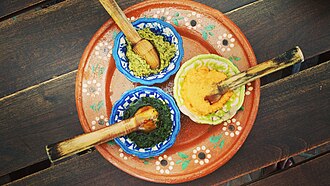
Photo: Wikipedia
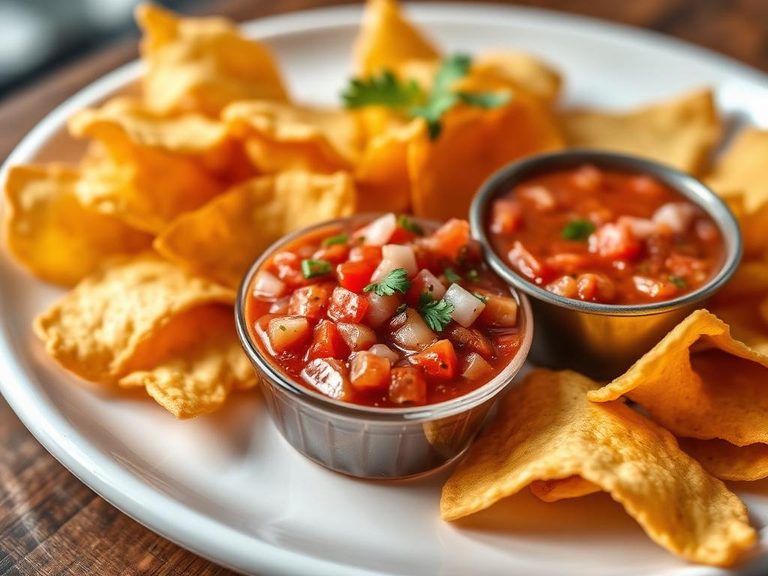
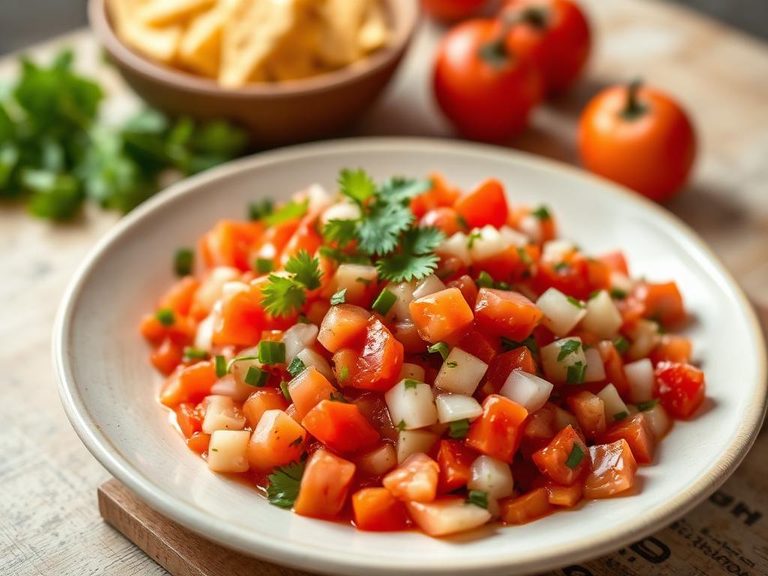
Salsa, NFS (Not Further Specified) is a vibrant, chunky, or smooth condiment typically made from a base of tomatoes, onions, chili peppers, and cilantro. It delivers a bright, tangy, and often spicy flavor profile with a refreshing, juicy texture. Nutritionally, it's a low-calorie, high-fiber addition to meals, with natural sugars from the tomatoes.
Calorie split: 17% protein · 78% carbs · 5% fat
↓ Full nutrition💚 Why it's loved
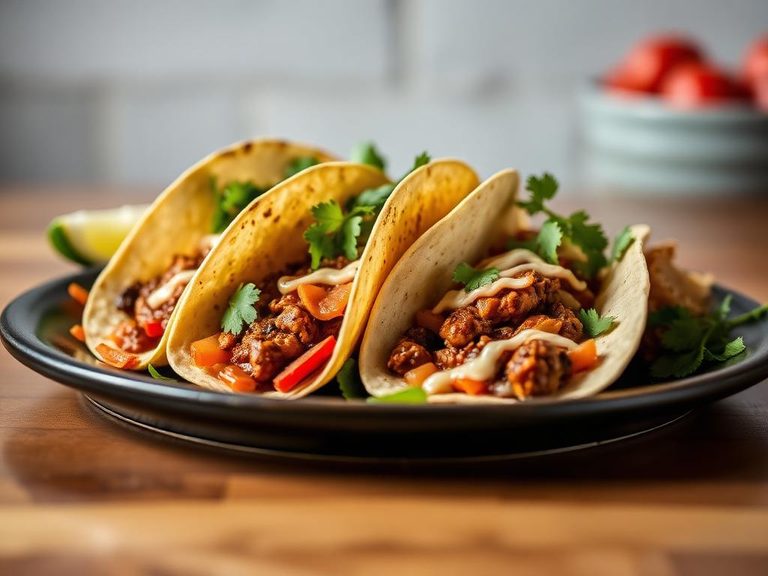
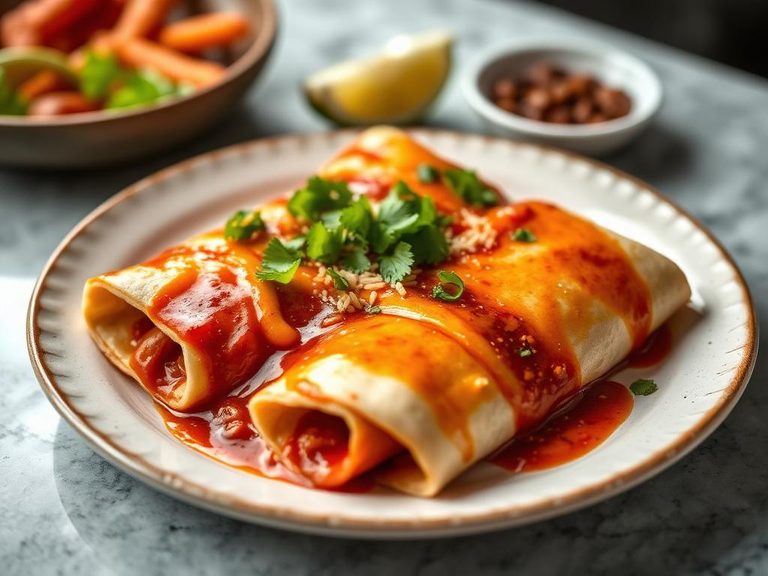
People love salsa for its explosive, fresh flavor that can instantly elevate a simple dish. Its incredible versatility—from a dip for chips to a sauce for tacos, eggs, or grilled meats—makes it a cultural staple in Mexican and Tex-Mex cuisine.
⚠️ Watch-outs & how to enjoy it better
Some commercial salsas can be high in sodium, which may be a concern for those monitoring blood pressure. The acidity from tomatoes and citrus can also trigger heartburn in individuals with acid reflux. To counteract, look for low-sodium versions, pair with a starchy food like a tortilla chip to buffer acidity, or use it as a flavoring in a larger dish to control portion size.
Key benefits
- Low in calories and fat, supporting weight management.
- Good source of dietary fiber from tomatoes and vegetables.
- Contains vitamin C and lycopene, powerful antioxidants from tomatoes.
- Adds significant flavor without adding excess calories or saturated fat.
- Capsaicin in chili peppers may offer a mild metabolism boost.
🍽️ Popular dishes


🌍 Where it's eaten
💡 Did you know?
The word 'salsa' simply means 'sauce' in Spanish, and its culinary roots trace back to the Aztec, Mayan, and Inca civilizations who combined tomatoes, chilies, and squash seeds.
Full nutrition (USDA data · scales with serving)
| Water | 89.3 g |
| Energy | 34.0 kcal |
| Protein | 1.4 g |
| Total lipid (fat) | 0.19 g |
| Carbohydrate, by difference | 6.7 g |
| Fiber, total dietary | 1.8 g |
| Total Sugars | 3.8 g |
| Calcium, Ca | 28.0 mg |
| Iron, Fe | 0.42 mg |
| Magnesium, Mg | 15.0 mg |
| Phosphorus, P | 32.0 mg |
| Potassium, K | 258 mg |
| Sodium, Na | 656 mg |
| Zinc, Zn | 0.20 mg |
| Copper, Cu | 0.07 mg |
| Selenium, Se | 0.90 ug |
| Vitamin C, total ascorbic acid | 1.9 mg |
| Thiamin | 0.04 mg |
| Riboflavin | 0.03 mg |
| Niacin | 1.1 mg |
| Vitamin B-6 | 0.18 mg |
| Folate, total | 4.0 ug |
| Folic acid | 0.00 ug |
| Folate, food | 4.0 ug |
| Folate, DFE | 4.0 ug |
| Choline, total | 12.8 mg |
| Vitamin B-12 | 0.00 ug |
| Vitamin B-12, added | 0.00 ug |
| Vitamin A, RAE | 24.0 ug |
| Retinol | 0.00 ug |
| Carotene, beta | 288 ug |
| Carotene, alpha | 0.00 ug |
| Cryptoxanthin, beta | 0.00 ug |
| Lycopene | 6310 ug |
| Lutein + zeaxanthin | 211 ug |
| Vitamin E (alpha-tocopherol) | 1.2 mg |
| Vitamin E, added | 0.00 mg |
| Vitamin D (D2 + D3) | 0.00 ug |
| Vitamin K (phylloquinone) | 4.2 ug |
| Alcohol, ethyl | 0.00 g |
| Caffeine | 0.00 mg |
| Theobromine | 0.00 mg |
Fat & fatty acid profile (per 100g)
| Fatty acids, total saturated | 0.02 g |
| SFA 4:0 | 0.00 g |
| SFA 6:0 | 0.00 g |
| SFA 8:0 | 0.00 g |
| SFA 10:0 | 0.00 g |
| SFA 12:0 | 0.00 g |
| SFA 14:0 | 0.00 g |
| SFA 16:0 | 0.02 g |
| SFA 18:0 | 0.00 g |
| Fatty acids, total monounsaturated | 0.02 g |
| MUFA 16:1 | 0.00 g |
| MUFA 18:1 | 0.02 g |
| MUFA 20:1 | 0.00 g |
| MUFA 22:1 | 0.00 g |
| Fatty acids, total polyunsaturated | 0.08 g |
| PUFA 18:2 | 0.07 g |
| PUFA 18:3 | 0.00 g |
| PUFA 18:4 | 0.00 g |
| PUFA 20:4 | 0.00 g |
| PUFA 20:5 n-3 (EPA) | 0.00 g |
| PUFA 22:5 n-3 (DPA) | 0.00 g |
| PUFA 22:6 n-3 (DHA) | 0.00 g |
| Cholesterol | 0.00 mg |
FAQ
What does 'NFS' mean on a nutrition label?
NFS stands for 'Not Further Specified.' It indicates the product is a general version of the food (like salsa) without a specific type or preparation method defined, so the nutrition data is an average.
Is salsa a good source of vitamins?
Yes, primarily from its tomato base. It's a good source of vitamin C and contains lycopene, an antioxidant linked to heart health. The exact amount depends on the recipe and freshness.
Can I eat salsa on a low-carb diet?
Absolutely. With only about 6.7g of carbs per 100g (and much of that being fiber and natural sugar), it's a low-carb, flavorful way to add moisture and taste to proteins and vegetables.
Nutrient density (calculated · NRF9.3)
Nutrient Rich Foods index: beneficial nutrients (protein, fiber, vitamins, minerals) minus saturated fat, added sugar & sodium, per 100 kcal.
NRF9.3 index — Fulgoni, Keast & Drewnowski, 2009. Computed from USDA nutrients.
Weight-loss friendliness (composite index)
Energy density 0.34 kcal/g · 17% calories from protein · 1.8 g fiber · 3.8 g sugar per 100 g.
Composite of energy density (Rolls et al., 1999), protein & fiber satiety, minus sugar. A calculated heuristic — ranks satiety-per-calorie, not a clinical measure.
Dietary load (calculated from USDA values)
Potential renal acid load. Positive = acid-forming, negative = alkaline-forming.
Sodium-to-potassium ratio: 2.54 (lower is better — aim for ≤ 1)
Sodium:potassium per WHO potassium guidance. Computed from USDA nutrients.