

Peanuts, spanish, oil-roasted, without salt
Whole food · Legumes and Legume Products

Photo: Wikipedia
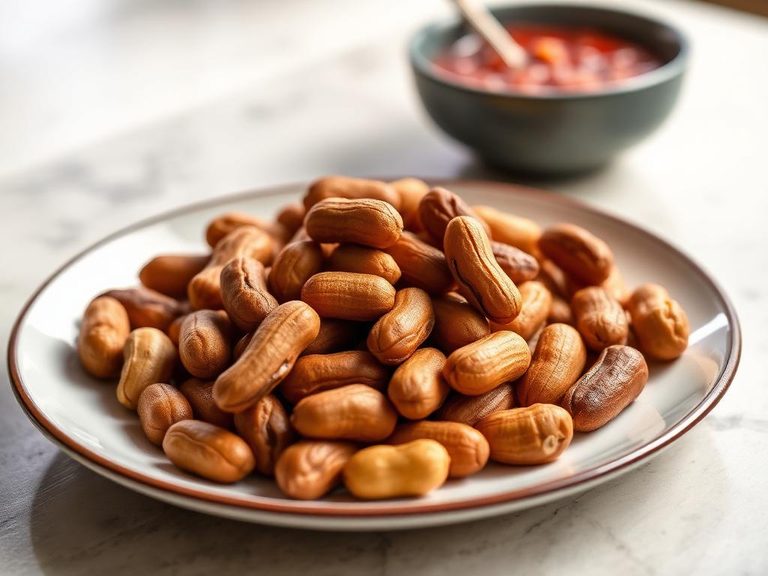
These are whole Spanish peanuts, dry-roasted in oil to achieve a deep golden-brown color and a satisfying, snappy crunch. The roasting process intensifies their rich, nutty, and slightly earthy flavor, while the absence of added salt allows their natural taste to shine. Nutritionally, they are a powerhouse, delivering nearly 50 grams of heart-healthy monounsaturated fats and a solid 28 grams of plant-based protein per 100g.
Calorie split: 18% protein · 11% carbs · 71% fat
↓ Full nutrition💚 Why it's loved
People love them for their robust, toasty flavor and firm texture that holds up well in both sweet and savory dishes. They are a versatile staple snack and ingredient, deeply embedded in cuisines from the American South to West Africa.
⚠️ Watch-outs & how to enjoy it better
As a common and potent allergen, they pose a serious risk for those with peanut allergies. Their high calorie density means portion control is key to avoid unintended weight gain. To counteract this, practice mindful portioning by measuring out a single serving (about a handful) and pair them with fiber-rich foods like vegetables or whole-grain crackers to enhance satiety.
Key benefits
- Excellent source of monounsaturated fats for heart health.
- High in plant-based protein for muscle maintenance and satiety.
- Rich in niacin (vitamin B3) and manganese for energy metabolism.
- Good source of dietary fiber to support digestive health.
- Contains resveratrol, an antioxidant also found in red wine.
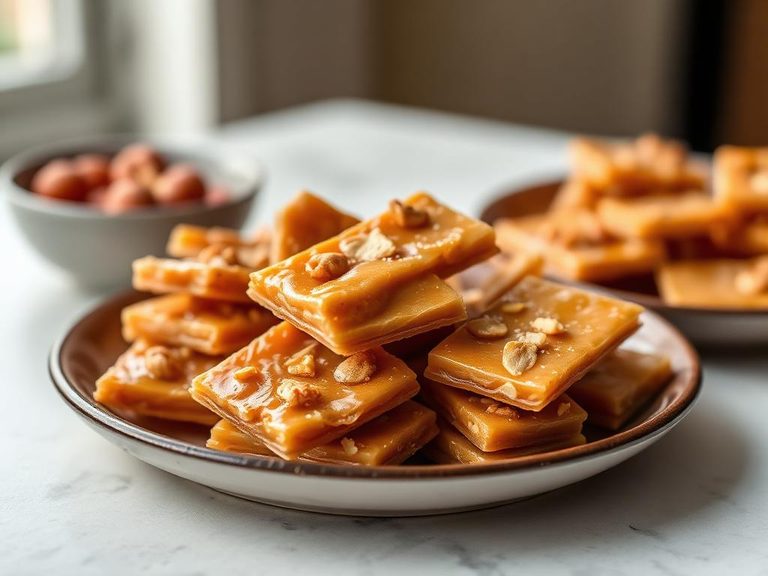
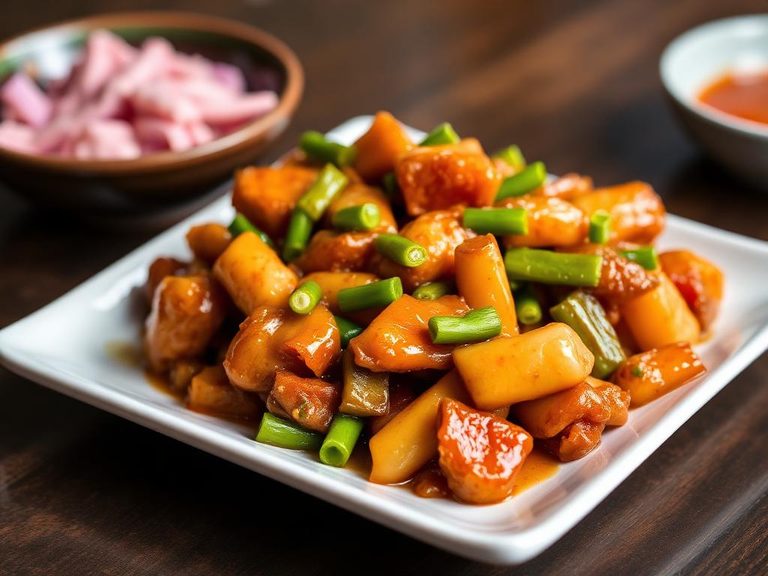
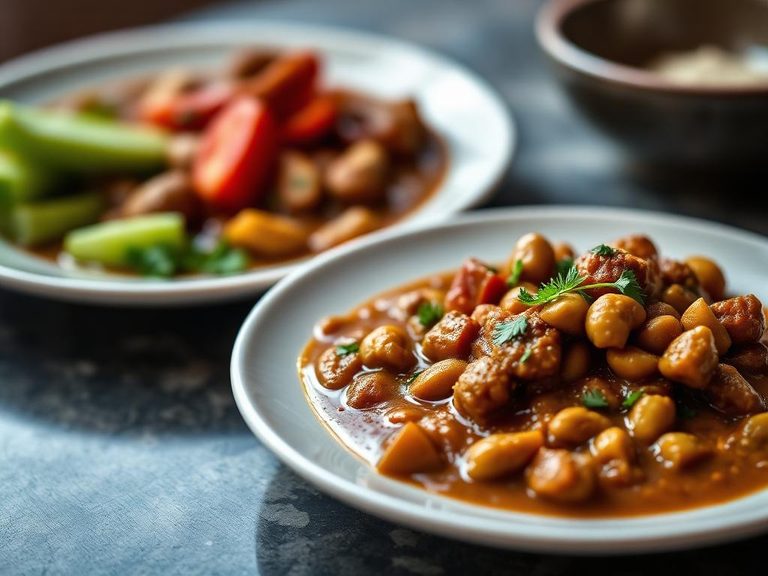
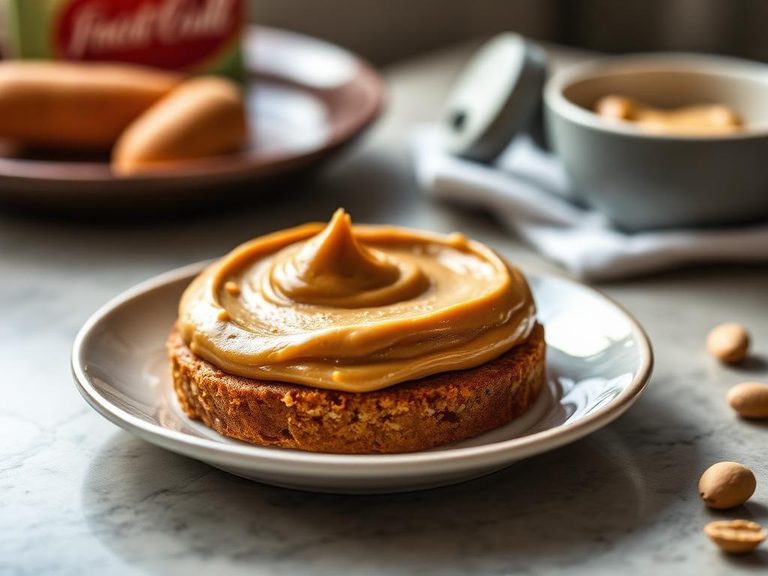
🍽️ Popular dishes
🌍 Where it's eaten
💡 Did you know?
Spanish peanuts have a higher oil content than other common varieties like Virginia or Runner peanuts, which makes them particularly prized for making peanut oil and for achieving an extra-crispy roast.
Full nutrition (USDA data · scales with serving)
| Water | 1.8 g |
| Energy | 579 kcal |
| Energy | 2423 kj |
| Protein | 28.0 g |
| Total lipid (fat) | 49.0 g |
| Ash | 3.7 g |
| Carbohydrate, by difference | 17.4 g |
| Fiber, total dietary | 8.9 g |
| Calcium, Ca | 100 mg |
| Iron, Fe | 2.3 mg |
| Magnesium, Mg | 168 mg |
| Phosphorus, P | 387 mg |
| Potassium, K | 776 mg |
| Sodium, Na | 6.0 mg |
| Zinc, Zn | 2.0 mg |
| Copper, Cu | 0.66 mg |
| Manganese, Mn | 2.4 mg |
| Selenium, Se | 7.5 ug |
| Vitamin C, total ascorbic acid | 0.00 mg |
| Thiamin | 0.32 mg |
| Riboflavin | 0.09 mg |
| Niacin | 14.9 mg |
| Pantothenic acid | 1.4 mg |
| Vitamin B-6 | 0.26 mg |
| Folate, total | 126 ug |
| Folic acid | 0.00 ug |
| Folate, food | 126 ug |
| Folate, DFE | 126 ug |
| Vitamin B-12 | 0.00 ug |
| Vitamin A, RAE | 0.00 ug |
| Retinol | 0.00 ug |
| Vitamin A, IU | 0.00 iu |
| Vitamin D (D2 + D3), International Units | 0.00 iu |
| Vitamin D (D2 + D3) | 0.00 ug |
Fat & fatty acid profile (per 100g)
| Fatty acids, total saturated | 7.6 g |
| SFA 14:0 | 0.03 g |
| SFA 16:0 | 5.6 g |
| SFA 18:0 | 1.3 g |
| Fatty acids, total monounsaturated | 22.1 g |
| MUFA 16:1 | 0.04 g |
| MUFA 18:1 | 21.5 g |
| MUFA 20:1 | 0.52 g |
| Fatty acids, total polyunsaturated | 17.0 g |
| PUFA 18:2 | 17.0 g |
| PUFA 18:3 | 0.01 g |
| Cholesterol | 0.00 mg |
Amino acid profile (per 100g)
| Tryptophan | 0.27 g |
| Threonine | 0.96 g |
| Isoleucine | 0.98 g |
| Leucine | 1.8 g |
| Lysine | 1.0 g |
| Methionine | 0.34 g |
| Cystine | 0.36 g |
| Phenylalanine | 1.5 g |
| Tyrosine | 1.1 g |
| Valine | 1.2 g |
| Arginine | 3.3 g |
| Histidine | 0.71 g |
| Alanine | 1.1 g |
| Aspartic acid | 3.4 g |
| Glutamic acid | 5.9 g |
| Glycine | 1.7 g |
| Proline | 1.2 g |
| Serine | 1.4 g |
FAQ
What's the difference between Spanish and regular peanuts?
Spanish peanuts are smaller, rounder, and have a reddish-brown skin. They have a higher oil content and a more pronounced, slightly more bitter nutty flavor compared to the larger, milder Virginia peanuts often eaten as snacks.
Are oil-roasted peanuts unhealthy?
Not inherently. The oil used is typically a neutral, high-oleic oil. The key factors are the type of oil and the lack of added salt in this specific product. They remain a nutrient-dense food when consumed in appropriate portions.
Can I use these for homemade peanut butter?
Yes, absolutely. Their high oil content can actually help create a smoother, creamier butter. Simply process them in a food processor until the desired consistency is reached, adding a pinch of salt if desired.
Nutrient density (calculated · NRF9.3)
Nutrient Rich Foods index: beneficial nutrients (protein, fiber, vitamins, minerals) minus saturated fat, added sugar & sodium, per 100 kcal.
NRF9.3 index — Fulgoni, Keast & Drewnowski, 2009. Computed from USDA nutrients.
Weight-loss friendliness (composite index)
Energy density 5.79 kcal/g · 19% calories from protein · 8.9 g fiber · 0.0 g sugar per 100 g.
Composite of energy density (Rolls et al., 1999), protein & fiber satiety, minus sugar. A calculated heuristic — ranks satiety-per-calorie, not a clinical measure.
Dietary load (calculated from USDA values)
Potential renal acid load. Positive = acid-forming, negative = alkaline-forming.
Sodium-to-potassium ratio: 0.01 (lower is better — aim for ≤ 1)
Sodium:potassium per WHO potassium guidance. Computed from USDA nutrients.