

Pasta, homemade, made without egg, cooked
Whole food · Cereal Grains and Pasta
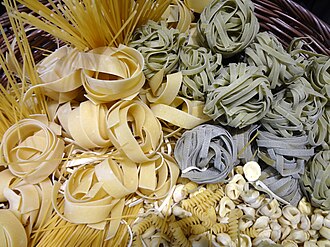
Photo: Wikipedia
This is the purest form of pasta: a simple, delicate dough of flour and water, rolled thin and cooked until tender. It has a soft, slightly chewy texture and a mild, wheaty flavor that acts as a perfect canvas for sauces. Nutritionally, it's a lean, low-fat source of quick energy from its carbohydrate content.
Calorie split: 14% protein · 79% carbs · 7% fat
↓ Full nutrition💚 Why it's loved
People love it for its comforting simplicity and remarkable versatility—it can be tossed with a bright pesto, a rich ragù, or just olive oil and garlic. It's a beloved staple that forms the heart of countless quick, satisfying meals across cultures.
⚠️ Watch-outs & how to enjoy it better
As a refined carbohydrate, it can cause rapid blood sugar spikes if eaten alone or in large portions. To counteract this, pair it with protein (like beans or lean meat) and healthy fats (like olive oil or cheese), and load it with fiber-rich vegetables to slow digestion. Those with celiac disease or gluten sensitivity must avoid it entirely.
Key benefits
- Excellent source of energy for active lifestyles
- Very low in fat and naturally cholesterol-free
- Simple ingredient list, suitable for egg-free diets
- Provides a neutral base for nutrient-dense sauces and toppings
- Quick-cooking and versatile for weeknight meals
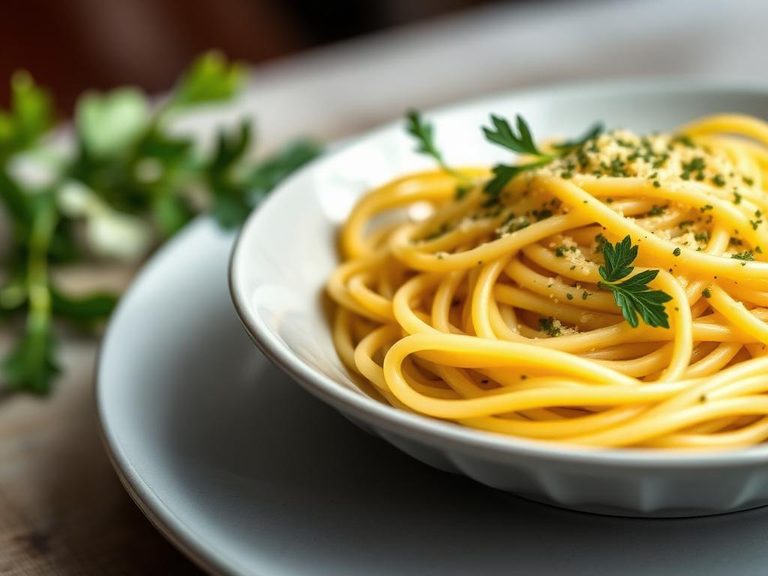
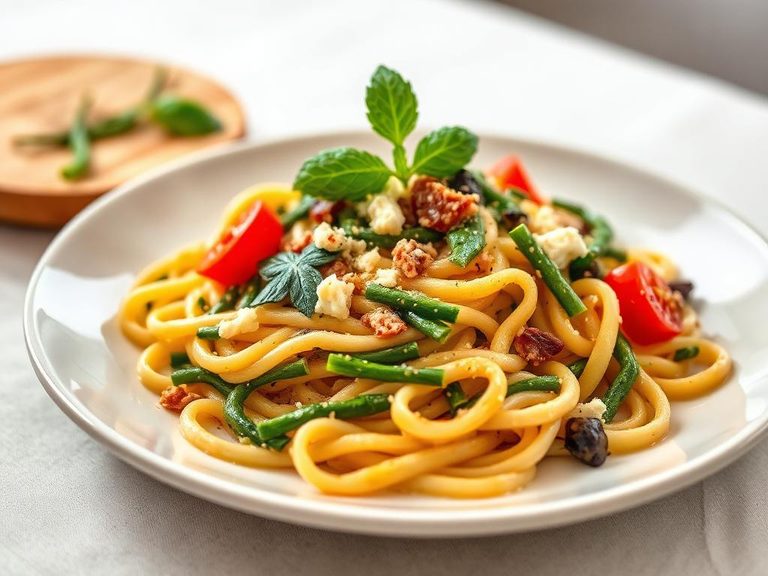
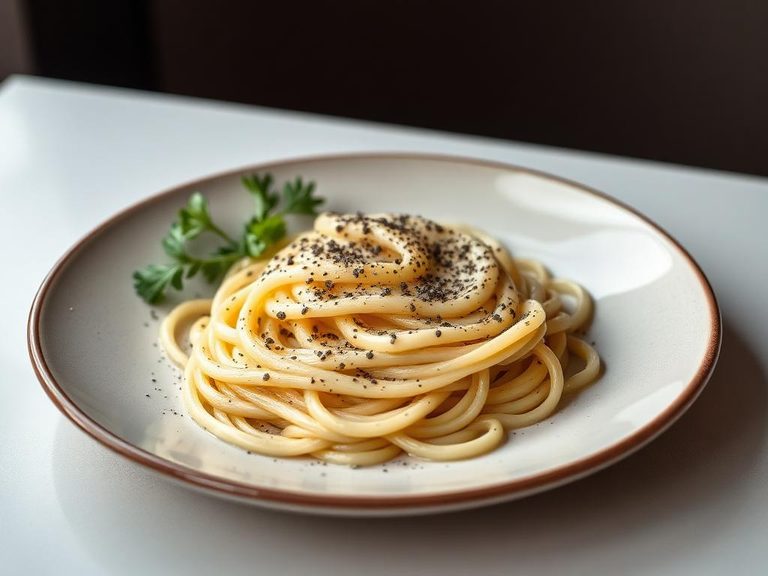
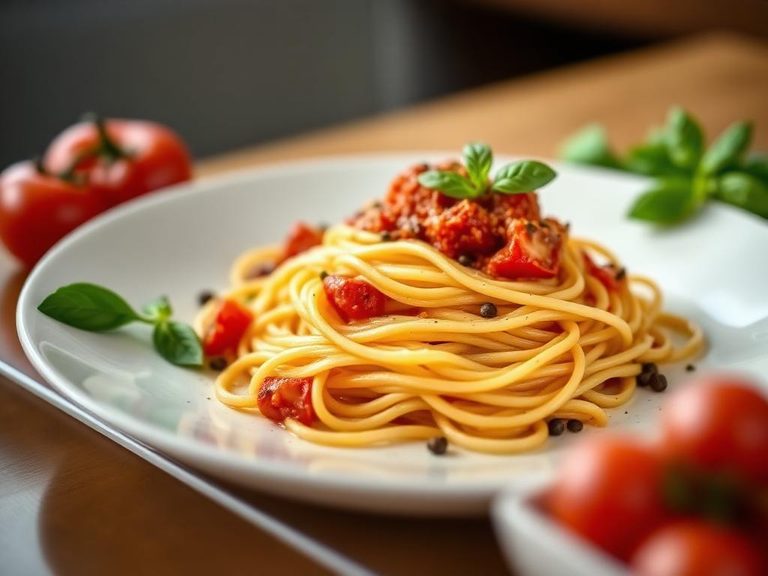
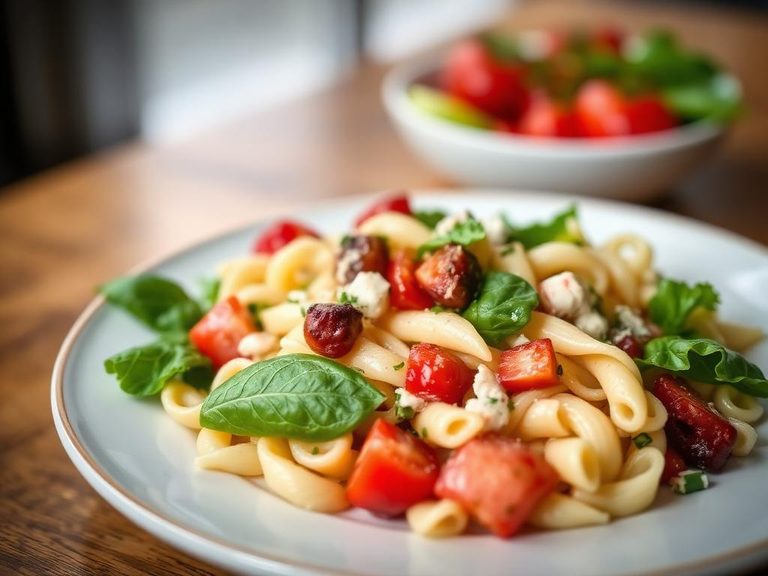
🍽️ Popular dishes
🌍 Where it's eaten
💡 Did you know?
The most common shape for homemade eggless pasta is 'fettuccine' or 'tagliatelle', which are flat ribbons that perfectly catch and hold onto simple oil-based or creamy sauces.
Full nutrition (USDA data · scales with serving)
| Water | 68.9 g |
| Energy | 124 kcal |
| Energy | 519 kj |
| Protein | 4.4 g |
| Total lipid (fat) | 0.98 g |
| Ash | 0.66 g |
| Carbohydrate, by difference | 25.1 g |
| Calcium, Ca | 6.0 mg |
| Iron, Fe | 1.1 mg |
| Magnesium, Mg | 14.0 mg |
| Phosphorus, P | 40.0 mg |
| Potassium, K | 19.0 mg |
| Sodium, Na | 74.0 mg |
| Zinc, Zn | 0.37 mg |
| Copper, Cu | 0.06 mg |
| Manganese, Mn | 0.19 mg |
| Vitamin C, total ascorbic acid | 0.00 mg |
| Thiamin | 0.18 mg |
| Riboflavin | 0.15 mg |
| Niacin | 1.3 mg |
| Pantothenic acid | 0.15 mg |
| Vitamin B-6 | 0.03 mg |
| Folate, total | 43.0 ug |
| Folic acid | 26.0 ug |
| Folate, food | 17.0 ug |
| Folate, DFE | 61.0 ug |
| Vitamin B-12 | 0.00 ug |
| Vitamin A, RAE | 0.00 ug |
| Retinol | 0.00 ug |
| Vitamin A, IU | 0.00 iu |
Fat & fatty acid profile (per 100g)
| Fatty acids, total saturated | 0.14 g |
| SFA 14:0 | 0.00 g |
| SFA 16:0 | 0.11 g |
| SFA 18:0 | 0.03 g |
| Fatty acids, total monounsaturated | 0.19 g |
| MUFA 16:1 | 0.00 g |
| MUFA 18:1 | 0.18 g |
| MUFA 20:1 | 0.00 g |
| Fatty acids, total polyunsaturated | 0.51 g |
| PUFA 18:2 | 0.45 g |
| PUFA 18:3 | 0.06 g |
| Cholesterol | 0.00 mg |
| Phytosterols | 2.0 mg |
Amino acid profile (per 100g)
| Tryptophan | 0.06 g |
| Threonine | 0.12 g |
| Isoleucine | 0.17 g |
| Leucine | 0.30 g |
| Lysine | 0.08 g |
| Methionine | 0.07 g |
| Cystine | 0.12 g |
| Phenylalanine | 0.21 g |
| Tyrosine | 0.12 g |
| Valine | 0.19 g |
| Arginine | 0.16 g |
| Histidine | 0.09 g |
| Alanine | 0.13 g |
| Aspartic acid | 0.18 g |
| Glutamic acid | 1.6 g |
| Glycine | 0.14 g |
| Proline | 0.48 g |
| Serine | 0.21 g |
FAQ
What's the difference between this and regular pasta?
The key difference is the absence of eggs. Eggless pasta dough uses only flour and water, resulting in a slightly firmer, more delicate texture and a simpler, more neutral flavor compared to the richer, yellower egg-based pasta.
Why is it so low in fat and protein?
The nutritional profile reflects its simple ingredients. Without egg yolks (which add fat and protein) or added oils, the macronutrients come almost entirely from the wheat flour, making it primarily a carbohydrate source.
Is it suitable for vegans?
Yes, this specific type of pasta—made without egg—is a classic vegan staple. Always check store-bought labels, as many dried pastas are eggless by default, but fresh pasta often contains eggs.
Nutrient density (calculated · NRF9.3)
Nutrient Rich Foods index: beneficial nutrients (protein, fiber, vitamins, minerals) minus saturated fat, added sugar & sodium, per 100 kcal.
NRF9.3 index — Fulgoni, Keast & Drewnowski, 2009. Computed from USDA nutrients.
Weight-loss friendliness (composite index)
Energy density 1.24 kcal/g · 14% calories from protein · 0.0 g fiber · 0.0 g sugar per 100 g.
Composite of energy density (Rolls et al., 1999), protein & fiber satiety, minus sugar. A calculated heuristic — ranks satiety-per-calorie, not a clinical measure.
Dietary load (calculated from USDA values)
Potential renal acid load. Positive = acid-forming, negative = alkaline-forming.
Sodium-to-potassium ratio: 3.89 (lower is better — aim for ≤ 1)
Sodium:potassium per WHO potassium guidance. Computed from USDA nutrients.