

Cacio e Pepe
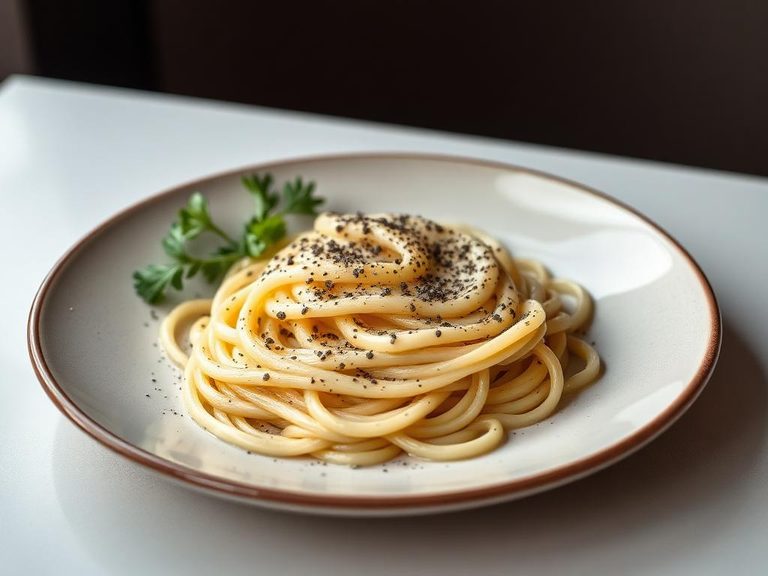
Cacio e Pepe is a classic Roman pasta dish celebrated for its elegant simplicity, traditionally made with just three core ingredients: pasta (usually spaghetti or tonnarelli), Pecorino Romano cheese, and freshly cracked black pepper. Originating from Rome, Italy, it is a staple of Roman cuisine, often associated with the culinary traditions of shepherds and travelers in the Lazio region.
🍳 View the full Cacio e Pepe recipe →
🍽️ Nutrition at a glance
This dish is high in carbohydrates from the pasta and fat from the cheese, providing a good source of protein and calcium, with a typical serving containing around 500-700 calories. The Pecorino Romano contributes sodium and umami flavor, while the black pepper adds minimal calories but may aid digestion.
Nutrition breakdown
| Calories | 550 kcal |
| Protein | 20 g |
| Carbs | 65 g |
| Fat | 22 g |
| Fiber | 3 g |
| Sugar | 3 g |
| Sodium | 600 mg |
| Calcium | 300 mg |
| Iron | 3 mg |
| Magnesium | 60 mg |
| Phosphorus | 250 mg |
| Potassium | 200 mg |
| Selenium | 40 µg |
| Vitamin A | 150 µg |
| Folate | 80 µg |
Per 1 plate (300 g) · estimated, varies by recipe
💡 What's interesting
Culturally, Cacio e Pepe is a testament to Italian culinary philosophy, where minimal, high-quality ingredients are transformed into a rich, flavorful dish through technique alone. Nutritionally, the combination of cheese and pepper is believed to enhance the absorption of certain nutrients, making it a surprisingly balanced meal despite its simplicity.
🍽️ Related dishes
AI estimate may be inaccurate · Terms