

Mussels
Common food

Photo: Wikipedia
Mussels are bivalve mollusks with tender, plump flesh that ranges from creamy beige to vibrant orange, offering a sweet, briny flavor with a subtle oceanic minerality. Their texture is soft yet slightly chewy, making them a luxurious yet affordable seafood staple. Nutritionally, they are a lean protein powerhouse, delivering over 15 grams of protein per 100 grams with minimal fat and no sugar.
Calorie split: 58% protein · 18% carbs · 24% fat
↓ Full nutrition💚 Why it's loved
People adore mussels for their ability to quickly absorb the flavors of broths, wines, and herbs, creating a deeply savory and aromatic dish. They are also cherished for their communal, rustic dining experience, often served in a large pot for sharing.
⚠️ Watch-outs & how to enjoy it better
Mussels can be high in sodium and are a common shellfish allergen, posing risks for those with salt-sensitive hypertension or allergies. To mitigate, rinse them thoroughly before cooking to reduce surface salt and always ensure they are fully cooked to destroy any potential bacteria or parasites.
Key benefits
- Excellent source of high-quality, complete protein
- Rich in vitamin B12, essential for nerve function
- Provides significant selenium, an important antioxidant
- High in manganese, supporting bone health
- Low in calories and saturated fat
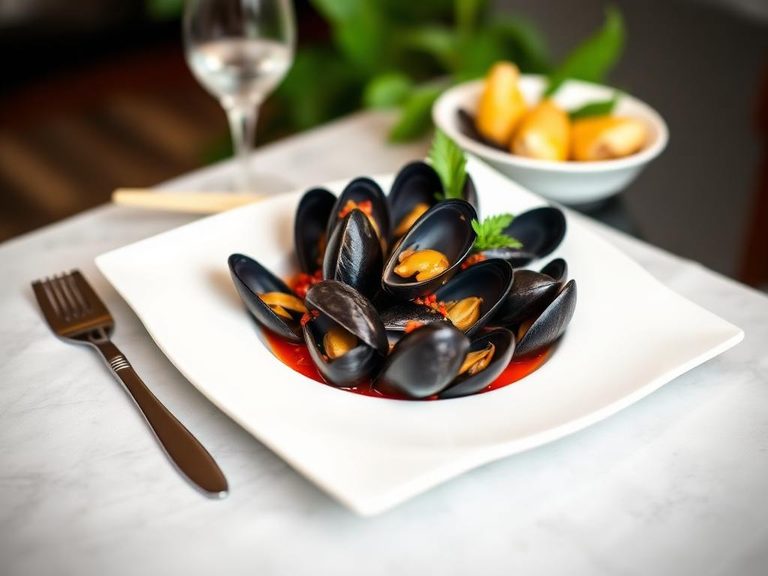
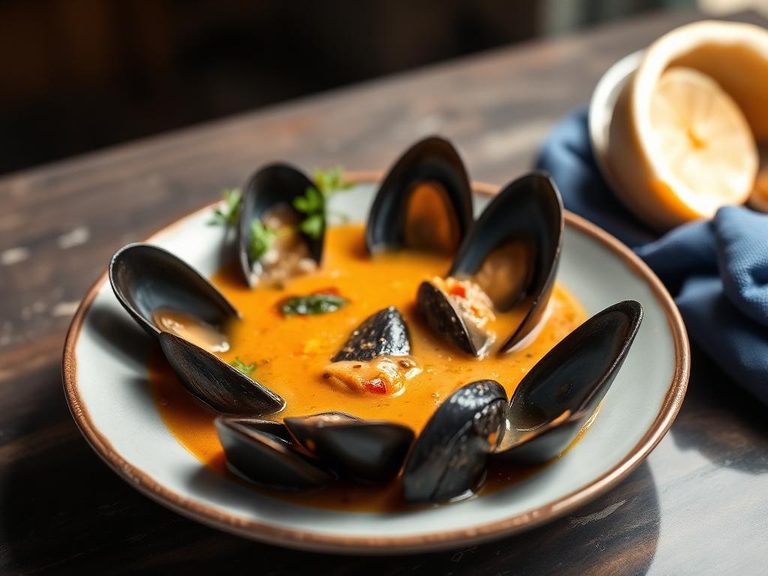
🍽️ Popular dishes
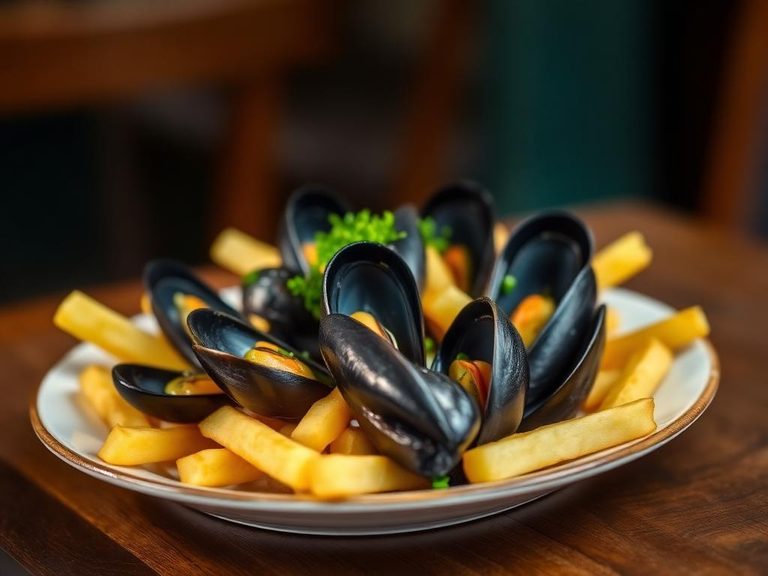
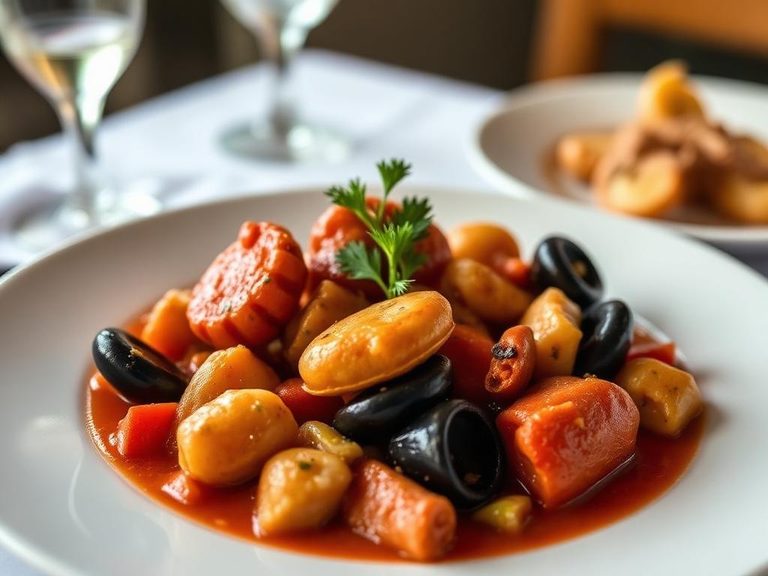
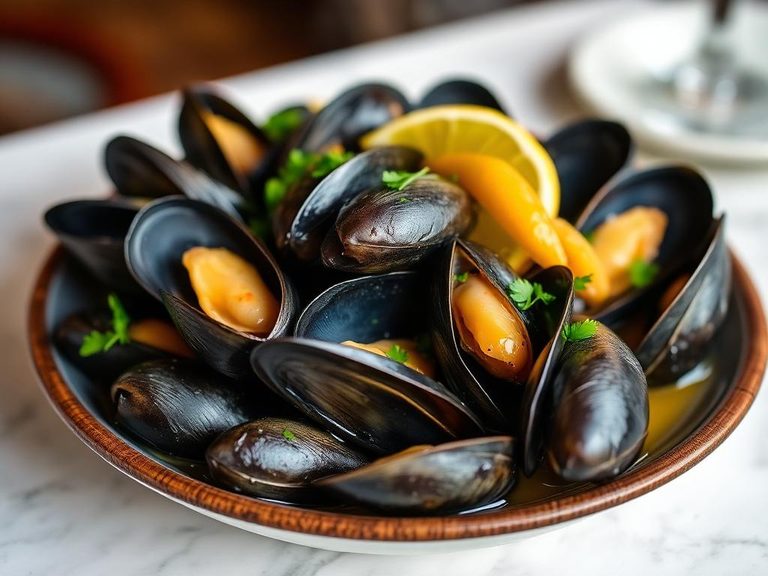
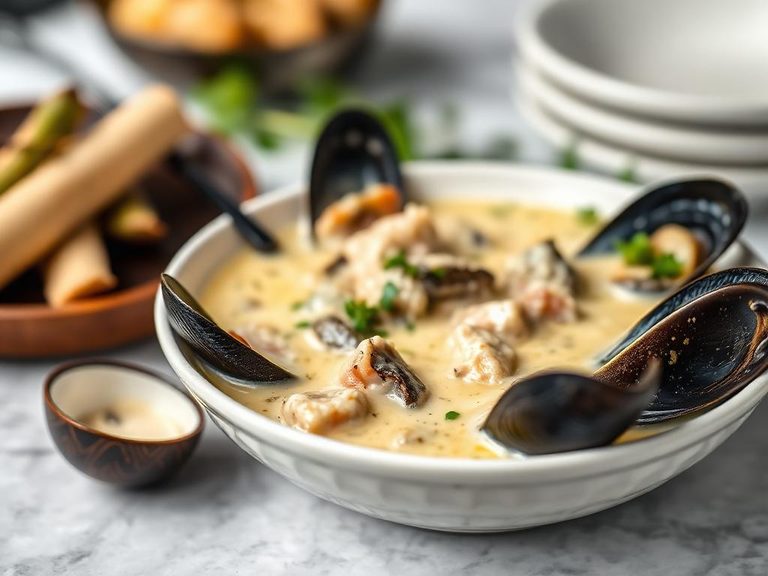
🌍 Where it's eaten
💡 Did you know?
Mussels are filter feeders, and a single mussel can filter up to 10 gallons of water per day, helping to clarify coastal waters.
Full nutrition (USDA data · scales with serving)
| Water | 75.4 g |
| Energy | 109 kcal |
| Protein | 15.1 g |
| Total lipid (fat) | 2.8 g |
| Carbohydrate, by difference | 4.7 g |
| Fiber, total dietary | 0.00 g |
| Total Sugars | 0.00 g |
| Calcium, Ca | 33.0 mg |
| Iron, Fe | 5.0 mg |
| Magnesium, Mg | 43.0 mg |
| Phosphorus, P | 249 mg |
| Potassium, K | 405 mg |
| Sodium, Na | 362 mg |
| Zinc, Zn | 2.0 mg |
| Copper, Cu | 0.12 mg |
| Selenium, Se | 56.7 ug |
| Vitamin C, total ascorbic acid | 8.1 mg |
| Thiamin | 0.17 mg |
| Riboflavin | 0.25 mg |
| Niacin | 1.9 mg |
| Vitamin B-6 | 0.06 mg |
| Folate, total | 40.0 ug |
| Folic acid | 0.00 ug |
| Folate, food | 40.0 ug |
| Folate, DFE | 40.0 ug |
| Choline, total | 82.3 mg |
| Vitamin B-12 | 12.9 ug |
| Vitamin B-12, added | 0.00 ug |
| Vitamin A, RAE | 58.0 ug |
| Retinol | 58.0 ug |
| Carotene, beta | 0.00 ug |
| Carotene, alpha | 0.00 ug |
| Cryptoxanthin, beta | 0.00 ug |
| Lycopene | 0.00 ug |
| Lutein + zeaxanthin | 0.00 ug |
| Vitamin E (alpha-tocopherol) | 0.70 mg |
| Vitamin E, added | 0.00 mg |
| Vitamin D (D2 + D3) | 0.00 ug |
| Vitamin K (phylloquinone) | 0.10 ug |
| Alcohol, ethyl | 0.00 g |
| Caffeine | 0.00 mg |
| Theobromine | 0.00 mg |
Fat & fatty acid profile (per 100g)
| Fatty acids, total saturated | 0.54 g |
| SFA 4:0 | 0.00 g |
| SFA 6:0 | 0.00 g |
| SFA 8:0 | 0.00 g |
| SFA 10:0 | 0.00 g |
| SFA 12:0 | 0.00 g |
| SFA 14:0 | 0.07 g |
| SFA 16:0 | 0.37 g |
| SFA 18:0 | 0.09 g |
| Fatty acids, total monounsaturated | 0.64 g |
| MUFA 16:1 | 0.17 g |
| MUFA 18:1 | 0.26 g |
| MUFA 20:1 | 0.17 g |
| MUFA 22:1 | 0.03 g |
| Fatty acids, total polyunsaturated | 0.77 g |
| PUFA 18:2 | 0.02 g |
| PUFA 18:3 | 0.03 g |
| PUFA 18:4 | 0.04 g |
| PUFA 20:4 | 0.09 g |
| PUFA 20:5 n-3 (EPA) | 0.24 g |
| PUFA 22:5 n-3 (DPA) | 0.03 g |
| PUFA 22:6 n-3 (DHA) | 0.32 g |
| Cholesterol | 35.0 mg |
FAQ
How do you tell if mussels are fresh before cooking?
Fresh, live mussels should have tightly closed shells or close when tapped. Discard any with cracked shells or that remain open after tapping.
What is the 'beard' on a mussel?
The beard, or byssus thread, is a strong fiber the mussel uses to attach to surfaces. It should be pulled off firmly towards the hinge before cooking.
Can you eat the orange part of a mussel?
Yes, the orange part is the roe (eggs) or mantle, and it is entirely edible and often considered a delicacy with a richer flavor.
Nutrient density (calculated · NRF9.3)
Nutrient Rich Foods index: beneficial nutrients (protein, fiber, vitamins, minerals) minus saturated fat, added sugar & sodium, per 100 kcal.
NRF9.3 index — Fulgoni, Keast & Drewnowski, 2009. Computed from USDA nutrients.
Weight-loss friendliness (composite index)
Energy density 1.09 kcal/g · 55% calories from protein · 0.0 g fiber · 0.0 g sugar per 100 g.
Composite of energy density (Rolls et al., 1999), protein & fiber satiety, minus sugar. A calculated heuristic — ranks satiety-per-calorie, not a clinical measure.
Dietary load (calculated from USDA values)
Potential renal acid load. Positive = acid-forming, negative = alkaline-forming.
Sodium-to-potassium ratio: 0.89 (lower is better — aim for ≤ 1)
Sodium:potassium per WHO potassium guidance. Computed from USDA nutrients.