

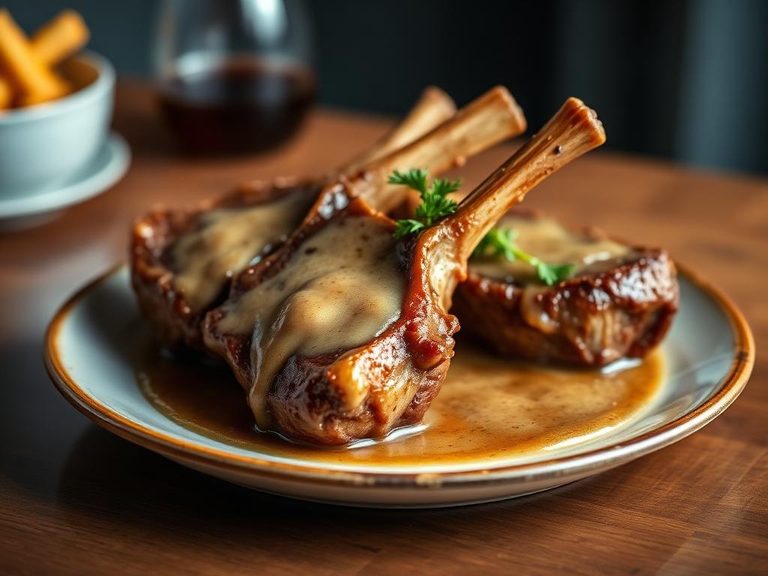
Lamb or mutton with gravy
Common food

Photo: Wikipedia
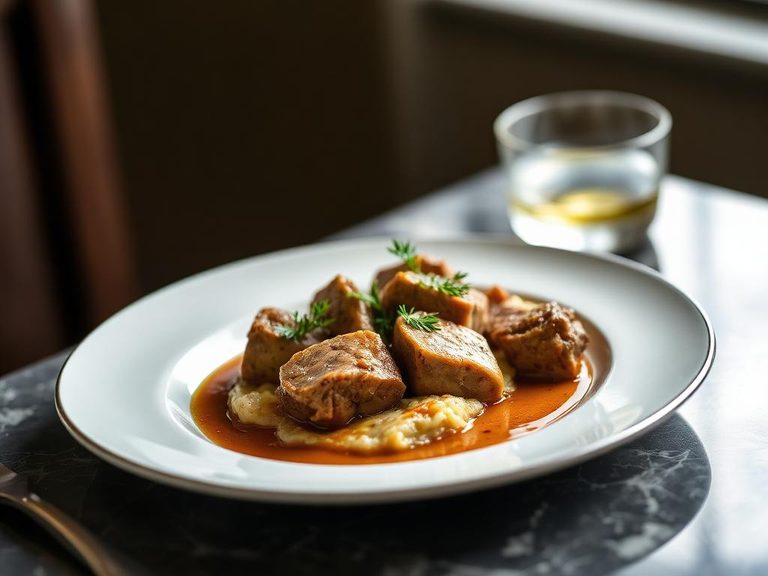
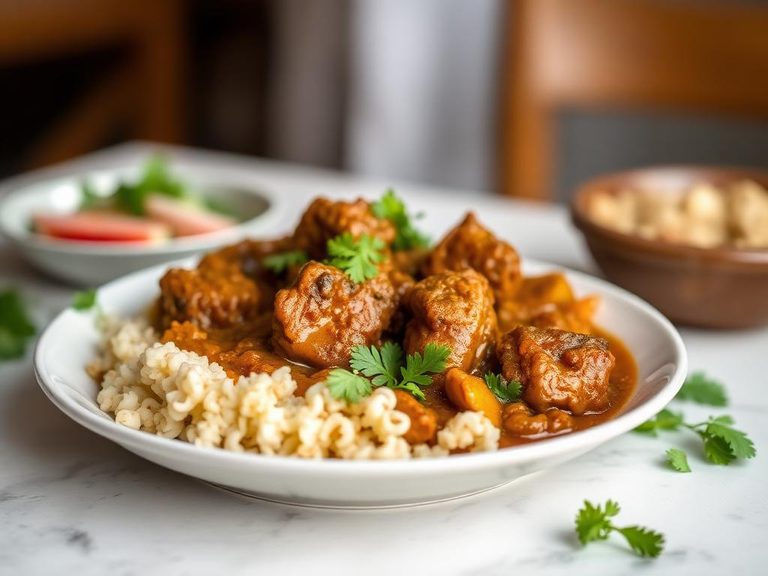
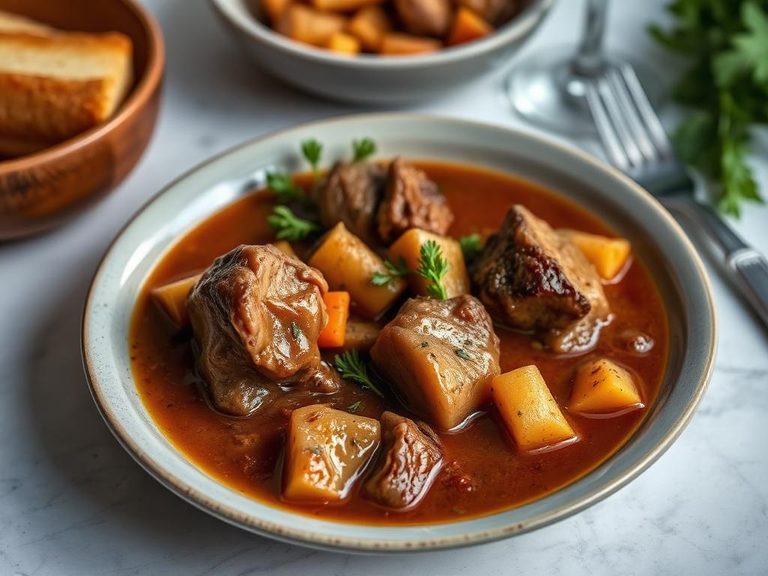
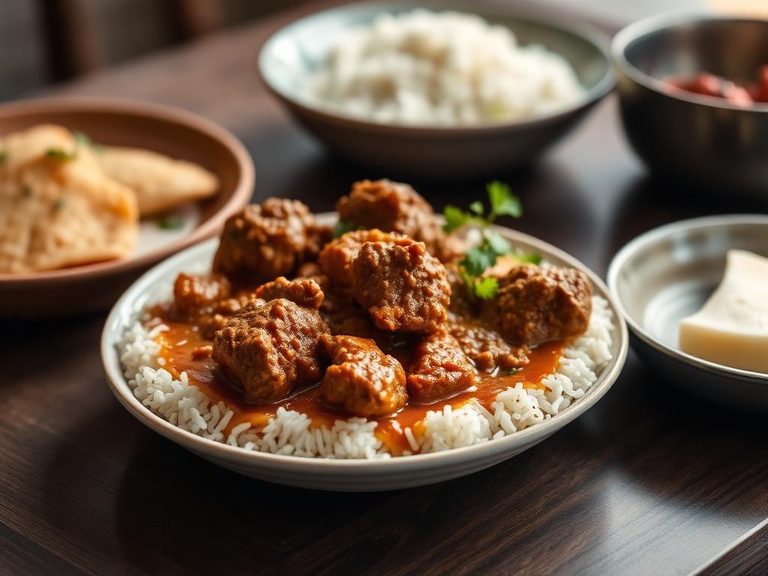
Lamb or mutton with gravy is a rich, savory dish featuring tender, slow-cooked meat coated in a deeply flavorful, meat-based sauce. The meat offers a robust, slightly gamey flavor with a melt-in-the-mouth texture when cooked properly, while the gravy provides a velvety, umami-rich coating. Nutritionally, it's a high-protein, high-fat dish with virtually no carbohydrates, making it a substantial source of energy and essential amino acids.
Calorie split: 32% protein · 3% carbs · 65% fat
↓ Full nutrition💚 Why it's loved
People adore this dish for its deep, comforting flavor profile—the savory richness of the gravy perfectly complements the distinctive taste of the lamb. It's a beloved centerpiece in many cultures, often associated with family gatherings, festive meals, and hearty home cooking.
⚠️ Watch-outs & how to enjoy it better
The high saturated fat and calorie density can be a concern for those monitoring heart health or calorie intake. Additionally, the gravy can be high in sodium, which may affect blood pressure. To counteract this, practice portion control, trim excess fat before cooking, and consider using low-sodium broth or reducing added salt. Pairing it with fiber-rich vegetables like roasted Brussels sprouts or a fresh salad can balance the meal.
Key benefits
- Excellent source of high-quality protein for muscle maintenance and repair.
- Rich in iron, particularly heme iron, which is highly absorbable and helps prevent anemia.
- Provides essential B vitamins like B12 and niacin, crucial for nerve function and energy metabolism.
- Contains zinc and selenium, minerals important for immune function and thyroid health.
- The fat content includes conjugated linoleic acid (CLA), which has been studied for various health benefits.
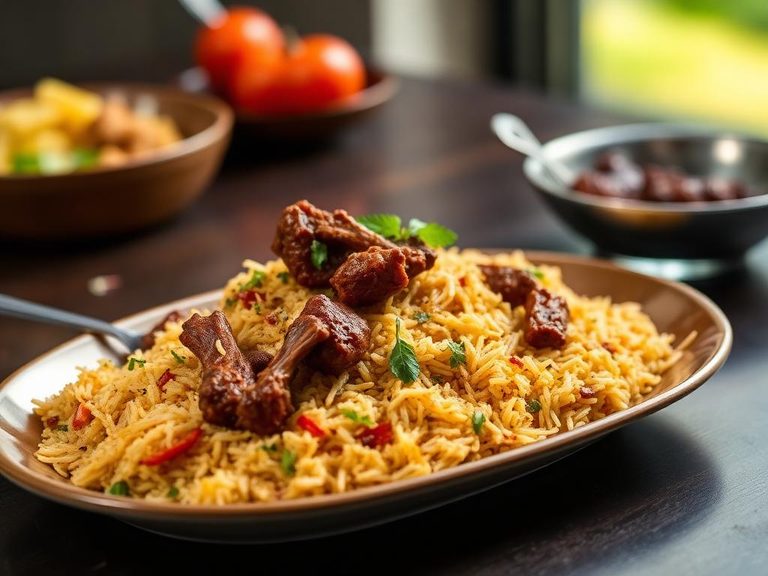
🍽️ Popular dishes
🌍 Where it's eaten
💡 Did you know?
The term 'mutton' typically refers to meat from sheep over two years old, which has a stronger flavor and tougher texture than lamb, often requiring slower cooking methods like braising to become tender.
Full nutrition (USDA data · scales with serving)
| Water | 64.4 g |
| Energy | 219 kcal |
| Protein | 17.3 g |
| Total lipid (fat) | 15.4 g |
| Carbohydrate, by difference | 1.6 g |
| Fiber, total dietary | 0.00 g |
| Total Sugars | 0.09 g |
| Calcium, Ca | 15.0 mg |
| Iron, Fe | 1.3 mg |
| Magnesium, Mg | 17.0 mg |
| Phosphorus, P | 137 mg |
| Potassium, K | 228 mg |
| Sodium, Na | 359 mg |
| Zinc, Zn | 3.1 mg |
| Copper, Cu | 0.09 mg |
| Selenium, Se | 18.5 ug |
| Vitamin C, total ascorbic acid | 0.00 mg |
| Thiamin | 0.08 mg |
| Riboflavin | 0.19 mg |
| Niacin | 4.7 mg |
| Vitamin B-6 | 0.10 mg |
| Folate, total | 13.0 ug |
| Folic acid | 0.00 ug |
| Folate, food | 13.0 ug |
| Folate, DFE | 13.0 ug |
| Choline, total | 66.4 mg |
| Vitamin B-12 | 1.8 ug |
| Vitamin B-12, added | 0.00 ug |
| Vitamin A, RAE | 0.00 ug |
| Retinol | 0.00 ug |
| Carotene, beta | 0.00 ug |
| Carotene, alpha | 0.00 ug |
| Cryptoxanthin, beta | 0.00 ug |
| Lycopene | 0.00 ug |
| Lutein + zeaxanthin | 0.00 ug |
| Vitamin E (alpha-tocopherol) | 0.13 mg |
| Vitamin E, added | 0.00 mg |
| Vitamin D (D2 + D3) | 0.10 ug |
| Vitamin K (phylloquinone) | 3.4 ug |
| Alcohol, ethyl | 0.00 g |
| Caffeine | 0.00 mg |
| Theobromine | 0.00 mg |
Fat & fatty acid profile (per 100g)
| Fatty acids, total saturated | 6.3 g |
| SFA 4:0 | 0.00 g |
| SFA 6:0 | 0.00 g |
| SFA 8:0 | 0.00 g |
| SFA 10:0 | 0.04 g |
| SFA 12:0 | 0.06 g |
| SFA 14:0 | 0.58 g |
| SFA 16:0 | 3.3 g |
| SFA 18:0 | 2.0 g |
| Fatty acids, total monounsaturated | 6.5 g |
| MUFA 16:1 | 0.46 g |
| MUFA 18:1 | 5.8 g |
| MUFA 20:1 | 0.00 g |
| MUFA 22:1 | 0.00 g |
| Fatty acids, total polyunsaturated | 1.2 g |
| PUFA 18:2 | 0.91 g |
| PUFA 18:3 | 0.21 g |
| PUFA 18:4 | 0.00 g |
| PUFA 20:4 | 0.05 g |
| PUFA 20:5 n-3 (EPA) | 0.00 g |
| PUFA 22:5 n-3 (DPA) | 0.00 g |
| PUFA 22:6 n-3 (DHA) | 0.00 g |
| Cholesterol | 69.0 mg |
FAQ
What's the difference between lamb and mutton?
Lamb comes from sheep under one year old and has a milder, more tender flavor. Mutton is from older sheep (over two years), resulting in a stronger, gamey taste and tougher texture that benefits from long, slow cooking.
How can I make the gravy less fatty?
After cooking, you can skim the fat from the surface of the gravy using a ladle or fat separator. Alternatively, chill the dish until the fat solidifies on top, then remove it before reheating.
Is this dish suitable for a low-carb diet?
Yes, the meat and gravy itself are very low in carbohydrates (about 1.58g per 100g). However, be mindful of any thickeners like flour or cornstarch used in the gravy recipe, as they will add carbs.
Nutrient density (calculated · NRF9.3)
Nutrient Rich Foods index: beneficial nutrients (protein, fiber, vitamins, minerals) minus saturated fat, added sugar & sodium, per 100 kcal.
NRF9.3 index — Fulgoni, Keast & Drewnowski, 2009. Computed from USDA nutrients.
Weight-loss friendliness (composite index)
Energy density 2.19 kcal/g · 32% calories from protein · 0.0 g fiber · 0.1 g sugar per 100 g.
Composite of energy density (Rolls et al., 1999), protein & fiber satiety, minus sugar. A calculated heuristic — ranks satiety-per-calorie, not a clinical measure.
Dietary load (calculated from USDA values)
Potential renal acid load. Positive = acid-forming, negative = alkaline-forming.
Sodium-to-potassium ratio: 1.57 (lower is better — aim for ≤ 1)
Sodium:potassium per WHO potassium guidance. Computed from USDA nutrients.