Mutton Biryani
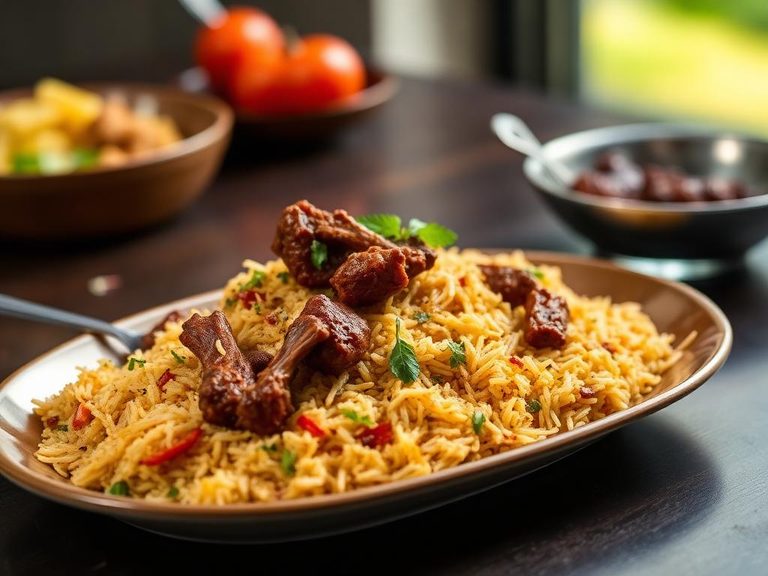
Mutton Biryani is a rich and aromatic rice dish from the Indian subcontinent, featuring tender pieces of marinated mutton layered with fragrant basmati rice, fried onions, and a blend of whole and ground spices like saffron, cardamom, and cloves. It is traditionally slow-cooked in a sealed pot (dum) to allow the flavors to meld beautifully. This celebratory dish is a staple at weddings, festivals, and special gatherings.
🍽️ Nutrition at a glance
This dish is a balanced but hearty meal, being high in protein from the mutton, carbohydrates from the rice, and fats from the cooking oil, ghee, and meat. A typical serving provides substantial energy, with a rough calorie ballpark of 500-700 calories, along with key nutrients like iron, B vitamins, and fiber from the spices and onions.
Nutrition breakdown
| Calories | 550 kcal |
| Protein | 25 g |
| Carbs | 65 g |
| Fat | 20 g |
| Fiber | 4 g |
| Sugar | 5 g |
| Sodium | 850 mg |
| Potassium | 450 mg |
| Iron | 4 mg |
| Zinc | 5 mg |
| Vitamin B12 | 2.5 mcg |
| Niacin (B3) | 8 mg |
| Phosphorus | 300 mg |
| Magnesium | 60 mg |
| Selenium | 25 mcg |
Per 1 plate (350 g) · estimated, varies by recipe
💡 What's interesting
Culturally, Mutton Biryani is a dish of pride and regional variation, with distinct styles like Hyderabadi, Lucknowi (Awadhi), and Kolkata biryani, each with its own unique preparation and history. Nutritionally, the combination of meat and rice creates a complete amino acid profile, and the spices used, such as turmeric and cloves, are known for their anti-inflammatory properties.