

Lamb or mutton, rice, and vegetables excluding carrots, broccoli, and dark-green leafy; gravy
Common food
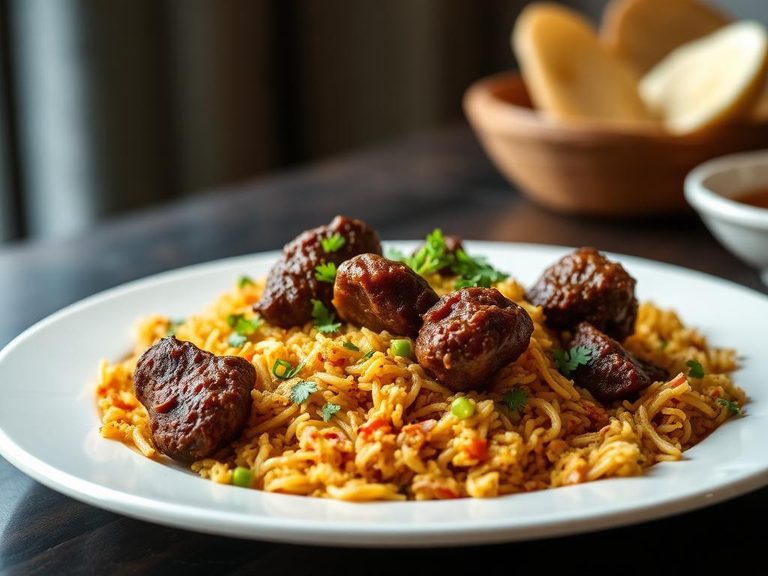
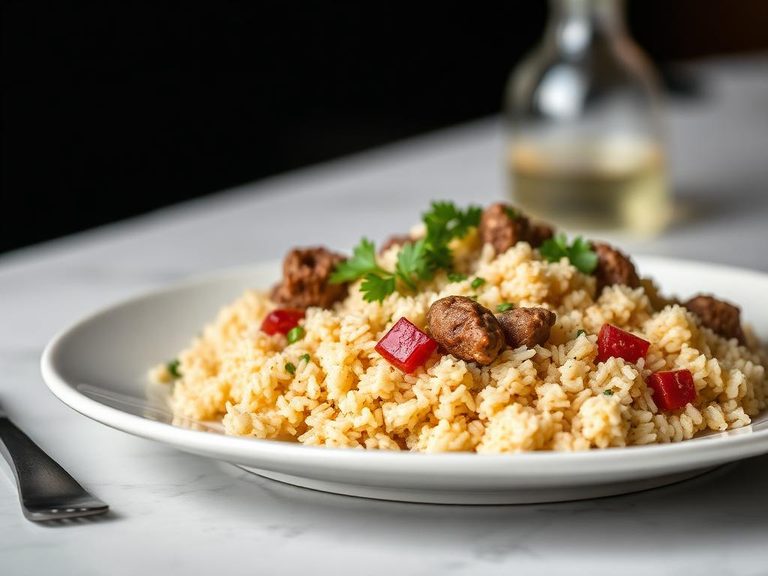
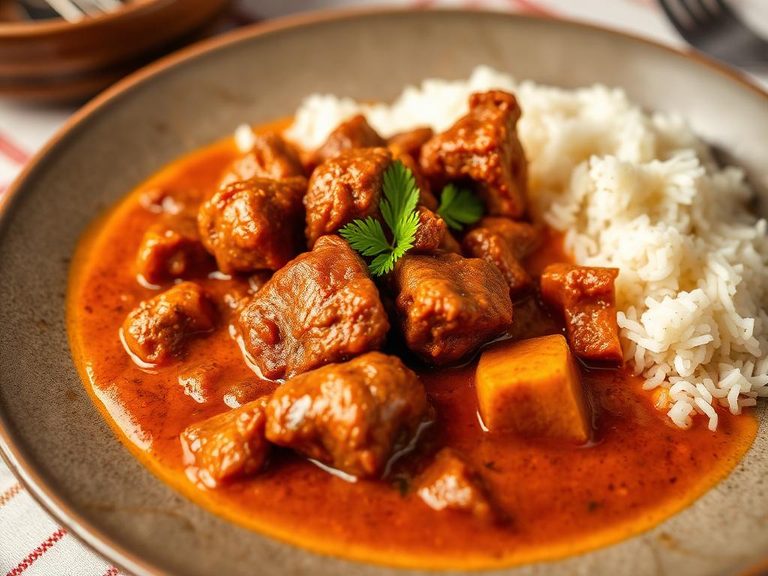
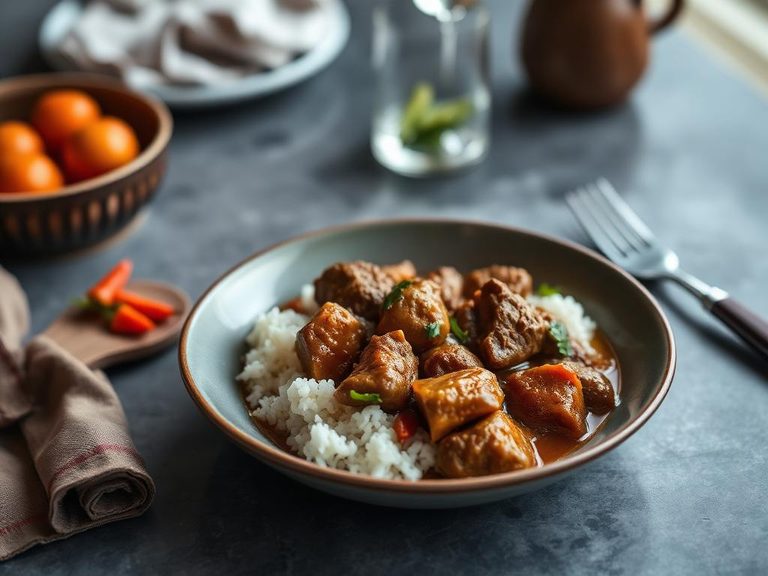
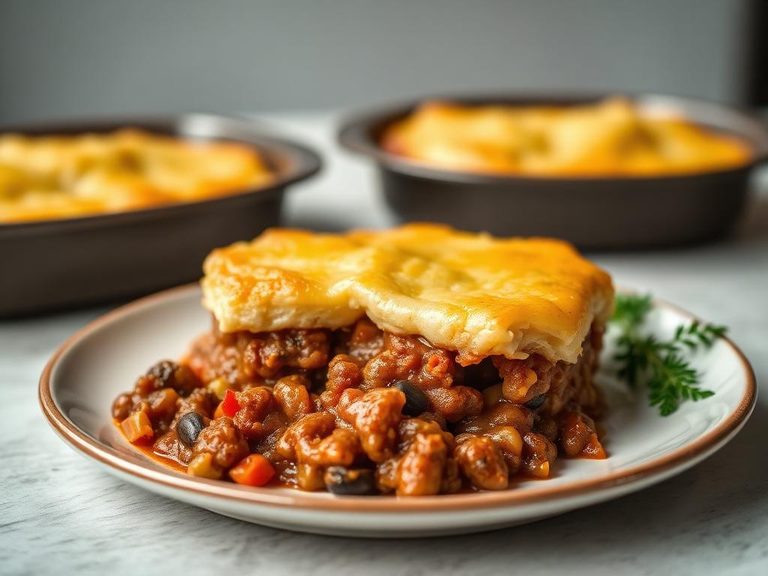
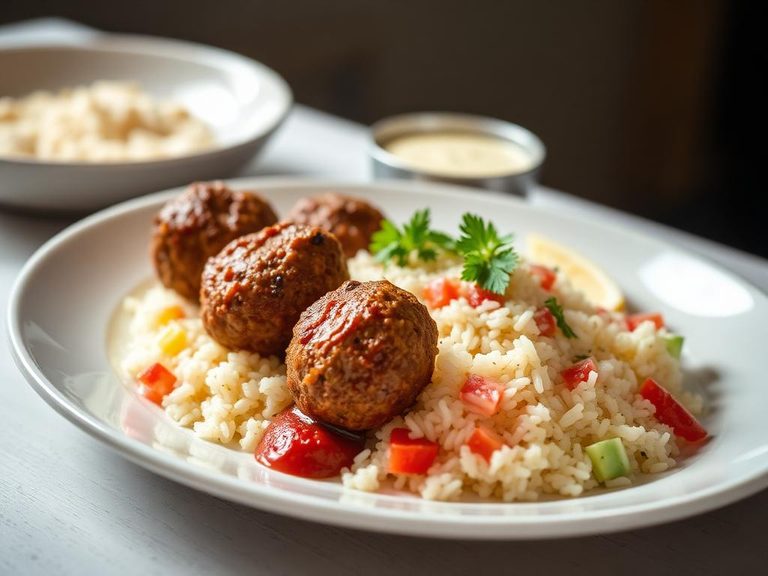
A hearty, comforting dish of tender lamb or mutton served over fluffy rice, accompanied by a medley of mild, sweet vegetables like peas, corn, or potatoes, all brought together with a rich, savory gravy. The texture is a satisfying mix of soft rice, succulent meat, and tender vegetables, with the gravy adding a deep, umami-rich flavor. At just 136 kcal per 100g, it's a surprisingly light yet filling meal, offering a good balance of protein (5.05g) and carbohydrates (16.34g) for sustained energy.
Calorie split: 15% protein · 48% carbs · 37% fat
↓ Full nutrition💚 Why it's loved
People love it for its deep, savory flavor and comforting, home-cooked appeal, often evoking memories of family meals. The combination of tender meat, fluffy rice, and rich gravy is universally satisfying and versatile, easily adapted to different spice levels or vegetable choices.
⚠️ Watch-outs & how to enjoy it better
The dish can be high in sodium due to the gravy and seasoning, which may concern those monitoring blood pressure. To counteract, opt for low-sodium broth or herbs for flavor, and balance with a side of fresh, unseasoned vegetables. Additionally, the red meat content may not suit everyone, but pairing with extra vegetables or using leaner cuts can help.
Key benefits
- Provides a balanced mix of protein and complex carbs for steady energy.
- Rich in B vitamins (especially B12) from lamb, supporting nerve function.
- Contains iron and zinc from red meat, crucial for immune health.
- The gravy and rice make it a comforting, easy-to-digest meal.
- Vegetable inclusion adds fiber and micronutrients without heaviness.
🍽️ Popular dishes
🌍 Where it's eaten
💡 Did you know?
Lamb and mutton have been staple meats in human diets for over 10,000 years, with ancient shepherds in the Fertile Crescent among the first to domesticate sheep for food.
Full nutrition (USDA data · scales with serving)
| Water | 71.9 g |
| Energy | 136 kcal |
| Protein | 5.0 g |
| Total lipid (fat) | 5.5 g |
| Carbohydrate, by difference | 16.3 g |
| Fiber, total dietary | 0.70 g |
| Total Sugars | 0.55 g |
| Calcium, Ca | 14.0 mg |
| Iron, Fe | 0.92 mg |
| Magnesium, Mg | 13.0 mg |
| Phosphorus, P | 60.0 mg |
| Potassium, K | 104 mg |
| Sodium, Na | 309 mg |
| Zinc, Zn | 0.92 mg |
| Copper, Cu | 0.06 mg |
| Selenium, Se | 7.1 ug |
| Vitamin C, total ascorbic acid | 0.70 mg |
| Thiamin | 0.10 mg |
| Riboflavin | 0.07 mg |
| Niacin | 1.8 mg |
| Vitamin B-6 | 0.08 mg |
| Folate, total | 34.0 ug |
| Folic acid | 25.0 ug |
| Folate, food | 9.0 ug |
| Folate, DFE | 52.0 ug |
| Choline, total | 17.7 mg |
| Vitamin B-12 | 0.34 ug |
| Vitamin B-12, added | 0.00 ug |
| Vitamin A, RAE | 3.0 ug |
| Retinol | 0.00 ug |
| Carotene, beta | 25.0 ug |
| Carotene, alpha | 6.0 ug |
| Cryptoxanthin, beta | 11.0 ug |
| Lycopene | 0.00 ug |
| Lutein + zeaxanthin | 107 ug |
| Vitamin E (alpha-tocopherol) | 0.41 mg |
| Vitamin E, added | 0.00 mg |
| Vitamin D (D2 + D3) | 0.00 ug |
| Vitamin K (phylloquinone) | 6.0 ug |
| Alcohol, ethyl | 0.00 g |
| Caffeine | 0.00 mg |
| Theobromine | 0.00 mg |
Fat & fatty acid profile (per 100g)
| Fatty acids, total saturated | 1.6 g |
| SFA 4:0 | 0.00 g |
| SFA 6:0 | 0.00 g |
| SFA 8:0 | 0.00 g |
| SFA 10:0 | 0.01 g |
| SFA 12:0 | 0.01 g |
| SFA 14:0 | 0.12 g |
| SFA 16:0 | 0.95 g |
| SFA 18:0 | 0.47 g |
| Fatty acids, total monounsaturated | 2.3 g |
| MUFA 16:1 | 0.12 g |
| MUFA 18:1 | 2.1 g |
| MUFA 20:1 | 0.02 g |
| MUFA 22:1 | 0.00 g |
| Fatty acids, total polyunsaturated | 1.1 g |
| PUFA 18:2 | 0.92 g |
| PUFA 18:3 | 0.14 g |
| PUFA 18:4 | 0.00 g |
| PUFA 20:4 | 0.01 g |
| PUFA 20:5 n-3 (EPA) | 0.00 g |
| PUFA 22:5 n-3 (DPA) | 0.00 g |
| PUFA 22:6 n-3 (DHA) | 0.00 g |
| Cholesterol | 14.0 mg |
FAQ
Is this dish high in calories?
At 136 kcal per 100g, it's relatively moderate, making it suitable for a balanced meal without excessive calorie intake.
Can I make this dish healthier?
Yes, use lean lamb cuts, reduce salt in the gravy, and increase the proportion of vegetables for added fiber and nutrients.
What vegetables are typically included?
Common additions are peas, corn, potatoes, and onions, but carrots, broccoli, and dark greens are excluded here, focusing on milder, sweeter veggies.
Nutrient density (calculated · NRF9.3)
Nutrient Rich Foods index: beneficial nutrients (protein, fiber, vitamins, minerals) minus saturated fat, added sugar & sodium, per 100 kcal.
NRF9.3 index — Fulgoni, Keast & Drewnowski, 2009. Computed from USDA nutrients.
Weight-loss friendliness (composite index)
Energy density 1.36 kcal/g · 15% calories from protein · 0.7 g fiber · 0.6 g sugar per 100 g.
Composite of energy density (Rolls et al., 1999), protein & fiber satiety, minus sugar. A calculated heuristic — ranks satiety-per-calorie, not a clinical measure.
Dietary load (calculated from USDA values)
Potential renal acid load. Positive = acid-forming, negative = alkaline-forming.
Sodium-to-potassium ratio: 2.97 (lower is better — aim for ≤ 1)
Sodium:potassium per WHO potassium guidance. Computed from USDA nutrients.