

Lamb, Australian, imported, fresh, shoulder, arm, separable lean and fat, trimmed to 1/8" fat, cooked, braised
Whole food · Lamb, Veal, and Game Products
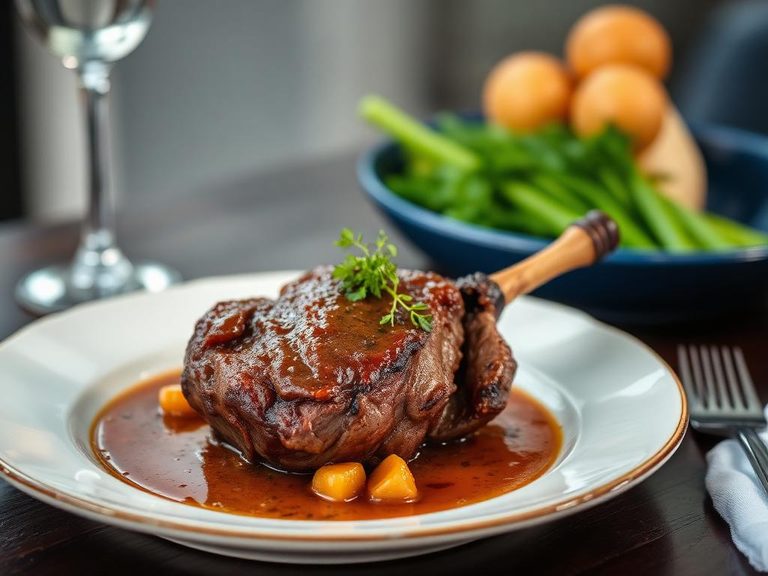
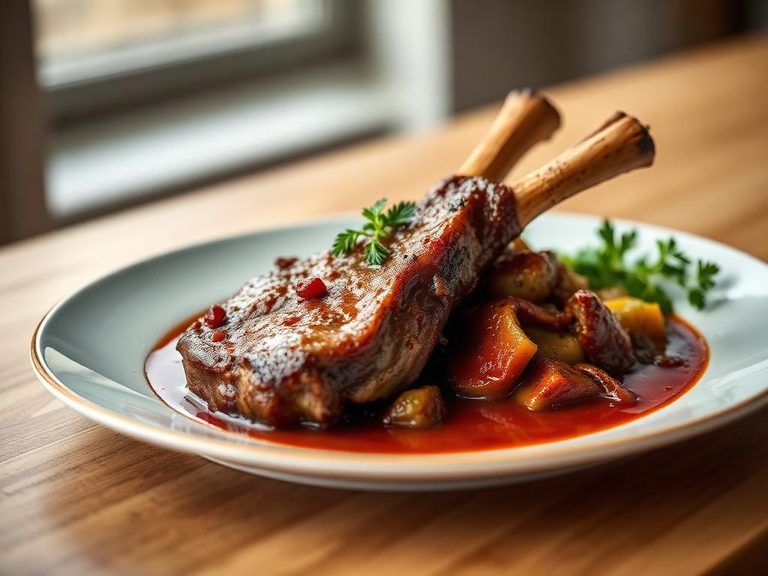
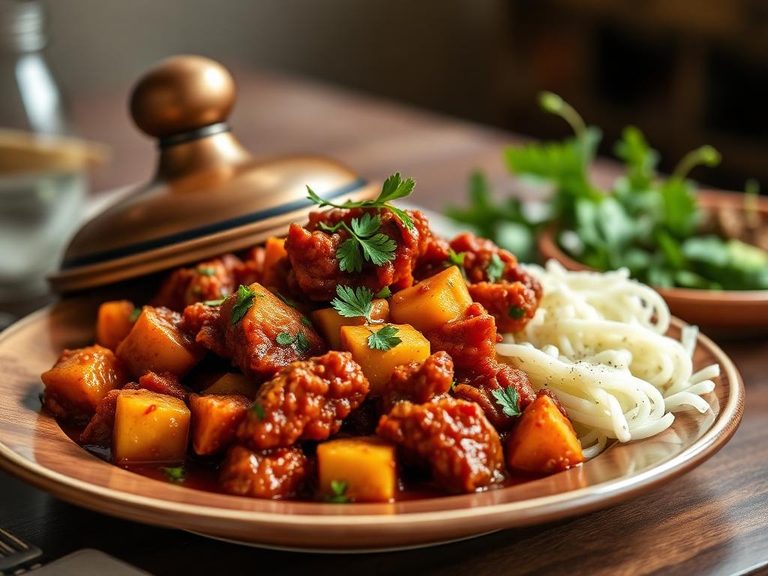
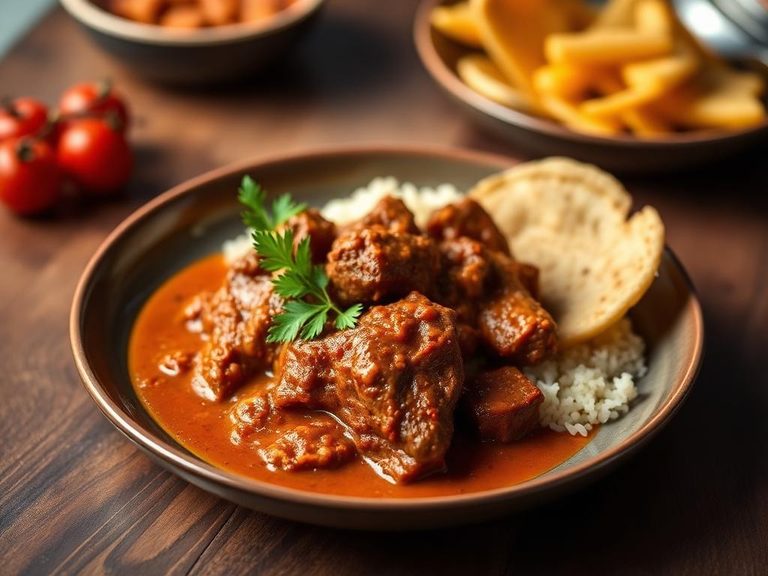
This is a rich, succulent cut of Australian lamb shoulder, braised until the meat is fall-apart tender and the marbled fat has rendered into a silky, deep-flavored sauce. The taste is robust and distinctly lamb-forward, with a satisfying, melt-in-the-mouth texture from the slow-cooking process. It's a protein powerhouse, delivering nearly 30 grams per 100g, with a significant portion of its calories coming from flavorful fat.
Calorie split: 39% protein · 0% carbs · 61% fat
↓ Full nutrition💚 Why it's loved
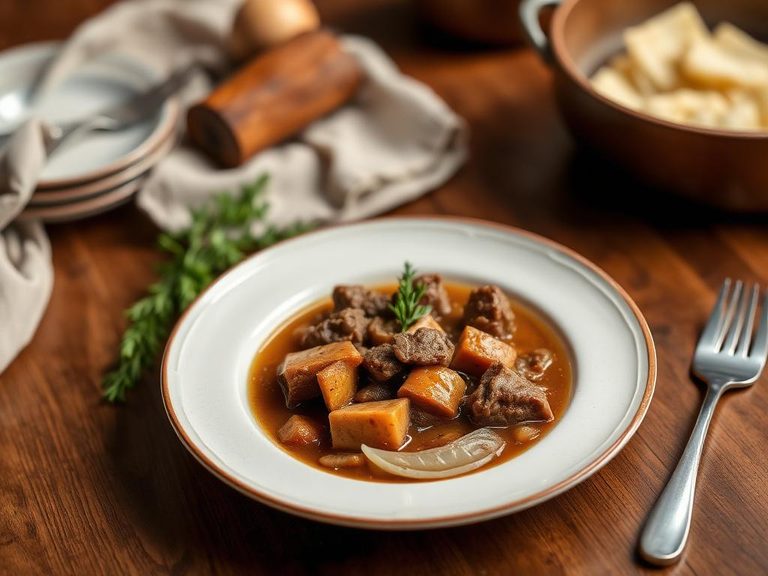
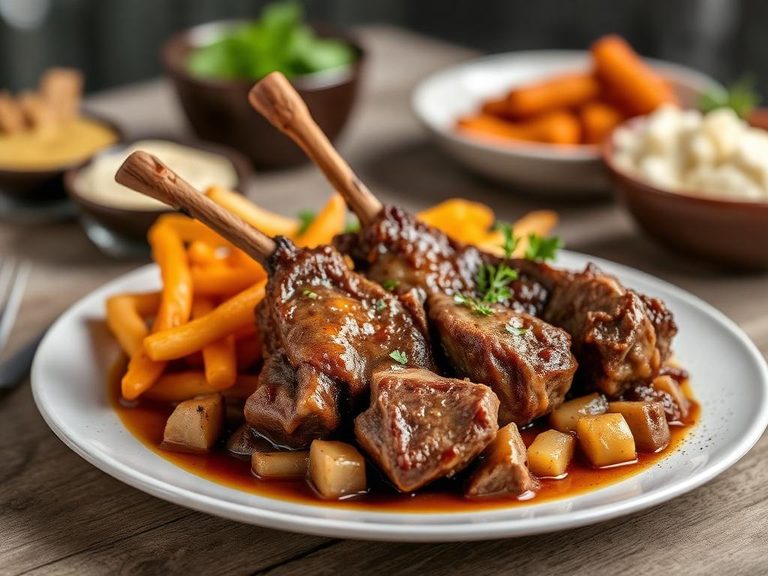
People adore this cut for its deep, savory flavor and incredibly tender, pull-apart texture that results from slow braising. It's a versatile comfort food, perfect for everything from a hearty Sunday roast to a rich, saucy stew.
⚠️ Watch-outs & how to enjoy it better
The high fat content (over 20g per 100g) means it's calorie-dense, which may be a concern for those managing weight or saturated fat intake. To mitigate this, pair it with a large portion of non-starchy vegetables (like roasted broccoli or a green salad) to add volume and fiber, and practice portion control by serving it as the centerpiece of a balanced plate rather than the main bulk.
Key benefits
- Excellent source of high-quality protein for muscle maintenance and repair.
- Rich in essential minerals like iron, zinc, and selenium.
- Provides a good source of B vitamins, particularly B12 and niacin.
- Contains conjugated linoleic acid (CLA), a naturally occurring fatty acid.
🍽️ Popular dishes
🌍 Where it's eaten
💡 Did you know?
The shoulder is a hardworking muscle group, and the connective tissue (collagen) within it breaks down into gelatin during braising, which is what gives the resulting sauce its luxurious, lip-smacking body.
Full nutrition (USDA data · scales with serving)
| Water | 51.0 g |
| Energy | 311 kcal |
| Energy | 1301 kj |
| Protein | 29.7 g |
| Total lipid (fat) | 20.4 g |
| Ash | 0.93 g |
| Carbohydrate, by difference | 0.00 g |
| Calcium, Ca | 27.0 mg |
| Iron, Fe | 2.4 mg |
| Magnesium, Mg | 23.0 mg |
| Phosphorus, P | 201 mg |
| Potassium, K | 268 mg |
| Sodium, Na | 73.0 mg |
| Zinc, Zn | 6.6 mg |
| Copper, Cu | 0.19 mg |
| Manganese, Mn | 0.02 mg |
| Selenium, Se | 9.2 ug |
| Thiamin | 0.09 mg |
| Riboflavin | 0.26 mg |
| Niacin | 4.4 mg |
| Pantothenic acid | 0.71 mg |
| Vitamin B-6 | 0.20 mg |
| Vitamin B-12 | 3.3 ug |
Fat & fatty acid profile (per 100g)
| Fatty acids, total saturated | 9.7 g |
| SFA 10:0 | 0.04 g |
| SFA 12:0 | 0.06 g |
| SFA 14:0 | 0.79 g |
| SFA 15:0 | 0.13 g |
| SFA 16:0 | 4.5 g |
| SFA 17:0 | 0.31 g |
| SFA 18:0 | 3.9 g |
| SFA 20:0 | 0.03 g |
| Fatty acids, total monounsaturated | 8.2 g |
| MUFA 14:1 | 0.03 g |
| MUFA 16:1 | 0.37 g |
| MUFA 18:1 | 7.5 g |
| MUFA 20:1 | 0.07 g |
| Fatty acids, total polyunsaturated | 0.83 g |
| PUFA 18:2 | 0.52 g |
| PUFA 18:3 | 0.25 g |
| PUFA 20:4 | 0.06 g |
| Cholesterol | 106 mg |
Amino acid profile (per 100g)
| Tryptophan | 0.35 g |
| Threonine | 1.3 g |
| Isoleucine | 1.4 g |
| Leucine | 2.3 g |
| Lysine | 2.6 g |
| Methionine | 0.76 g |
| Cystine | 0.36 g |
| Phenylalanine | 1.2 g |
| Tyrosine | 1.00 g |
| Valine | 1.6 g |
| Arginine | 1.8 g |
| Histidine | 0.94 g |
| Alanine | 1.8 g |
| Aspartic acid | 2.6 g |
| Glutamic acid | 4.3 g |
| Glycine | 1.4 g |
| Proline | 1.2 g |
| Serine | 1.1 g |
FAQ
What's the best way to cook this cut for maximum tenderness?
Braising is ideal. Sear the meat first, then cook it slowly in a covered pot with liquid (like stock, wine, or tomatoes) at a low temperature (around 325°F/160°C) for several hours until it's fork-tender.
How does the fat content compare to other lamb cuts?
The shoulder, especially with 1/8" fat trimmed, is a fattier cut compared to leaner options like the loin or leg. This fat is crucial for flavor and moisture during long cooking times.
Can I reduce the fat in the final dish?
Yes, after braising, you can chill the dish and skim off the solidified fat from the top of the sauce before reheating and serving.
Nutrient density (calculated · NRF9.3)
Nutrient Rich Foods index: beneficial nutrients (protein, fiber, vitamins, minerals) minus saturated fat, added sugar & sodium, per 100 kcal.
NRF9.3 index — Fulgoni, Keast & Drewnowski, 2009. Computed from USDA nutrients.
Weight-loss friendliness (composite index)
Energy density 3.11 kcal/g · 38% calories from protein · 0.0 g fiber · 0.0 g sugar per 100 g.
Composite of energy density (Rolls et al., 1999), protein & fiber satiety, minus sugar. A calculated heuristic — ranks satiety-per-calorie, not a clinical measure.
Dietary load (calculated from USDA values)
Potential renal acid load. Positive = acid-forming, negative = alkaline-forming.
Sodium-to-potassium ratio: 0.27 (lower is better — aim for ≤ 1)
Sodium:potassium per WHO potassium guidance. Computed from USDA nutrients.