

Infant formula, PBM PRODUCTS, store brand, soy, powder
Whole food · Baby Foods

Photo: Wikipedia
This is a finely milled, pale yellow powder designed as a complete, plant-based nutritional source for infants. When mixed with water, it reconstitutes into a smooth, creamy liquid with a mild, slightly beany taste profile typical of soy-based products. Nutritionally, it delivers a dense 508 calories per 100g of powder, with a balanced macronutrient profile emphasizing carbohydrates and fats for growth.
Calorie split: 11% protein · 41% carbs · 48% fat
↓ Full nutrition💚 Why it's loved
Parents appreciate it as a reliable, nutritionally complete alternative when breastfeeding isn't possible or for infants with specific dietary needs. Its powder form offers convenience, long shelf life, and easy preparation for on-the-go feeding.
⚠️ Watch-outs & how to enjoy it better
The high carbohydrate content (52.2g per 100g powder) means the reconstituted formula can cause rapid blood sugar rises if not portioned appropriately. Some infants may experience digestive adjustment periods (gas, fussiness) when transitioning to soy protein. Always consult a pediatrician before use, especially for infants with soy allergies.
Key benefits
- Complete protein source for infant growth
- Lactose-free and dairy-free option
- Fortified with essential vitamins and minerals
- Provides a balanced calorie-to-volume ratio
- Suitable for infants with cow's milk protein allergy
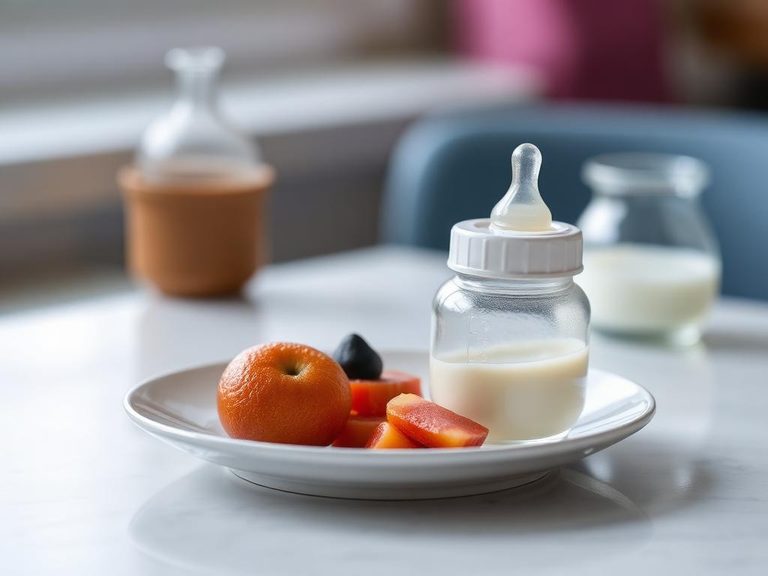
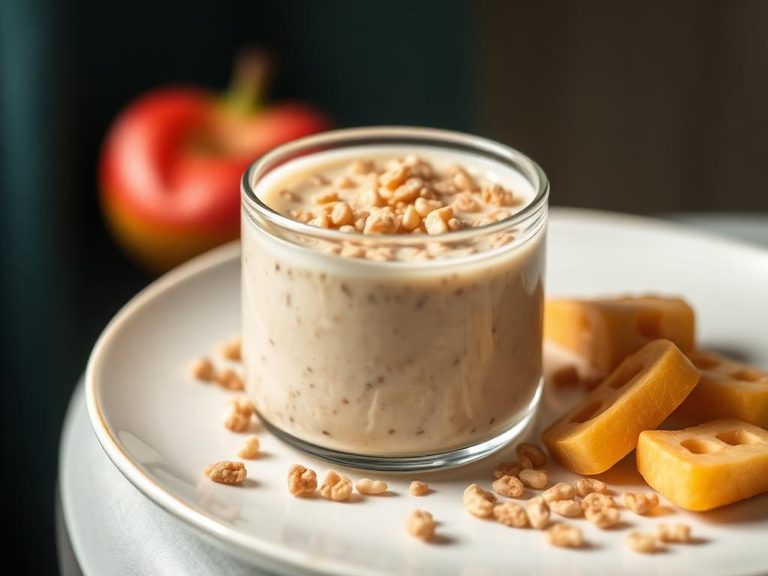
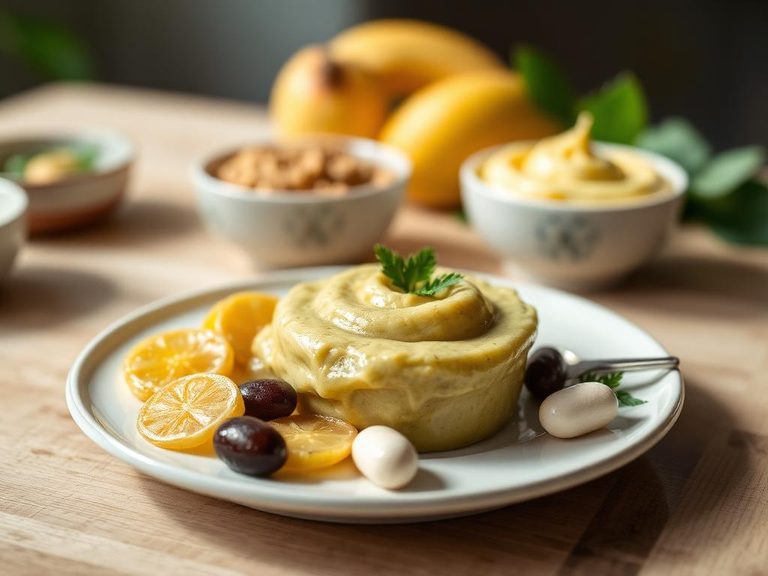
🍽️ Popular dishes


🌍 Where it's eaten
💡 Did you know?
The soy protein in infant formula is extensively hydrolyzed or isolated to mimic the digestibility of human milk protein, a process developed in the 1960s.
Full nutrition (USDA data · scales with serving)
| Water | 2.0 g |
| Energy | 508 kcal |
| Energy | 2125 kj |
| Protein | 13.6 g |
| Total lipid (fat) | 27.2 g |
| Ash | 5.0 g |
| Carbohydrate, by difference | 52.2 g |
| Fiber, total dietary | 0.00 g |
| Total Sugars | 52.2 g |
| Calcium, Ca | 453 mg |
| Iron, Fe | 9.1 mg |
| Magnesium, Mg | 51.0 mg |
| Phosphorus, P | 317 mg |
| Potassium, K | 528 mg |
| Sodium, Na | 151 mg |
| Zinc, Zn | 3.8 mg |
| Copper, Cu | 0.35 mg |
| Selenium, Se | 11.0 ug |
| Vitamin C, total ascorbic acid | 42.0 mg |
| Thiamin | 0.50 mg |
| Riboflavin | 0.76 mg |
| Niacin | 3.8 mg |
| Vitamin B-6 | 0.32 mg |
| Folate, total | 38.0 ug |
| Folic acid | 38.0 ug |
| Folate, food | 0.00 ug |
| Folate, DFE | 64.0 ug |
| Choline, total | 73.0 mg |
| Vitamin B-12 | 1.5 ug |
| Vitamin B-12, added | 1.5 ug |
| Vitamin A, RAE | 473 ug |
| Retinol | 473 ug |
| Carotene, beta | 0.00 ug |
| Carotene, alpha | 0.00 ug |
| Cryptoxanthin, beta | 0.00 ug |
| Vitamin A, IU | 1577 iu |
| Lycopene | 0.00 ug |
| Lutein + zeaxanthin | 0.00 ug |
| Vitamin E (alpha-tocopherol) | 3.2 mg |
| Vitamin E, added | 3.2 mg |
| Vitamin D (D2 + D3), International Units | 303 iu |
| Vitamin D (D2 + D3) | 7.6 ug |
| Vitamin K (phylloquinone) | 41.6 ug |
| Alcohol, ethyl | 0.00 g |
| Caffeine | 0.00 mg |
| Theobromine | 0.00 mg |
Fat & fatty acid profile (per 100g)
| Fatty acids, total saturated | 12.4 g |
| SFA 4:0 | 0.00 g |
| SFA 6:0 | 0.00 g |
| SFA 8:0 | 0.71 g |
| SFA 10:0 | 0.54 g |
| SFA 12:0 | 3.8 g |
| SFA 14:0 | 1.8 g |
| SFA 16:0 | 3.7 g |
| SFA 18:0 | 1.9 g |
| Fatty acids, total monounsaturated | 10.8 g |
| MUFA 16:1 | 0.32 g |
| MUFA 18:1 | 10.4 g |
| MUFA 20:1 | 0.05 g |
| MUFA 22:1 | 0.00 g |
| Fatty acids, total polyunsaturated | 3.8 g |
| PUFA 18:2 | 3.5 g |
| PUFA 18:3 | 0.35 g |
| PUFA 18:4 | 0.00 g |
| PUFA 20:4 | 0.18 g |
| PUFA 20:5 n-3 (EPA) | 0.00 g |
| PUFA 22:5 n-3 (DPA) | 0.00 g |
| PUFA 22:6 n-3 (DHA) | 0.09 g |
| Cholesterol | 0.00 mg |
FAQ
Is this formula suitable for newborns?
Soy-based formulas are generally considered safe for full-term infants from birth, but they are often recommended as a second-line option after extensively hydrolyzed formulas for cow's milk protein allergy. Always follow pediatric guidance.
Why is the sugar content so high?
The 52.2g of sugar per 100g of powder is primarily lactose or other carbohydrate sources (like corn syrup solids) added to provide the necessary energy density and mimic the carbohydrate profile of breast milk. When reconstituted, the concentration per serving is appropriate for infant nutrition.
How does the texture compare to cow's milk formula?
The powder itself is very fine and mixes easily. The reconstituted liquid is typically smooth and uniform, though some parents note a slightly thinner consistency compared to some cow's milk-based formulas.
Nutrient density (calculated · NRF9.3)
Nutrient Rich Foods index: beneficial nutrients (protein, fiber, vitamins, minerals) minus saturated fat, added sugar & sodium, per 100 kcal.
NRF9.3 index — Fulgoni, Keast & Drewnowski, 2009. Computed from USDA nutrients.
Weight-loss friendliness (composite index)
Energy density 5.08 kcal/g · 11% calories from protein · 0.0 g fiber · 52.2 g sugar per 100 g.
Composite of energy density (Rolls et al., 1999), protein & fiber satiety, minus sugar. A calculated heuristic — ranks satiety-per-calorie, not a clinical measure.
Dietary load (calculated from USDA values)
Potential renal acid load. Positive = acid-forming, negative = alkaline-forming.
Sodium-to-potassium ratio: 0.29 (lower is better — aim for ≤ 1)
Sodium:potassium per WHO potassium guidance. Computed from USDA nutrients.