

Infant Formula, MEAD JOHNSON, ENFAMIL, GENTLEASE, with ARA and DHA powder not reconstituted
Whole food · Baby Foods

Photo: Wikipedia
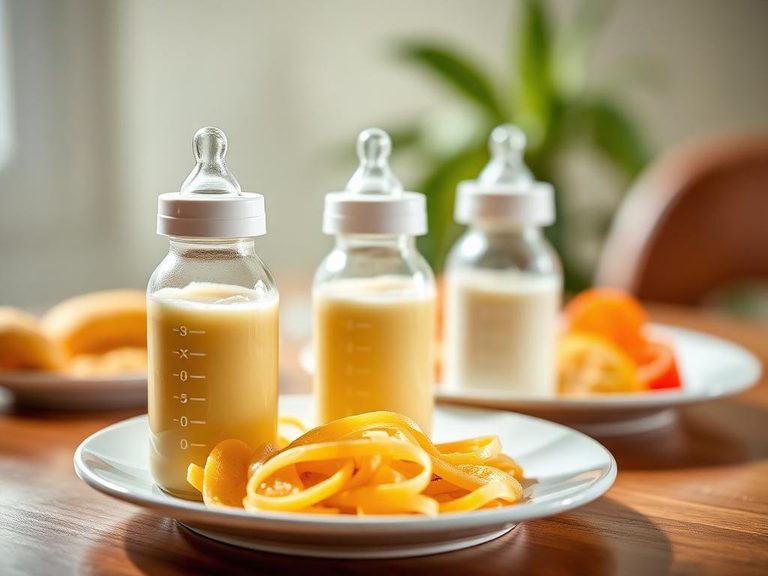
Enfamil Gentlease is a specialized infant formula powder designed for sensitive tummies, featuring a gentle, partially hydrolyzed protein blend. Its fine, pale-yellow powder mixes into a smooth, creamy liquid with a mild, slightly sweet milk-like flavor. Nutritionally, it's a powerhouse, delivering a balanced profile of 516 kcal, 11.7g protein, and 56.5g carbohydrates per 100g, with added ARA and DHA for brain and eye development.
Calorie split: 9% protein · 44% carbs · 47% fat
↓ Full nutrition💚 Why it's loved
Parents love it for providing peace of mind and relief for fussy, gassy babies, often noticing a calmer demeanor and easier digestion. The formula's reliability and targeted nutrition make it a trusted staple in many households.
⚠️ Watch-outs & how to enjoy it better
As a formula, it is a processed product and not a substitute for breastfeeding when possible. Some infants may still have sensitivities to its components, and it should be used under pediatric guidance. To counteract potential digestive issues, ensure proper mixing ratios and consult a doctor if fussiness persists.
Key benefits
- Gentle on sensitive stomachs due to partially hydrolyzed proteins
- Provides essential ARA and DHA for cognitive development
- Balanced nutrition for infants with fussiness or gas
- Fortified with iron and other key vitamins and minerals
🍽️ Popular dishes
🌍 Where it's eaten
💡 Did you know?
The 'Gentlease' blend uses proteins broken down into smaller pieces, a process called partial hydrolysis, which is specifically designed to be easier on a developing digestive system.
Full nutrition (USDA data · scales with serving)
| Water | 1.7 g |
| Energy | 516 kcal |
| Energy | 2158 kj |
| Protein | 11.7 g |
| Total lipid (fat) | 27.0 g |
| Ash | 3.1 g |
| Carbohydrate, by difference | 56.5 g |
| Fiber, total dietary | 0.00 g |
| Total Sugars | 11.5 g |
| Calcium, Ca | 420 mg |
| Iron, Fe | 9.2 mg |
| Magnesium, Mg | 41.0 mg |
| Phosphorus, P | 230 mg |
| Potassium, K | 550 mg |
| Sodium, Na | 185 mg |
| Zinc, Zn | 5.1 mg |
| Copper, Cu | 0.38 mg |
| Manganese, Mn | 0.08 mg |
| Selenium, Se | 14.3 ug |
| Vitamin C, total ascorbic acid | 61.0 mg |
| Thiamin | 0.41 mg |
| Riboflavin | 0.71 mg |
| Niacin | 5.1 mg |
| Pantothenic acid | 2.6 mg |
| Vitamin B-6 | 0.31 mg |
| Folate, total | 82.0 ug |
| Folic acid | 82.0 ug |
| Folate, food | 0.00 ug |
| Folate, DFE | 139 ug |
| Choline, total | 122 mg |
| Vitamin B-12 | 1.5 ug |
| Vitamin B-12, added | 1.5 ug |
| Vitamin A, RAE | 460 ug |
| Retinol | 460 ug |
| Carotene, beta | 0.00 ug |
| Carotene, alpha | 0.00 ug |
| Cryptoxanthin, beta | 0.00 ug |
| Vitamin A, IU | 1533 iu |
| Lycopene | 0.00 ug |
| Lutein + zeaxanthin | 0.00 ug |
| Vitamin E (alpha-tocopherol) | 4.6 mg |
| Vitamin E, added | 4.6 mg |
| Vitamin D (D2 + D3), International Units | 310 iu |
| Vitamin D (D2 + D3) | 7.8 ug |
| Vitamin K (phylloquinone) | 46.0 ug |
| Alcohol, ethyl | 0.00 g |
| Caffeine | 0.00 mg |
| Theobromine | 0.00 mg |
Fat & fatty acid profile (per 100g)
| Fatty acids, total saturated | 11.3 g |
| SFA 4:0 | 0.00 g |
| SFA 6:0 | 0.04 g |
| SFA 8:0 | 0.43 g |
| SFA 10:0 | 0.32 g |
| SFA 12:0 | 2.5 g |
| SFA 14:0 | 1.1 g |
| SFA 16:0 | 5.9 g |
| SFA 18:0 | 1.1 g |
| Fatty acids, total monounsaturated | 9.5 g |
| MUFA 16:1 | 0.04 g |
| MUFA 18:1 | 9.2 g |
| MUFA 20:1 | 0.08 g |
| MUFA 22:1 | 0.00 g |
| Fatty acids, total polyunsaturated | 5.1 g |
| PUFA 18:2 | 4.4 g |
| PUFA 18:3 | 0.37 g |
| PUFA 18:4 | 0.00 g |
| PUFA 20:4 | 0.17 g |
| PUFA 20:5 n-3 (EPA) | 0.00 g |
| PUFA 22:5 n-3 (DPA) | 0.00 g |
| PUFA 22:6 n-3 (DHA) | 0.09 g |
| Cholesterol | 17.0 mg |
FAQ
What makes Gentlease different from regular infant formula?
Gentlease uses partially hydrolyzed proteins, which are broken down into smaller fragments to be gentler on sensitive stomachs, potentially reducing fussiness and gas.
Can I use this formula for a healthy baby without sensitivities?
Yes, it provides complete nutrition, but it's specifically formulated for comfort. A standard formula is often recommended unless there's a specific need for gentle digestion.
How should I store the opened powder?
Use within 30 days of opening. Keep the lid tightly closed and store in a cool, dry place, but not in the refrigerator.
Nutrient density (calculated · NRF9.3)
Nutrient Rich Foods index: beneficial nutrients (protein, fiber, vitamins, minerals) minus saturated fat, added sugar & sodium, per 100 kcal.
NRF9.3 index — Fulgoni, Keast & Drewnowski, 2009. Computed from USDA nutrients.
Weight-loss friendliness (composite index)
Energy density 5.16 kcal/g · 9% calories from protein · 0.0 g fiber · 11.5 g sugar per 100 g.
Composite of energy density (Rolls et al., 1999), protein & fiber satiety, minus sugar. A calculated heuristic — ranks satiety-per-calorie, not a clinical measure.
Dietary load (calculated from USDA values)
Potential renal acid load. Positive = acid-forming, negative = alkaline-forming.
Sodium-to-potassium ratio: 0.34 (lower is better — aim for ≤ 1)
Sodium:potassium per WHO potassium guidance. Computed from USDA nutrients.