

Infant formula, ABBOTT NUTRITION, SIMILAC, ISOMIL, with iron, ready-to-feed
Whole food · Baby Foods

Photo: Wikipedia
This is a ready-to-feed, iron-fortified soy-based infant formula designed for babies with cow's milk protein sensitivity or lactose intolerance. It has a smooth, thin liquid texture and a mildly sweet, neutral soy taste. Nutritionally, it provides a balanced blend of plant-based protein, fats, and carbohydrates to support infant growth.
Calorie split: 10% protein · 41% carbs · 49% fat
↓ Full nutrition💚 Why it's loved
Parents love it for its convenience and as a trusted, reliable nutritional solution for infants with specific dietary needs, offering peace of mind during feeding.
⚠️ Watch-outs & how to enjoy it better
Some may be cautious due to the presence of soy, a common allergen, and the naturally occurring sugars. For those concerned, consulting a pediatrician is key, and ensuring the formula is part of a varied diet as the child grows can help.
Key benefits
- Soy-based for cow's milk protein allergy or lactose intolerance
- Iron-fortified to support cognitive development
- Ready-to-feed convenience, no mixing required
- Provides complete nutrition for infants
- DHA and ARA for brain and eye development
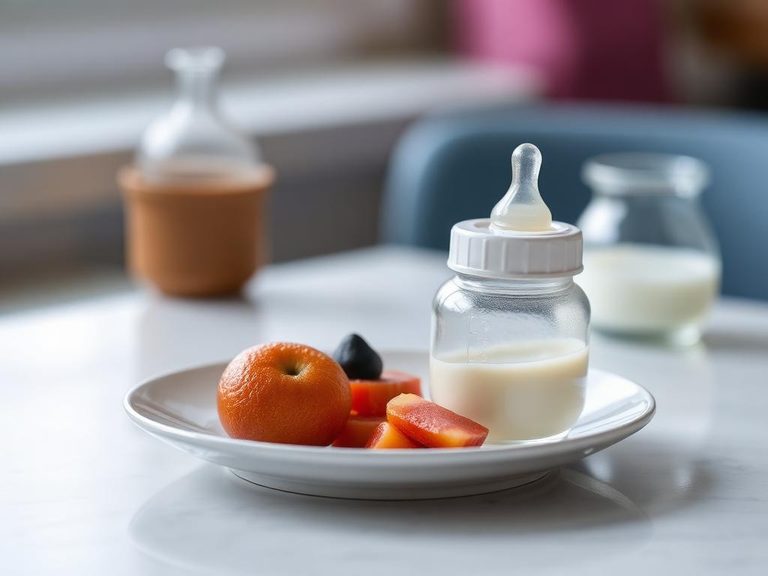
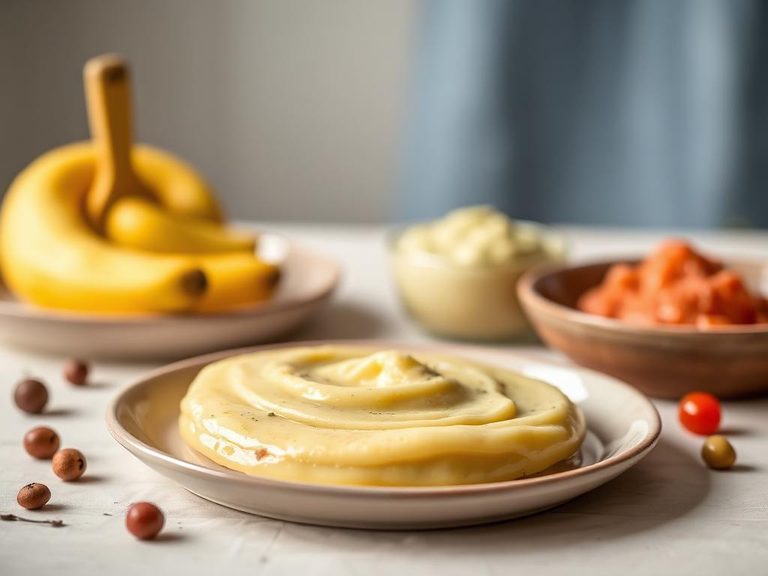
🍽️ Popular dishes
🌍 Where it's eaten
💡 Did you know?
The 'ISOMIL' line was one of the first commercially successful soy-based infant formulas, introduced in the 1960s.
Full nutrition (USDA data · scales with serving)
| Water | 87.5 g |
| Energy | 66.0 kcal |
| Energy | 276 kj |
| Protein | 1.6 g |
| Total lipid (fat) | 3.6 g |
| Ash | 0.66 g |
| Carbohydrate, by difference | 6.7 g |
| Fiber, total dietary | 0.00 g |
| Total Sugars | 6.7 g |
| Calcium, Ca | 69.0 mg |
| Iron, Fe | 1.2 mg |
| Magnesium, Mg | 5.0 mg |
| Phosphorus, P | 49.0 mg |
| Potassium, K | 71.0 mg |
| Sodium, Na | 29.0 mg |
| Zinc, Zn | 0.49 mg |
| Copper, Cu | 0.05 mg |
| Manganese, Mn | 0.02 mg |
| Selenium, Se | 1.4 ug |
| Vitamin C, total ascorbic acid | 5.9 mg |
| Thiamin | 0.04 mg |
| Riboflavin | 0.06 mg |
| Niacin | 0.89 mg |
| Pantothenic acid | 0.49 mg |
| Vitamin B-6 | 0.04 mg |
| Folate, total | 10.0 ug |
| Folic acid | 10.0 ug |
| Folate, food | 0.00 ug |
| Folate, DFE | 17.0 ug |
| Choline, total | 8.0 mg |
| Vitamin B-12 | 0.30 ug |
| Vitamin B-12, added | 0.30 ug |
| Vitamin A, RAE | 59.0 ug |
| Retinol | 59.0 ug |
| Carotene, beta | 0.00 ug |
| Carotene, alpha | 0.00 ug |
| Cryptoxanthin, beta | 0.00 ug |
| Vitamin A, IU | 197 iu |
| Lycopene | 0.00 ug |
| Lutein + zeaxanthin | 0.00 ug |
| Vitamin E (alpha-tocopherol) | 1.3 mg |
| Vitamin E, added | 1.3 mg |
| Vitamin D (D2 + D3), International Units | 39.0 iu |
| Vitamin D (D2 + D3) | 1.0 ug |
| Vitamin K (phylloquinone) | 7.2 ug |
| Alcohol, ethyl | 0.00 g |
| Caffeine | 0.00 mg |
| Theobromine | 0.00 mg |
Fat & fatty acid profile (per 100g)
| Fatty acids, total saturated | 1.2 g |
| SFA 4:0 | 0.00 g |
| SFA 6:0 | 0.01 g |
| SFA 8:0 | 0.09 g |
| SFA 10:0 | 0.06 g |
| SFA 12:0 | 0.45 g |
| SFA 14:0 | 0.18 g |
| SFA 16:0 | 0.26 g |
| SFA 18:0 | 0.12 g |
| Fatty acids, total monounsaturated | 1.4 g |
| MUFA 16:1 | 0.00 g |
| MUFA 18:1 | 1.4 g |
| MUFA 20:1 | 0.01 g |
| MUFA 22:1 | 0.00 g |
| Fatty acids, total polyunsaturated | 0.84 g |
| PUFA 18:2 | 0.75 g |
| PUFA 18:3 | 0.09 g |
| PUFA 18:4 | 0.00 g |
| PUFA 20:4 | 0.00 g |
| PUFA 20:5 n-3 (EPA) | 0.00 g |
| PUFA 22:5 n-3 (DPA) | 0.00 g |
| PUFA 22:6 n-3 (DHA) | 0.00 g |
| Cholesterol | 0.00 mg |
FAQ
Is this formula suitable for vegetarian or vegan infants?
While it is soy-based, infant formulas are considered medical foods and their suitability for specific diets should be discussed with a healthcare provider.
Why is it ready-to-feed instead of powder?
Ready-to-feed formulas offer ultimate convenience and sterility, which can be especially helpful for newborns, premature infants, or in situations where clean water is a concern.
Can I use this for a toddler over 1 year old?
This is an infant formula designed for 0-12 months. After the first year, toddlers typically transition to whole milk or a toddler-specific nutritional drink as directed by a pediatrician.
Nutrient density (calculated · NRF9.3)
Nutrient Rich Foods index: beneficial nutrients (protein, fiber, vitamins, minerals) minus saturated fat, added sugar & sodium, per 100 kcal.
NRF9.3 index — Fulgoni, Keast & Drewnowski, 2009. Computed from USDA nutrients.
Weight-loss friendliness (composite index)
Energy density 0.66 kcal/g · 10% calories from protein · 0.0 g fiber · 6.7 g sugar per 100 g.
Composite of energy density (Rolls et al., 1999), protein & fiber satiety, minus sugar. A calculated heuristic — ranks satiety-per-calorie, not a clinical measure.
Dietary load (calculated from USDA values)
Potential renal acid load. Positive = acid-forming, negative = alkaline-forming.
Sodium-to-potassium ratio: 0.41 (lower is better — aim for ≤ 1)
Sodium:potassium per WHO potassium guidance. Computed from USDA nutrients.