

Horseradish
Common food

Photo: Wikipedia
Horseradish is a pungent, spicy root vegetable whose fiery kick comes from the volatile compound allyl isothiocyanate, released when the root is grated or crushed. Its texture is fibrous and crisp, with a flavor that clears the sinuses and lingers long after the initial bite. Nutritionally, it is low in calories and a notable source of dietary fiber (3.3g per 100g), which supports digestive health.
Calorie split: 8% protein · 81% carbs · 11% fat
↓ Full nutrition💚 Why it's loved
People love horseradish for its intense, sinus-clearing heat that adds a bold, sharp dimension to dishes without the lingering burn of chili peppers. Its versatility as a condiment—from pairing with roast beef to enhancing sauces—makes it a staple in many culinary traditions, especially during holidays.
⚠️ Watch-outs & how to enjoy it better
The intense, volatile heat can be overwhelming for some, potentially causing digestive discomfort or irritation, especially for those with sensitive stomachs or conditions like acid reflux. To counteract this, start with small portions (e.g., 1-2 teaspoons) and pair it with fatty or creamy foods (like sour cream or mayonnaise) to mellow the spiciness, or mix it into sauces to dilute its potency.
Key benefits
- Rich in dietary fiber, aiding digestion and satiety.
- Contains glucosinolates, which are studied for their potential antioxidant properties.
- Low in calories (48 kcal per 100g), making it a flavorful, low-energy-density condiment.
- May support immune function due to its vitamin C content.
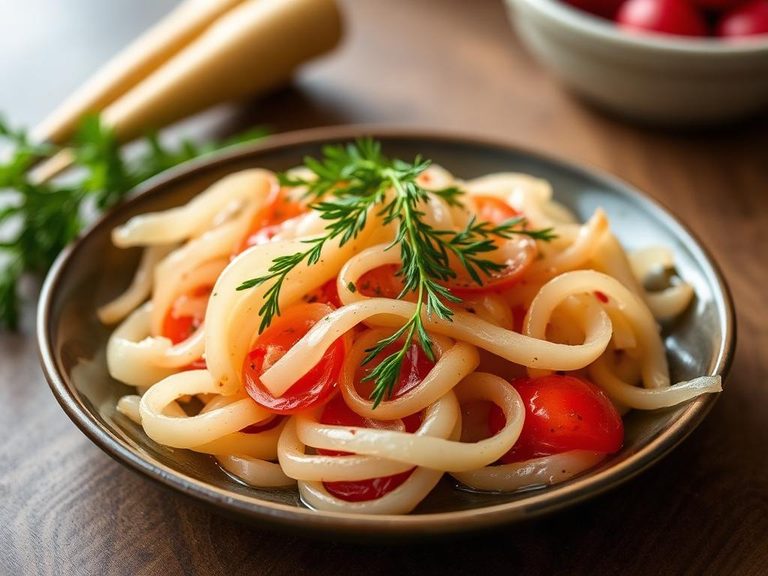
🍽️ Popular dishes
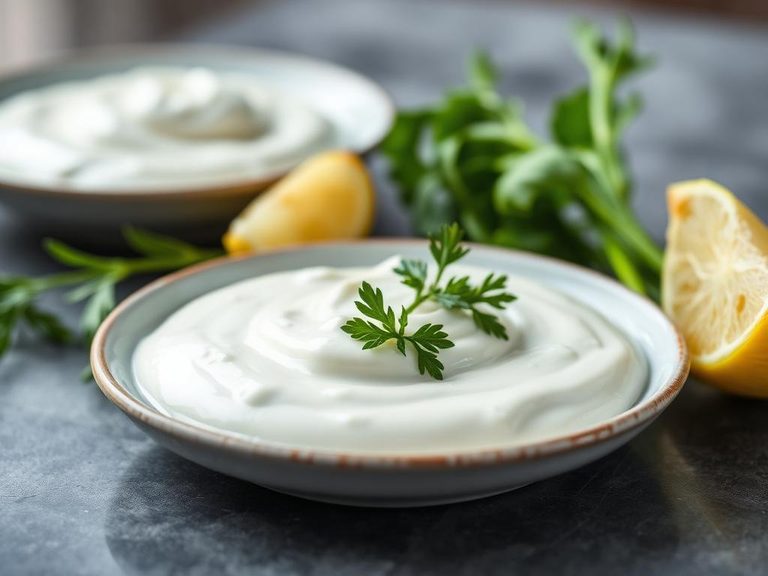
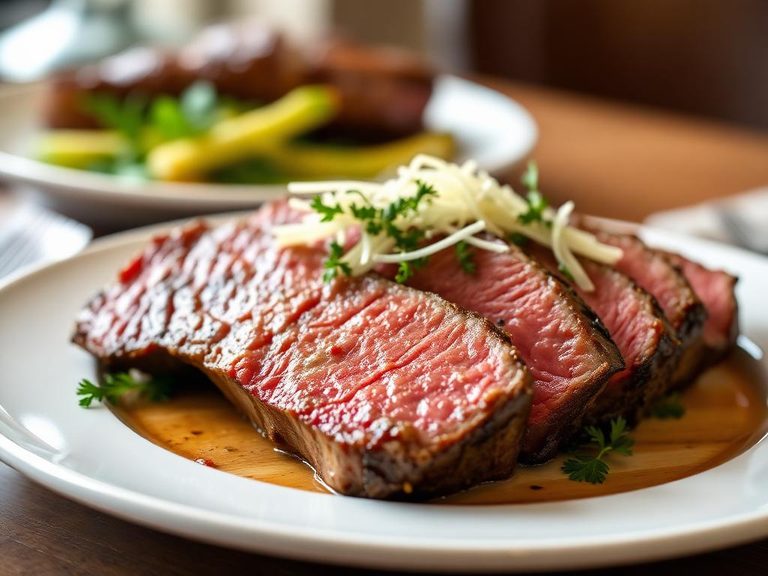
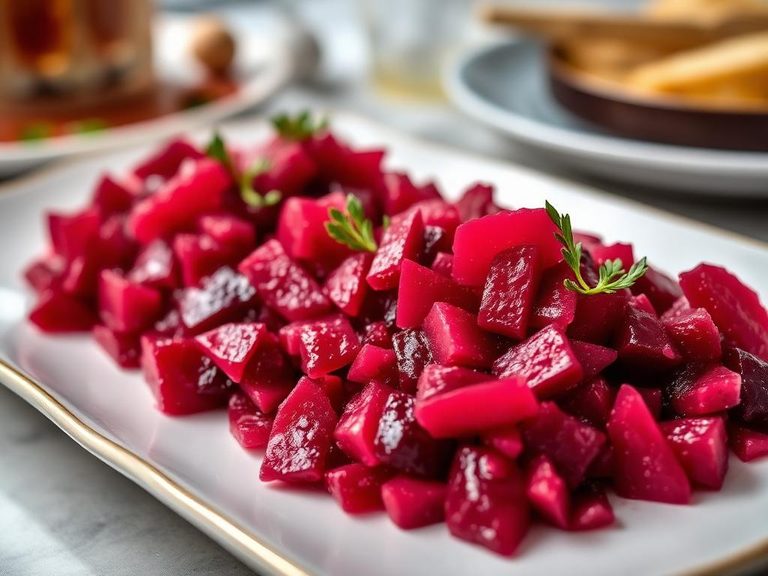
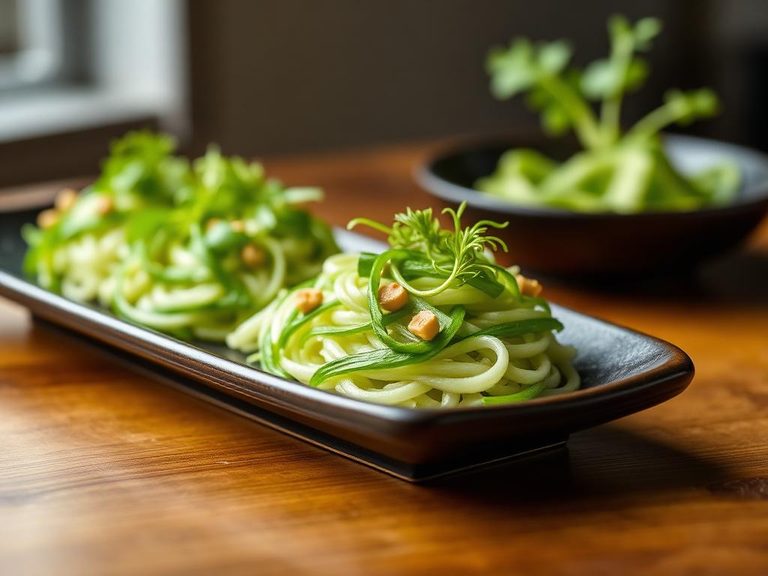
🌍 Where it's eaten
💡 Did you know?
The fiery compound in horseradish, allyl isothiocyanate, is so volatile that it can cause eyes to water and sinuses to burn, which is why it's often grated under a running faucet or in a well-ventilated area to avoid irritation.
Full nutrition (USDA data · scales with serving)
| Water | 85.1 g |
| Energy | 48.0 kcal |
| Protein | 1.2 g |
| Total lipid (fat) | 0.69 g |
| Carbohydrate, by difference | 11.3 g |
| Fiber, total dietary | 3.3 g |
| Total Sugars | 8.0 g |
| Calcium, Ca | 56.0 mg |
| Iron, Fe | 0.42 mg |
| Magnesium, Mg | 27.0 mg |
| Phosphorus, P | 31.0 mg |
| Potassium, K | 246 mg |
| Sodium, Na | 420 mg |
| Zinc, Zn | 0.83 mg |
| Copper, Cu | 0.06 mg |
| Selenium, Se | 2.8 ug |
| Vitamin C, total ascorbic acid | 24.9 mg |
| Thiamin | 0.01 mg |
| Riboflavin | 0.02 mg |
| Niacin | 0.39 mg |
| Vitamin B-6 | 0.07 mg |
| Folate, total | 57.0 ug |
| Folic acid | 0.00 ug |
| Folate, food | 57.0 ug |
| Folate, DFE | 57.0 ug |
| Choline, total | 6.5 mg |
| Vitamin B-12 | 0.00 ug |
| Vitamin B-12, added | 0.00 ug |
| Vitamin A, RAE | 0.00 ug |
| Retinol | 0.00 ug |
| Carotene, beta | 1.0 ug |
| Carotene, alpha | 0.00 ug |
| Cryptoxanthin, beta | 0.00 ug |
| Lycopene | 0.00 ug |
| Lutein + zeaxanthin | 10.0 ug |
| Vitamin E (alpha-tocopherol) | 0.01 mg |
| Vitamin E, added | 0.00 mg |
| Vitamin D (D2 + D3) | 0.00 ug |
| Vitamin K (phylloquinone) | 1.3 ug |
| Alcohol, ethyl | 0.00 g |
| Caffeine | 0.00 mg |
| Theobromine | 0.00 mg |
Fat & fatty acid profile (per 100g)
| Fatty acids, total saturated | 0.09 g |
| SFA 4:0 | 0.00 g |
| SFA 6:0 | 0.00 g |
| SFA 8:0 | 0.00 g |
| SFA 10:0 | 0.00 g |
| SFA 12:0 | 0.00 g |
| SFA 14:0 | 0.00 g |
| SFA 16:0 | 0.06 g |
| SFA 18:0 | 0.02 g |
| Fatty acids, total monounsaturated | 0.13 g |
| MUFA 16:1 | 0.00 g |
| MUFA 18:1 | 0.13 g |
| MUFA 20:1 | 0.00 g |
| MUFA 22:1 | 0.00 g |
| Fatty acids, total polyunsaturated | 0.34 g |
| PUFA 18:2 | 0.28 g |
| PUFA 18:3 | 0.05 g |
| PUFA 18:4 | 0.00 g |
| PUFA 20:4 | 0.00 g |
| PUFA 20:5 n-3 (EPA) | 0.00 g |
| PUFA 22:5 n-3 (DPA) | 0.00 g |
| PUFA 22:6 n-3 (DHA) | 0.00 g |
| Cholesterol | 0.00 mg |
FAQ
Is horseradish the same as wasabi?
No, but they are related. True wasabi is a different plant (Wasabia japonica) and is more expensive and milder. Most 'wasabi' served in restaurants is actually horseradish dyed green.
How do I store horseradish to keep its heat?
Store grated horseradish in a sealed container in the refrigerator, covered with vinegar or lemon juice to preserve its pungency. Whole roots can be stored in the fridge for several weeks.
Can horseradish be eaten raw?
Yes, it is commonly eaten raw as a condiment. Cooking it will mellow its heat and alter its flavor, so it is typically added at the end of cooking or served fresh.
Nutrient density (calculated · NRF9.3)
Nutrient Rich Foods index: beneficial nutrients (protein, fiber, vitamins, minerals) minus saturated fat, added sugar & sodium, per 100 kcal.
NRF9.3 index — Fulgoni, Keast & Drewnowski, 2009. Computed from USDA nutrients.
Weight-loss friendliness (composite index)
Energy density 0.48 kcal/g · 10% calories from protein · 3.3 g fiber · 8.0 g sugar per 100 g.
Composite of energy density (Rolls et al., 1999), protein & fiber satiety, minus sugar. A calculated heuristic — ranks satiety-per-calorie, not a clinical measure.
Dietary load (calculated from USDA values)
Potential renal acid load. Positive = acid-forming, negative = alkaline-forming.
Sodium-to-potassium ratio: 1.71 (lower is better — aim for ≤ 1)
Sodium:potassium per WHO potassium guidance. Computed from USDA nutrients.