

Guisada, pork
Common food
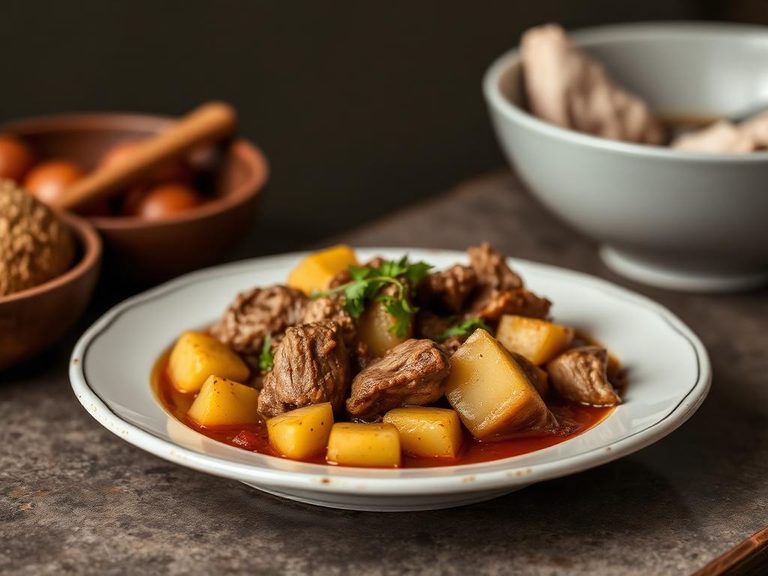
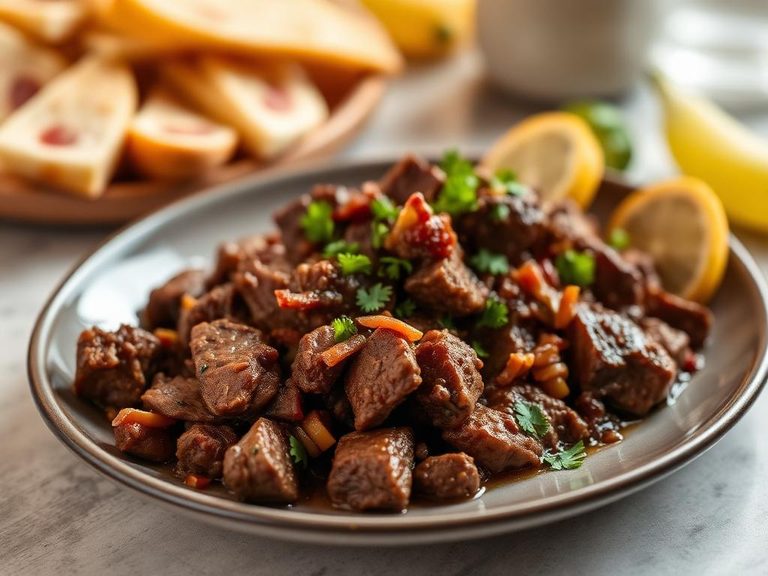
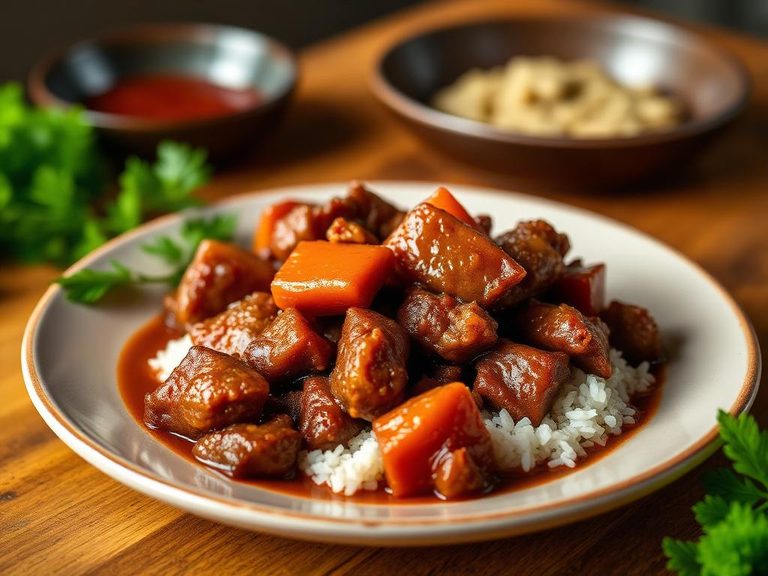
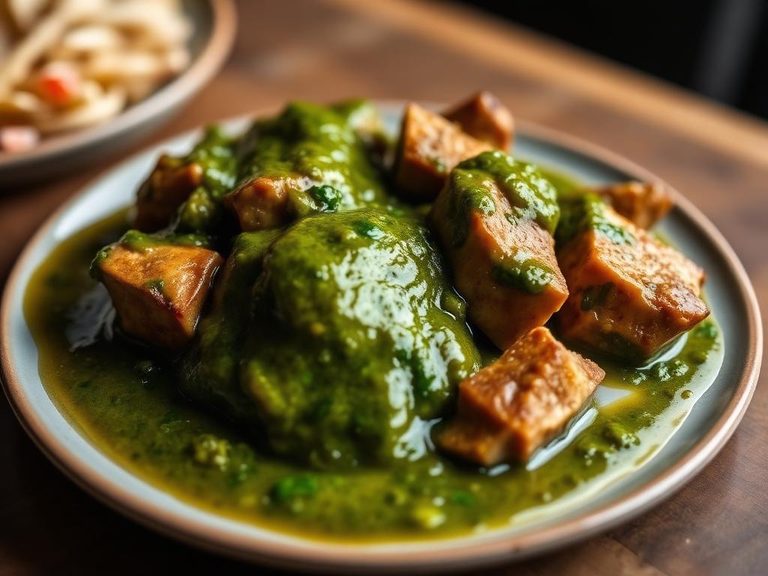
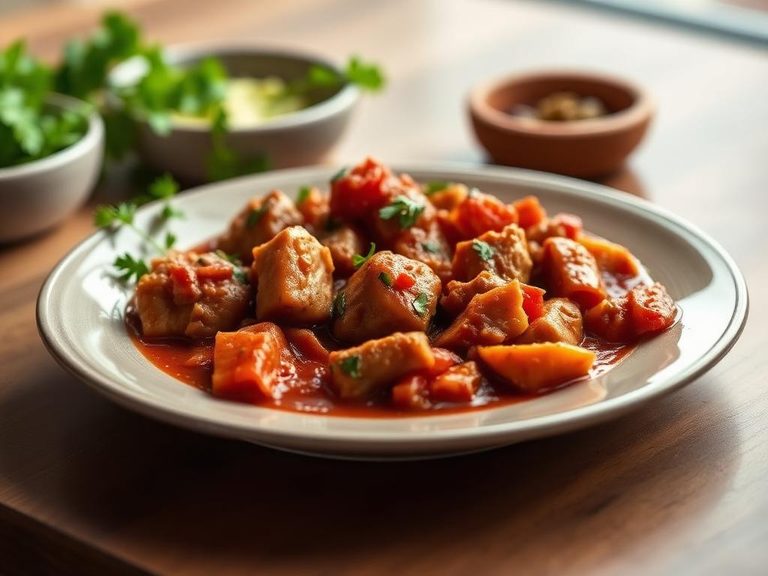
Guisada de cerdo is a savory, slow-simmered pork stew, typically featuring tender chunks of meat in a rich, aromatic sauce built from a sofrito base of tomatoes, onions, and peppers. The texture is tender and succulent, with the pork absorbing the deep, earthy flavors of cumin, oregano, and garlic. Nutritionally, it is a high-protein, low-carb dish, making it a hearty and satiating meal option.
Calorie split: 36% protein · 9% carbs · 55% fat
↓ Full nutrition💚 Why it's loved
People love guisada for its comforting, homestyle flavor that evokes a sense of tradition and family. The slow-cooking process melds the spices into a deeply savory sauce, making it incredibly versatile for serving with rice, tortillas, or bread.
⚠️ Watch-outs & how to enjoy it better
The dish can be high in sodium depending on the broth or seasoning used, which may be a concern for those monitoring blood pressure. To mitigate this, use low-sodium broth, limit added salt, and pair the dish with potassium-rich sides like leafy greens or sweet potatoes. Also, be mindful of portion sizes if managing fat intake, as some cuts of pork can be marbled.
Key benefits
- Excellent source of complete protein for muscle maintenance and satiety.
- Low in carbohydrates, suitable for low-carb or ketogenic dietary patterns.
- Rich in B vitamins, particularly B1 (thiamine) and B6, from the pork.
- Contains beneficial compounds from aromatic vegetables like garlic and onions.
- Provides a satisfying, balanced meal that helps regulate appetite.
🍽️ Popular dishes
🌍 Where it's eaten
💡 Did you know?
The term 'guisada' comes from the Spanish verb 'guisar,' meaning 'to stew' or 'to cook,' and it's a foundational technique in many Spanish-speaking kitchens, often used to transform tougher cuts of meat into tender, flavorful meals through slow, moist heat.
Full nutrition (USDA data · scales with serving)
| Water | 78.3 g |
| Energy | 118 kcal |
| Protein | 10.3 g |
| Total lipid (fat) | 7.1 g |
| Carbohydrate, by difference | 2.5 g |
| Fiber, total dietary | 0.50 g |
| Total Sugars | 0.63 g |
| Calcium, Ca | 16.0 mg |
| Iron, Fe | 0.79 mg |
| Magnesium, Mg | 13.0 mg |
| Phosphorus, P | 92.0 mg |
| Potassium, K | 186 mg |
| Sodium, Na | 300 mg |
| Zinc, Zn | 2.0 mg |
| Copper, Cu | 0.07 mg |
| Selenium, Se | 16.9 ug |
| Vitamin C, total ascorbic acid | 2.8 mg |
| Thiamin | 0.21 mg |
| Riboflavin | 0.16 mg |
| Niacin | 1.8 mg |
| Vitamin B-6 | 0.20 mg |
| Folate, total | 5.0 ug |
| Folic acid | 0.00 ug |
| Folate, food | 5.0 ug |
| Folate, DFE | 5.0 ug |
| Choline, total | 43.1 mg |
| Vitamin B-12 | 0.37 ug |
| Vitamin B-12, added | 0.00 ug |
| Vitamin A, RAE | 52.0 ug |
| Retinol | 1.0 ug |
| Carotene, beta | 514 ug |
| Carotene, alpha | 207 ug |
| Cryptoxanthin, beta | 1.0 ug |
| Lycopene | 216 ug |
| Lutein + zeaxanthin | 62.0 ug |
| Vitamin E (alpha-tocopherol) | 0.12 mg |
| Vitamin E, added | 0.00 mg |
| Vitamin D (D2 + D3) | 0.50 ug |
| Vitamin K (phylloquinone) | 2.2 ug |
| Alcohol, ethyl | 0.00 g |
| Caffeine | 0.00 mg |
| Theobromine | 0.00 mg |
Fat & fatty acid profile (per 100g)
| Fatty acids, total saturated | 2.6 g |
| SFA 4:0 | 0.00 g |
| SFA 6:0 | 0.00 g |
| SFA 8:0 | 0.00 g |
| SFA 10:0 | 0.01 g |
| SFA 12:0 | 0.01 g |
| SFA 14:0 | 0.09 g |
| SFA 16:0 | 1.6 g |
| SFA 18:0 | 0.89 g |
| Fatty acids, total monounsaturated | 3.2 g |
| MUFA 16:1 | 0.16 g |
| MUFA 18:1 | 3.0 g |
| MUFA 20:1 | 0.05 g |
| MUFA 22:1 | 0.00 g |
| Fatty acids, total polyunsaturated | 0.84 g |
| PUFA 18:2 | 0.73 g |
| PUFA 18:3 | 0.03 g |
| PUFA 18:4 | 0.00 g |
| PUFA 20:4 | 0.04 g |
| PUFA 20:5 n-3 (EPA) | 0.00 g |
| PUFA 22:5 n-3 (DPA) | 0.00 g |
| PUFA 22:6 n-3 (DHA) | 0.00 g |
| Cholesterol | 39.0 mg |
FAQ
What is the difference between guisada and stew?
Guisada is a Spanish term for a stew, often featuring a tomato-based sauce with spices like cumin and oregano. While similar to other stews, it typically has a thicker, more concentrated sauce and is a staple in Latin American and Spanish cuisines.
Can I make guisada with other meats?
Yes, guisada is highly adaptable. While pork is common, it's also made with beef (carne guisada), chicken (pollo guisado), or even fish and vegetables, each with its own regional variations.
How do I make the pork more tender?
For tender pork guisada, use a cut with some marbling like pork shoulder or butt. Sear the meat first, then simmer it slowly on low heat for 1.5 to 2 hours until it's fork-tender and the sauce has thickened.
Nutrient density (calculated · NRF9.3)
Nutrient Rich Foods index: beneficial nutrients (protein, fiber, vitamins, minerals) minus saturated fat, added sugar & sodium, per 100 kcal.
NRF9.3 index — Fulgoni, Keast & Drewnowski, 2009. Computed from USDA nutrients.
Weight-loss friendliness (composite index)
Energy density 1.18 kcal/g · 35% calories from protein · 0.5 g fiber · 0.6 g sugar per 100 g.
Composite of energy density (Rolls et al., 1999), protein & fiber satiety, minus sugar. A calculated heuristic — ranks satiety-per-calorie, not a clinical measure.
Dietary load (calculated from USDA values)
Potential renal acid load. Positive = acid-forming, negative = alkaline-forming.
Sodium-to-potassium ratio: 1.61 (lower is better — aim for ≤ 1)
Sodium:potassium per WHO potassium guidance. Computed from USDA nutrients.