

Guisada, beef
Common food
Guisada de res is a rich, slow-simmered Latin American beef stew where tender chunks of beef are braised in a savory, tomato-based sauce until they practically melt. The texture is soft and yielding, with a deeply savory, slightly sweet flavor profile from the sofrito base of onions, peppers, and garlic. With 10.85g of protein per 100g, it's a hearty, protein-rich dish that delivers substantial nutrition in a comforting, saucy package.
Calorie split: 38% protein · 9% carbs · 53% fat
↓ Full nutrition💚 Why it's loved
People love guisada for its deep, comforting flavors that improve with time, making it a beloved home-cooked staple across Latin America. The tender beef and rich sauce make it incredibly versatile—served over rice, with tortillas, or as a filling for empanadas—and it carries the warmth of family traditions.
⚠️ Watch-outs & how to enjoy it better
The dish can be high in sodium, especially when using commercial broths or canned tomatoes, which may concern those monitoring blood pressure. To counteract this, use low-sodium broth, rinse canned tomatoes, and balance with potassium-rich sides like sweet potatoes or bananas. Also, the beef fat content can be significant; choose leaner cuts like eye of round and skim excess fat after cooking.
Key benefits
- High-quality protein source for muscle maintenance and satiety
- Low in carbohydrates, making it suitable for low-carb diets
- Rich in iron and B vitamins from beef
- Contains lycopene and vitamin C from tomato-based sauce
- Versatile base for meal prep and leftovers
🍽️ Popular dishes
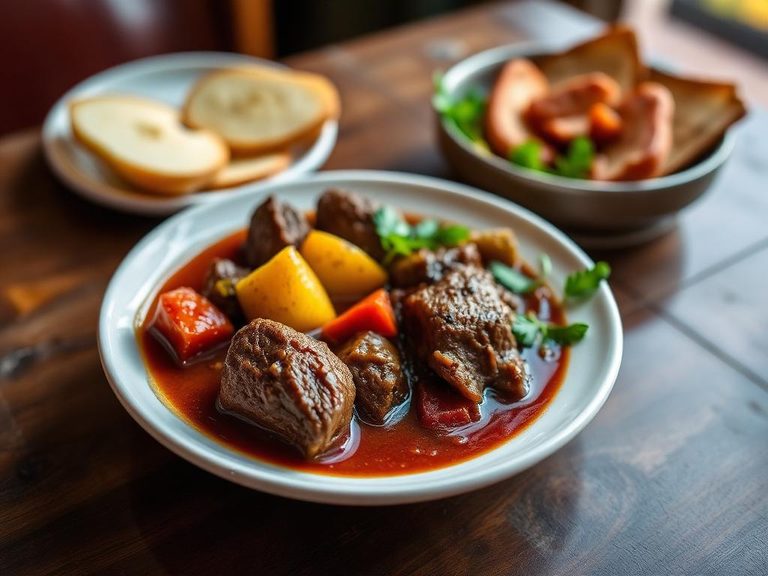
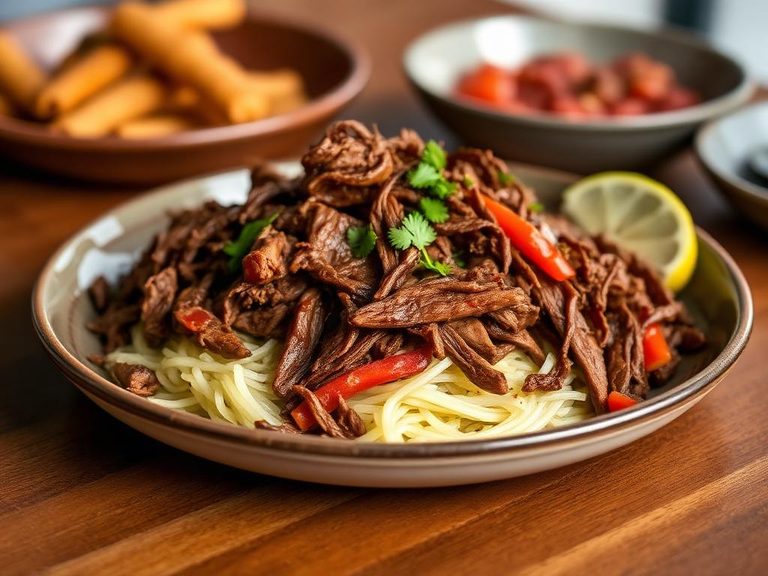
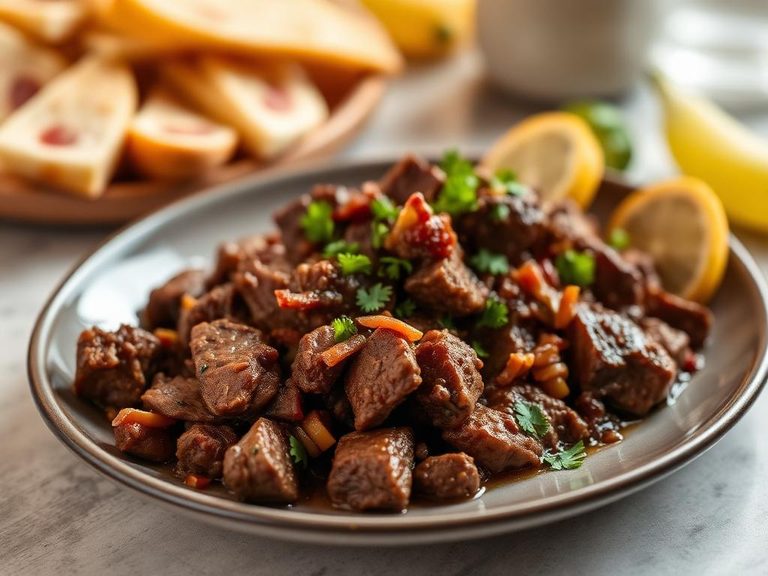
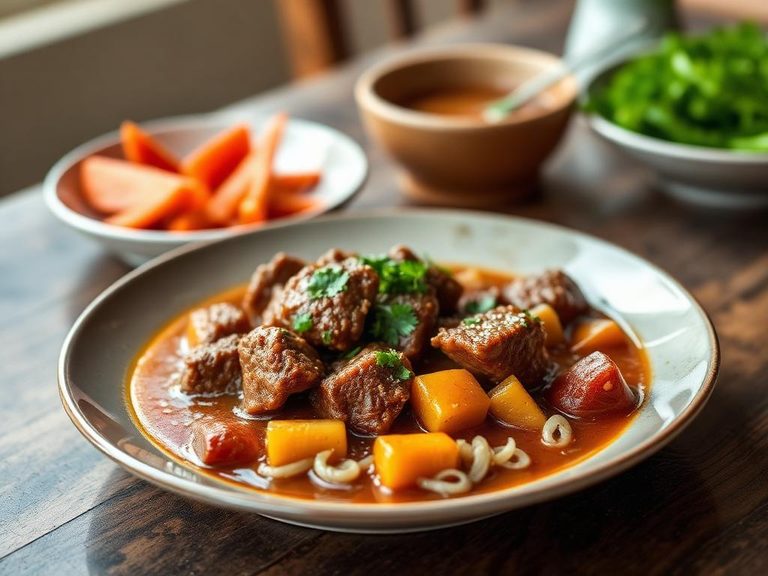
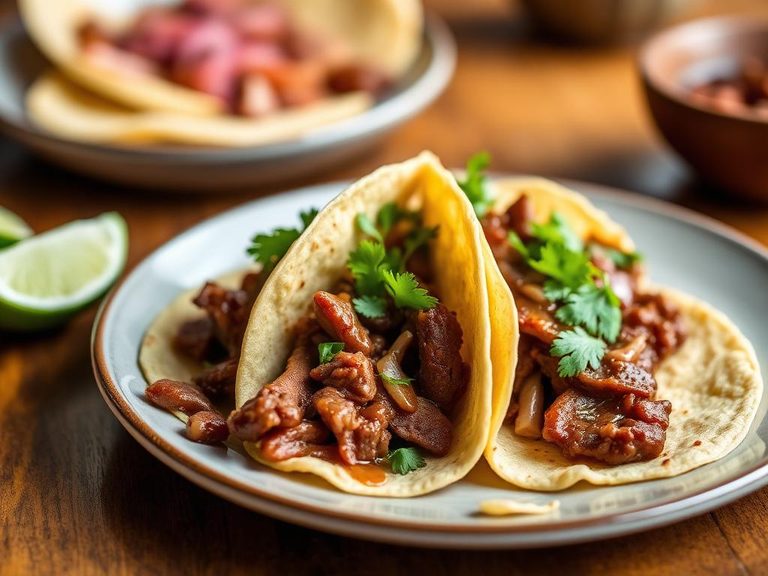
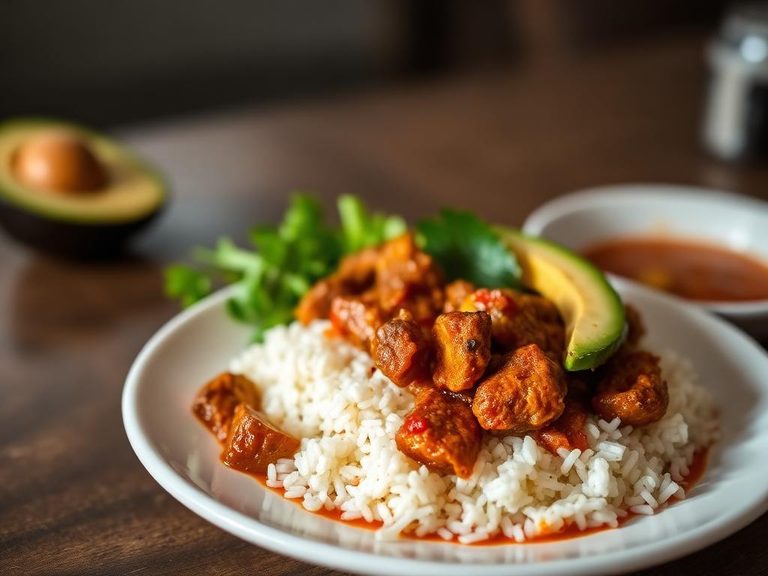
🌍 Where it's eaten
💡 Did you know?
The word 'guisada' comes from the Spanish verb 'guisar,' meaning 'to stew,' but in many Latin American countries, the dish is traditionally cooked in a clay pot called a 'olla de barro,' which imparts a subtle earthy flavor to the meat and sauce.
Full nutrition (USDA data · scales with serving)
| Water | 78.8 g |
| Energy | 115 kcal |
| Protein | 10.8 g |
| Total lipid (fat) | 6.6 g |
| Carbohydrate, by difference | 2.5 g |
| Fiber, total dietary | 0.50 g |
| Total Sugars | 0.63 g |
| Calcium, Ca | 14.0 mg |
| Iron, Fe | 1.1 mg |
| Magnesium, Mg | 12.0 mg |
| Phosphorus, P | 91.0 mg |
| Potassium, K | 188 mg |
| Sodium, Na | 305 mg |
| Zinc, Zn | 2.5 mg |
| Copper, Cu | 0.06 mg |
| Selenium, Se | 9.7 ug |
| Vitamin C, total ascorbic acid | 2.8 mg |
| Thiamin | 0.04 mg |
| Riboflavin | 0.09 mg |
| Niacin | 2.4 mg |
| Vitamin B-6 | 0.19 mg |
| Folate, total | 8.0 ug |
| Folic acid | 0.00 ug |
| Folate, food | 8.0 ug |
| Folate, DFE | 8.0 ug |
| Choline, total | 36.7 mg |
| Vitamin B-12 | 1.0 ug |
| Vitamin B-12, added | 0.00 ug |
| Vitamin A, RAE | 53.0 ug |
| Retinol | 1.0 ug |
| Carotene, beta | 514 ug |
| Carotene, alpha | 207 ug |
| Cryptoxanthin, beta | 1.0 ug |
| Lycopene | 216 ug |
| Lutein + zeaxanthin | 62.0 ug |
| Vitamin E (alpha-tocopherol) | 0.14 mg |
| Vitamin E, added | 0.00 mg |
| Vitamin D (D2 + D3) | 0.00 ug |
| Vitamin K (phylloquinone) | 2.8 ug |
| Alcohol, ethyl | 0.00 g |
| Caffeine | 0.00 mg |
| Theobromine | 0.00 mg |
Fat & fatty acid profile (per 100g)
| Fatty acids, total saturated | 2.5 g |
| SFA 4:0 | 0.00 g |
| SFA 6:0 | 0.00 g |
| SFA 8:0 | 0.00 g |
| SFA 10:0 | 0.00 g |
| SFA 12:0 | 0.01 g |
| SFA 14:0 | 0.19 g |
| SFA 16:0 | 1.5 g |
| SFA 18:0 | 0.80 g |
| Fatty acids, total monounsaturated | 2.9 g |
| MUFA 16:1 | 0.24 g |
| MUFA 18:1 | 2.6 g |
| MUFA 20:1 | 0.02 g |
| MUFA 22:1 | 0.00 g |
| Fatty acids, total polyunsaturated | 0.24 g |
| PUFA 18:2 | 0.18 g |
| PUFA 18:3 | 0.03 g |
| PUFA 18:4 | 0.00 g |
| PUFA 20:4 | 0.02 g |
| PUFA 20:5 n-3 (EPA) | 0.00 g |
| PUFA 22:5 n-3 (DPA) | 0.00 g |
| PUFA 22:6 n-3 (DHA) | 0.00 g |
| Cholesterol | 36.0 mg |
FAQ
What is the difference between guisada and stew?
Guisada is a Latin American stew, typically cooked with a sofrito base (onions, peppers, garlic, tomatoes) and often includes potatoes or other vegetables. It's similar to a stew but with a more pronounced tomato and spice profile, and it's often served with rice or tortillas.
Can I make guisada with chicken instead of beef?
Yes, chicken guisada is a popular variation, using chicken thighs or breasts. The cooking time is shorter, but the flavor profile remains similar. It's a great option for those who prefer poultry or want a lighter version.
How long does guisada last in the fridge?
Properly stored in an airtight container, guisada will last 3-4 days in the refrigerator. The flavors actually improve after a day or two as the ingredients meld. It also freezes well for up to 3 months.
Nutrient density (calculated · NRF9.3)
Nutrient Rich Foods index: beneficial nutrients (protein, fiber, vitamins, minerals) minus saturated fat, added sugar & sodium, per 100 kcal.
NRF9.3 index — Fulgoni, Keast & Drewnowski, 2009. Computed from USDA nutrients.
Weight-loss friendliness (composite index)
Energy density 1.15 kcal/g · 38% calories from protein · 0.5 g fiber · 0.6 g sugar per 100 g.
Composite of energy density (Rolls et al., 1999), protein & fiber satiety, minus sugar. A calculated heuristic — ranks satiety-per-calorie, not a clinical measure.
Dietary load (calculated from USDA values)
Potential renal acid load. Positive = acid-forming, negative = alkaline-forming.
Sodium-to-potassium ratio: 1.62 (lower is better — aim for ≤ 1)
Sodium:potassium per WHO potassium guidance. Computed from USDA nutrients.