

Frozen coffee drink, decaffeinated, nonfat, with whipped cream
Common food

Photo: Wikipedia
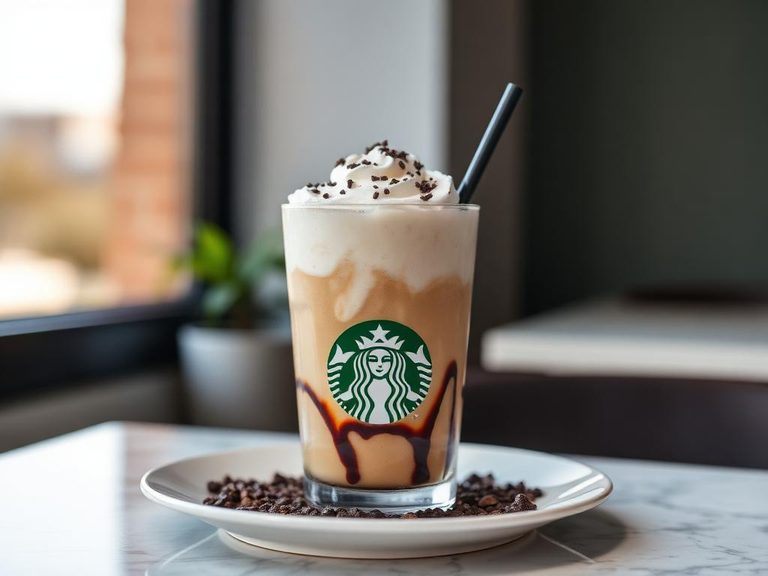
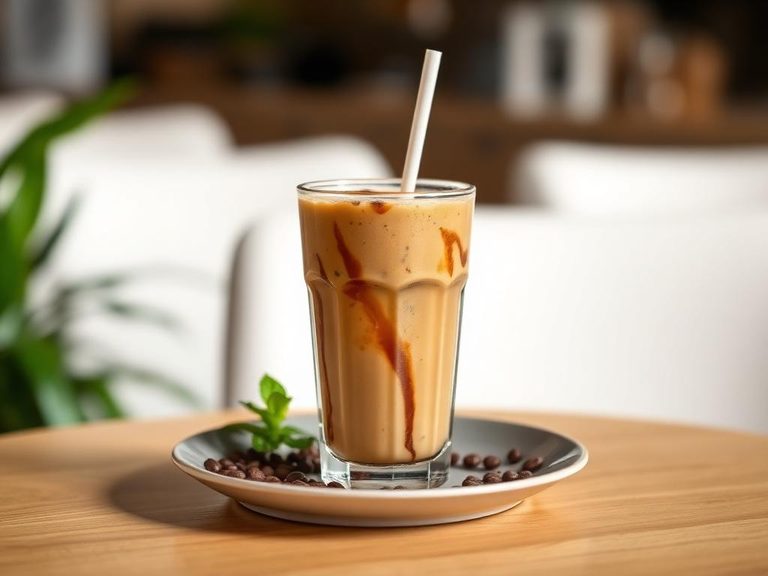
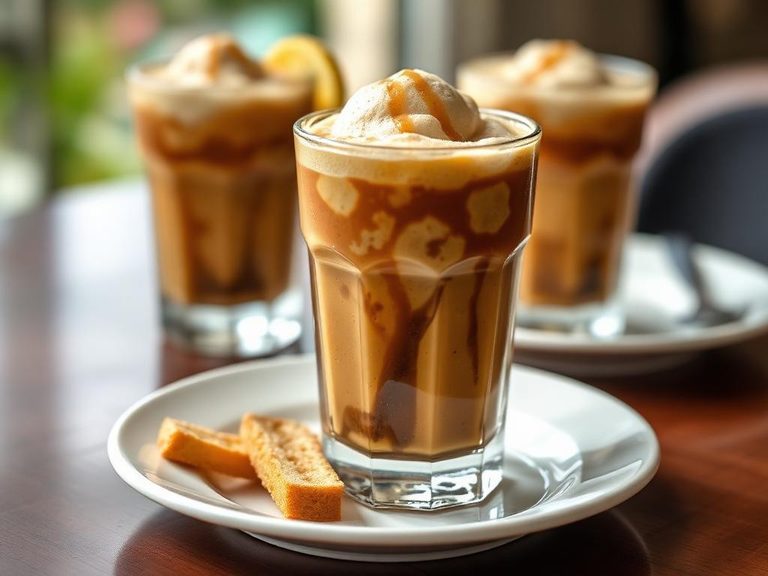
A light, icy, and frothy indulgence, this decaffeinated frozen coffee drink delivers the classic coffeehouse experience without the jolt. It's a smooth, sweet, and creamy treat, characterized by its whipped cream topping and a nutrition profile that's surprisingly low in calories. At just 76 kcal per 100g, it's a guilt-free way to enjoy a frozen dessert, with most of its energy coming from carbohydrates, specifically sugar.
Calorie split: 9% protein · 68% carbs · 23% fat
↓ Full nutrition💚 Why it's loved
People love it for the comforting ritual of a frozen coffeehouse drink without the caffeine buzz, making it a perfect afternoon or evening pick-me-up. Its familiar sweet, creamy, and slightly bitter flavor profile, enhanced by the decadent whipped cream, offers a nostalgic and versatile treat that can be customized with various syrups.
⚠️ Watch-outs & how to enjoy it better
The primary downside is the high sugar content (12.75g/100g), which can lead to a rapid blood-sugar spike and subsequent crash. To counteract this, pair the drink with a source of protein or healthy fat (like a handful of nuts or a cheese stick) to slow sugar absorption and promote satiety. Also, be mindful of portion size, as the whipped cream can add hidden calories and fat.
Key benefits
- Low-calorie frozen treat (76 kcal/100g)
- Decaffeinated for evening enjoyment
- Contains some protein (1.62g/100g)
- Quick source of energy from carbs
- Nonfat base reduces saturated fat intake
🍽️ Popular dishes



🌍 Where it's eaten
💡 Did you know?
The modern frozen coffee drink as we know it was popularized in the 1990s, but its roots trace back to the Brazilian 'bica' or 'cafézinho' culture, where strong, sweet coffee is a daily staple, and the concept of blending it with ice emerged as a refreshing variation.
Full nutrition (USDA data · scales with serving)
| Water | 83.0 g |
| Energy | 76.0 kcal |
| Protein | 1.6 g |
| Total lipid (fat) | 2.0 g |
| Carbohydrate, by difference | 13.0 g |
| Fiber, total dietary | 0.00 g |
| Total Sugars | 12.8 g |
| Calcium, Ca | 62.0 mg |
| Iron, Fe | 0.02 mg |
| Magnesium, Mg | 17.0 mg |
| Phosphorus, P | 51.0 mg |
| Potassium, K | 95.0 mg |
| Sodium, Na | 22.0 mg |
| Zinc, Zn | 0.22 mg |
| Copper, Cu | 0.01 mg |
| Selenium, Se | 1.1 ug |
| Vitamin C, total ascorbic acid | 0.10 mg |
| Thiamin | 0.03 mg |
| Riboflavin | 0.09 mg |
| Niacin | 0.80 mg |
| Vitamin B-6 | 0.03 mg |
| Folate, total | 1.0 ug |
| Folic acid | 0.00 ug |
| Folate, food | 1.0 ug |
| Folate, DFE | 1.0 ug |
| Choline, total | 9.0 mg |
| Vitamin B-12 | 0.25 ug |
| Vitamin B-12, added | 0.00 ug |
| Vitamin A, RAE | 45.0 ug |
| Retinol | 45.0 ug |
| Carotene, beta | 1.0 ug |
| Carotene, alpha | 0.00 ug |
| Cryptoxanthin, beta | 0.00 ug |
| Lycopene | 0.00 ug |
| Lutein + zeaxanthin | 0.00 ug |
| Vitamin E (alpha-tocopherol) | 0.05 mg |
| Vitamin E, added | 0.00 mg |
| Vitamin D (D2 + D3) | 0.60 ug |
| Vitamin K (phylloquinone) | 0.20 ug |
| Alcohol, ethyl | 0.00 g |
| Caffeine | 0.00 mg |
| Theobromine | 0.00 mg |
Fat & fatty acid profile (per 100g)
| Fatty acids, total saturated | 1.1 g |
| SFA 4:0 | 0.04 g |
| SFA 6:0 | 0.03 g |
| SFA 8:0 | 0.02 g |
| SFA 10:0 | 0.05 g |
| SFA 12:0 | 0.06 g |
| SFA 14:0 | 0.18 g |
| SFA 16:0 | 0.51 g |
| SFA 18:0 | 0.17 g |
| Fatty acids, total monounsaturated | 0.40 g |
| MUFA 16:1 | 0.04 g |
| MUFA 18:1 | 0.43 g |
| MUFA 20:1 | 0.00 g |
| MUFA 22:1 | 0.00 g |
| Fatty acids, total polyunsaturated | 0.10 g |
| PUFA 18:2 | 0.06 g |
| PUFA 18:3 | 0.01 g |
| PUFA 18:4 | 0.00 g |
| PUFA 20:4 | 0.00 g |
| PUFA 20:5 n-3 (EPA) | 0.00 g |
| PUFA 22:5 n-3 (DPA) | 0.00 g |
| PUFA 22:6 n-3 (DHA) | 0.00 g |
| Cholesterol | 7.0 mg |
FAQ
Is this drink suitable for people avoiding caffeine?
Yes, it is specifically labeled as decaffeinated, making it an excellent choice for those sensitive to caffeine or looking to reduce their intake, especially later in the day.
How does the whipped cream affect the nutrition?
The whipped cream adds a significant amount of fat and calories compared to the nonfat base. It's the main source of fat in the drink (1.99g/100g) and contributes to its rich, creamy texture and sweet flavor.
Can I make a healthier version at home?
Absolutely. You can blend decaf coffee with ice, a small amount of milk or a non-dairy alternative, and a natural sweetener like stevia or a touch of honey. Use a dollop of Greek yogurt instead of whipped cream for a protein boost and less sugar.
Nutrient density (calculated · NRF9.3)
Nutrient Rich Foods index: beneficial nutrients (protein, fiber, vitamins, minerals) minus saturated fat, added sugar & sodium, per 100 kcal.
NRF9.3 index — Fulgoni, Keast & Drewnowski, 2009. Computed from USDA nutrients.
Weight-loss friendliness (composite index)
Energy density 0.76 kcal/g · 9% calories from protein · 0.0 g fiber · 12.8 g sugar per 100 g.
Composite of energy density (Rolls et al., 1999), protein & fiber satiety, minus sugar. A calculated heuristic — ranks satiety-per-calorie, not a clinical measure.
Dietary load (calculated from USDA values)
Potential renal acid load. Positive = acid-forming, negative = alkaline-forming.
Sodium-to-potassium ratio: 0.23 (lower is better — aim for ≤ 1)
Sodium:potassium per WHO potassium guidance. Computed from USDA nutrients.