

Fluid replacement, electrolyte solution (include PEDIALYTE)
Whole food · Baby Foods

Photo: Wikipedia
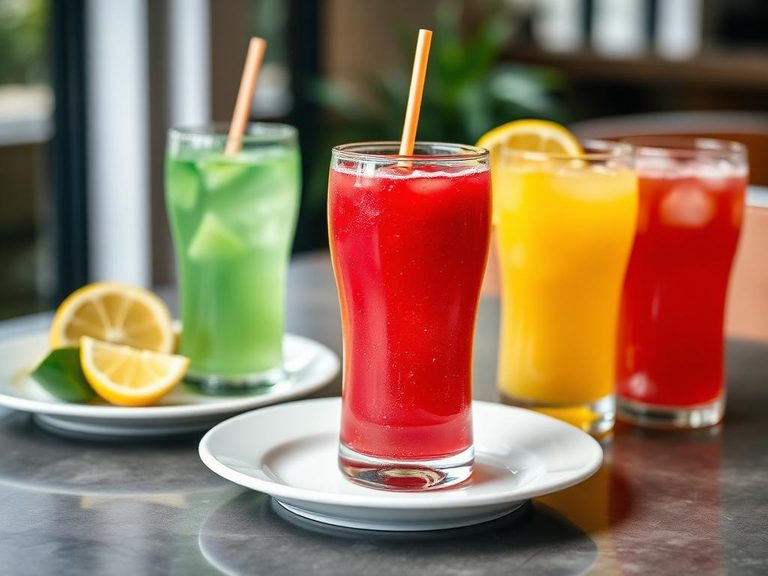
A clear, sterile, and often fruit-flavored oral rehydration solution designed to rapidly replenish fluids and electrolytes lost through illness, exercise, or heat. It has a thin, water-like texture with a distinct, sweet-and-salty taste that is engineered for rapid absorption rather than gourmet pleasure. Nutritionally, it is a minimalist delivery system for quick energy (from simple sugars) and essential minerals like sodium and potassium.
Calorie split: 0% protein · 100% carbs · 0% fat
↓ Full nutrition💚 Why it's loved
It is a trusted, reliable lifeline for parents managing childhood stomach bugs and athletes pushing through intense endurance events. Its specific, science-backed formula provides peace of mind that simple water cannot, making it a staple in first-aid kits and gym bags.
⚠️ Watch-outs & how to enjoy it better
The medicinal or overly sweet taste can be unpalatable, and the high simple sugar content can cause a rapid blood sugar spike if consumed in large quantities by those with insulin sensitivity. To counteract, use the lowest sugar concentration needed, sip slowly over 30-60 minutes rather than gulping, and consider a lower-sugar or homemade version for maintenance hydration.
Key benefits
- Rapidly rehydrates during illness, diarrhea, or vomiting
- Replenishes critical electrolytes (sodium, potassium) lost in sweat
- Provides quick, easily digestible energy from simple carbohydrates
- Helps prevent dehydration-related fatigue and dizziness
- Often contains zinc to support immune function during illness
🍽️ Popular dishes
🌍 Where it's eaten
💡 Did you know?
The World Health Organization's oral rehydration solution (ORS) formula, which Pedialyte is based on, uses a precise ratio of salt to sugar that harnesses the sodium-glucose co-transport mechanism in the gut, allowing water to be absorbed almost as quickly as an IV drip.
Full nutrition (USDA data · scales with serving)
| Water | 96.4 g |
| Energy | 10.0 kcal |
| Energy | 41.0 kj |
| Protein | 0.00 g |
| Total lipid (fat) | 0.00 g |
| Ash | 0.18 g |
| Carbohydrate, by difference | 2.5 g |
| Fiber, total dietary | 0.00 g |
| Total Sugars | 2.5 g |
| Calcium, Ca | 10.0 mg |
| Iron, Fe | 0.00 mg |
| Magnesium, Mg | 1.0 mg |
| Phosphorus, P | 10.0 mg |
| Potassium, K | 77.0 mg |
| Sodium, Na | 101 mg |
| Zinc, Zn | 0.02 mg |
| Copper, Cu | 0.01 mg |
| Selenium, Se | 0.00 ug |
| Vitamin C, total ascorbic acid | 0.00 mg |
| Thiamin | 0.00 mg |
| Riboflavin | 0.00 mg |
| Niacin | 0.00 mg |
| Vitamin B-6 | 0.00 mg |
| Folate, total | 0.00 ug |
| Folic acid | 0.00 ug |
| Folate, food | 0.00 ug |
| Folate, DFE | 0.00 ug |
| Choline, total | 0.00 mg |
| Vitamin B-12 | 0.00 ug |
| Vitamin B-12, added | 0.00 ug |
| Vitamin A, RAE | 0.00 ug |
| Retinol | 0.00 ug |
| Carotene, beta | 0.00 ug |
| Carotene, alpha | 0.00 ug |
| Cryptoxanthin, beta | 0.00 ug |
| Vitamin A, IU | 0.00 iu |
| Lycopene | 0.00 ug |
| Lutein + zeaxanthin | 0.00 ug |
| Vitamin E (alpha-tocopherol) | 0.00 mg |
| Vitamin E, added | 0.00 mg |
| Vitamin D (D2 + D3), International Units | 0.00 iu |
| Vitamin D (D2 + D3) | 0.00 ug |
| Vitamin K (phylloquinone) | 0.00 ug |
| Alcohol, ethyl | 0.00 g |
| Caffeine | 0.00 mg |
| Theobromine | 0.00 mg |
Fat & fatty acid profile (per 100g)
| Fatty acids, total saturated | 0.00 g |
| SFA 4:0 | 0.00 g |
| SFA 6:0 | 0.00 g |
| SFA 8:0 | 0.00 g |
| SFA 10:0 | 0.00 g |
| SFA 12:0 | 0.00 g |
| SFA 14:0 | 0.00 g |
| SFA 16:0 | 0.00 g |
| SFA 18:0 | 0.00 g |
| Fatty acids, total monounsaturated | 0.00 g |
| MUFA 16:1 | 0.00 g |
| MUFA 18:1 | 0.00 g |
| MUFA 20:1 | 0.00 g |
| MUFA 22:1 | 0.00 g |
| Fatty acids, total polyunsaturated | 0.00 g |
| PUFA 18:2 | 0.00 g |
| PUFA 18:3 | 0.00 g |
| PUFA 18:4 | 0.00 g |
| PUFA 20:4 | 0.00 g |
| PUFA 20:5 n-3 (EPA) | 0.00 g |
| PUFA 22:5 n-3 (DPA) | 0.00 g |
| PUFA 22:6 n-3 (DHA) | 0.00 g |
| Cholesterol | 0.00 mg |
FAQ
Is Pedialyte the same as a sports drink like Gatorade?
No. Pedialyte has a much lower sugar concentration and a higher electrolyte (especially potassium) content, designed for medical rehydration. Sports drinks are formulated for fuel during prolonged exercise and contain more sugar for energy.
Can adults drink Pedialyte?
Yes, it is safe and effective for adults, especially during illness, severe dehydration, or after heavy alcohol consumption. Some adults prefer the unflavored version to avoid the sweetness.
Why does it taste so salty and sweet at the same time?
The taste is a direct result of its functional design. The salt (sodium) and sugar (glucose) are included in a specific ratio to activate the gut's optimal water-absorption pathway, making rehydration as efficient as possible.
Nutrient density (calculated · NRF9.3)
Nutrient Rich Foods index: beneficial nutrients (protein, fiber, vitamins, minerals) minus saturated fat, added sugar & sodium, per 100 kcal.
NRF9.3 index — Fulgoni, Keast & Drewnowski, 2009. Computed from USDA nutrients.
Weight-loss friendliness (composite index)
Energy density 0.10 kcal/g · 0% calories from protein · 0.0 g fiber · 2.5 g sugar per 100 g.
Composite of energy density (Rolls et al., 1999), protein & fiber satiety, minus sugar. A calculated heuristic — ranks satiety-per-calorie, not a clinical measure.
Dietary load (calculated from USDA values)
Potential renal acid load. Positive = acid-forming, negative = alkaline-forming.
Sodium-to-potassium ratio: 1.31 (lower is better — aim for ≤ 1)
Sodium:potassium per WHO potassium guidance. Computed from USDA nutrients.