

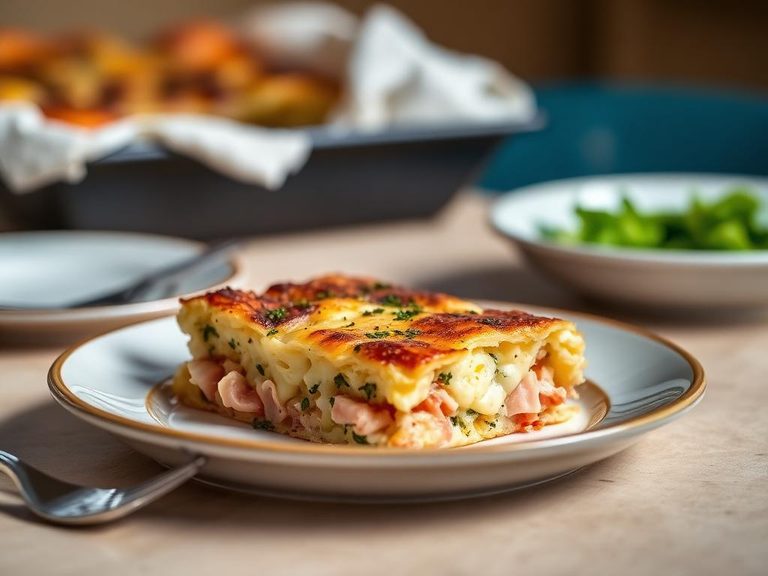
Egg casserole with bread, cheese, milk and meat
Common food

Photo: Wikipedia
This is a savory, custardy bake where cubes of bread soak up a rich mixture of eggs, milk, and melted cheese, often studded with bits of meat like ham or sausage. The texture is a delightful contrast between a soft, pudding-like interior and a golden, slightly crisp top. It's a protein-packed comfort food, delivering a substantial 11.43g of protein per 100g.
Calorie split: 26% protein · 23% carbs · 50% fat
↓ Full nutrition💚 Why it's loved
People adore it for its comforting, savory flavor and the way it transforms simple ingredients into a cohesive, satisfying dish. It's a beloved staple for brunches, holidays, and family gatherings, offering a customizable canvas for different cheeses and meats.
⚠️ Watch-outs & how to enjoy it better
The combination of bread, cheese, and meat can make it high in sodium and saturated fat, which those monitoring heart health or blood pressure should consider. To mitigate, use low-sodium cheese and lean meats like turkey ham, and pair the casserole with a large side salad or steamed vegetables to add fiber and balance the meal.
Key benefits
- Excellent source of high-quality protein for muscle maintenance.
- Provides calcium from milk and cheese for bone health.
- Versatile base for using leftover bread and cooked meats.
- Can be prepared ahead, making it ideal for meal prep or brunch.
🍽️ Popular dishes
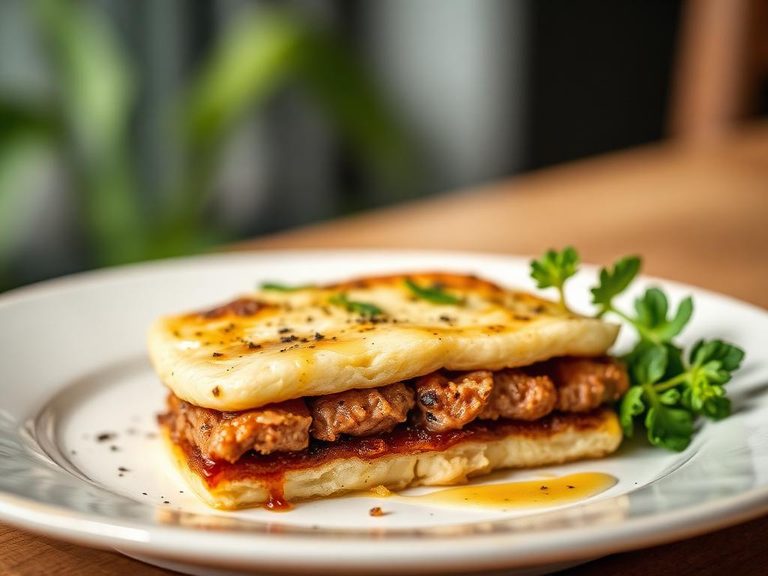
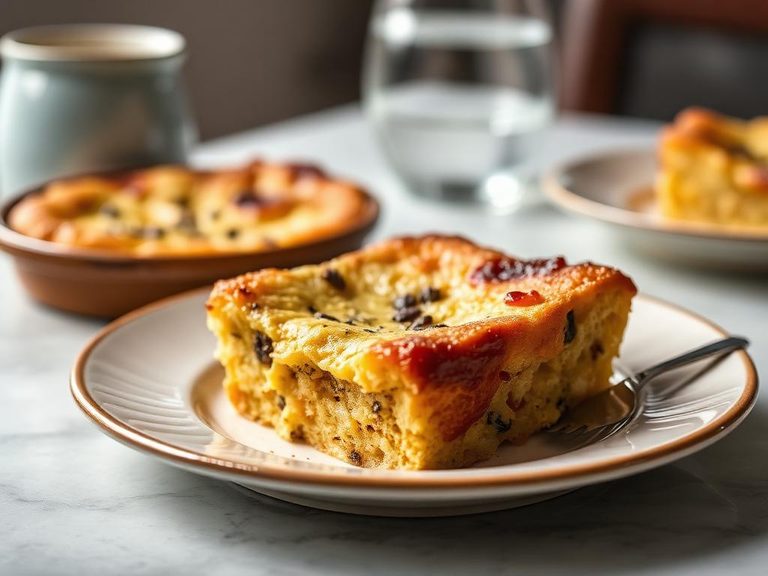
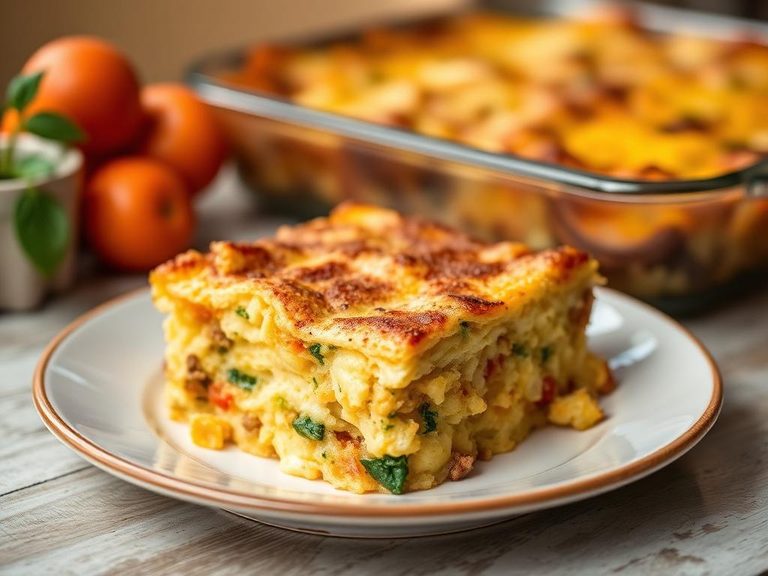
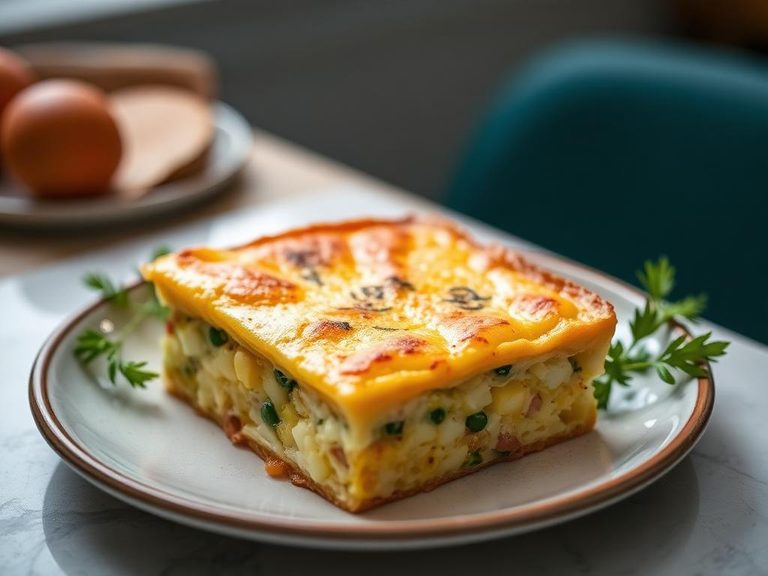
🌍 Where it's eaten
💡 Did you know?
A classic 'strata' is traditionally assembled the night before and refrigerated, allowing the bread to fully absorb the egg custard, which results in a more uniform and fluffy texture when baked.
Full nutrition (USDA data · scales with serving)
| Water | 66.7 g |
| Energy | 175 kcal |
| Protein | 11.4 g |
| Total lipid (fat) | 9.8 g |
| Carbohydrate, by difference | 10.2 g |
| Fiber, total dietary | 0.40 g |
| Total Sugars | 2.8 g |
| Calcium, Ca | 142 mg |
| Iron, Fe | 1.1 mg |
| Magnesium, Mg | 17.0 mg |
| Phosphorus, P | 178 mg |
| Potassium, K | 184 mg |
| Sodium, Na | 420 mg |
| Zinc, Zn | 1.3 mg |
| Copper, Cu | 0.04 mg |
| Selenium, Se | 19.6 ug |
| Vitamin C, total ascorbic acid | 0.00 mg |
| Thiamin | 0.16 mg |
| Riboflavin | 0.25 mg |
| Niacin | 2.2 mg |
| Vitamin B-6 | 0.12 mg |
| Folate, total | 26.0 ug |
| Folic acid | 10.0 ug |
| Folate, food | 16.0 ug |
| Folate, DFE | 32.0 ug |
| Choline, total | 80.5 mg |
| Vitamin B-12 | 0.49 ug |
| Vitamin B-12, added | 0.00 ug |
| Vitamin A, RAE | 84.0 ug |
| Retinol | 84.0 ug |
| Carotene, beta | 1.0 ug |
| Carotene, alpha | 0.00 ug |
| Cryptoxanthin, beta | 3.0 ug |
| Lycopene | 0.00 ug |
| Lutein + zeaxanthin | 113 ug |
| Vitamin E (alpha-tocopherol) | 0.44 mg |
| Vitamin E, added | 0.00 mg |
| Vitamin D (D2 + D3) | 1.1 ug |
| Vitamin K (phylloquinone) | 0.50 ug |
| Alcohol, ethyl | 0.00 g |
| Caffeine | 0.00 mg |
| Theobromine | 0.00 mg |
Fat & fatty acid profile (per 100g)
| Fatty acids, total saturated | 3.9 g |
| SFA 4:0 | 0.07 g |
| SFA 6:0 | 0.05 g |
| SFA 8:0 | 0.04 g |
| SFA 10:0 | 0.08 g |
| SFA 12:0 | 0.10 g |
| SFA 14:0 | 0.35 g |
| SFA 16:0 | 2.2 g |
| SFA 18:0 | 0.92 g |
| Fatty acids, total monounsaturated | 3.2 g |
| MUFA 16:1 | 0.19 g |
| MUFA 18:1 | 3.0 g |
| MUFA 20:1 | 0.04 g |
| MUFA 22:1 | 0.00 g |
| Fatty acids, total polyunsaturated | 1.5 g |
| PUFA 18:2 | 1.3 g |
| PUFA 18:3 | 0.07 g |
| PUFA 18:4 | 0.00 g |
| PUFA 20:4 | 0.03 g |
| PUFA 20:5 n-3 (EPA) | 0.00 g |
| PUFA 22:5 n-3 (DPA) | 0.00 g |
| PUFA 22:6 n-3 (DHA) | 0.00 g |
| Cholesterol | 114 mg |
FAQ
Can I make this without meat?
Absolutely. Omit the meat and consider adding vegetables like spinach, mushrooms, or bell peppers for a vegetarian version. You can also increase the cheese for extra flavor.
Why is my casserole soggy in the middle?
This usually means the bread didn't absorb the custard fully. Ensure your bread is slightly stale or toasted, and let the assembled casserole rest for at least 30 minutes (or overnight) before baking to allow for proper absorption.
What kind of bread works best?
Day-old, sturdy breads like French bread, sourdough, or a thick-sliced white or whole wheat loaf hold up best. Very soft, fresh bread can become mushy.
Nutrient density (calculated · NRF9.3)
Nutrient Rich Foods index: beneficial nutrients (protein, fiber, vitamins, minerals) minus saturated fat, added sugar & sodium, per 100 kcal.
NRF9.3 index — Fulgoni, Keast & Drewnowski, 2009. Computed from USDA nutrients.
Weight-loss friendliness (composite index)
Energy density 1.75 kcal/g · 26% calories from protein · 0.4 g fiber · 2.8 g sugar per 100 g.
Composite of energy density (Rolls et al., 1999), protein & fiber satiety, minus sugar. A calculated heuristic — ranks satiety-per-calorie, not a clinical measure.
Dietary load (calculated from USDA values)
Potential renal acid load. Positive = acid-forming, negative = alkaline-forming.
Sodium-to-potassium ratio: 2.28 (lower is better — aim for ≤ 1)
Sodium:potassium per WHO potassium guidance. Computed from USDA nutrients.