

Eggplant and meat casserole
Common food

Photo: Wikipedia
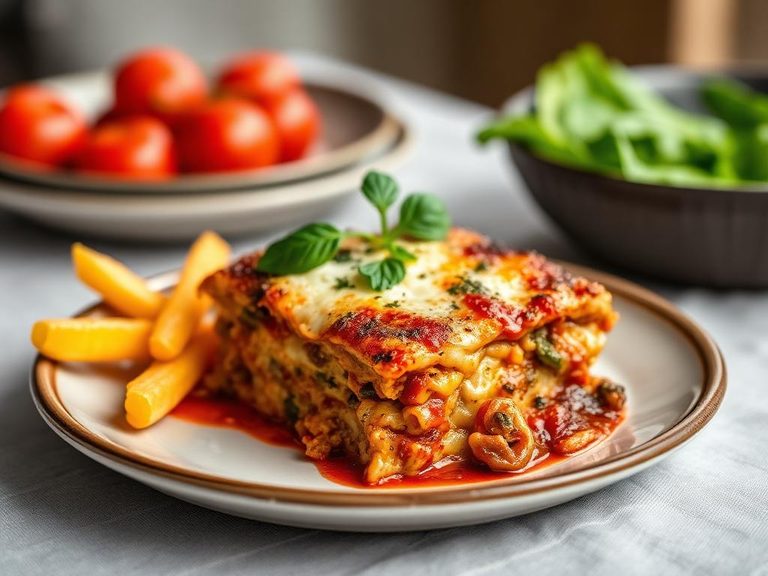
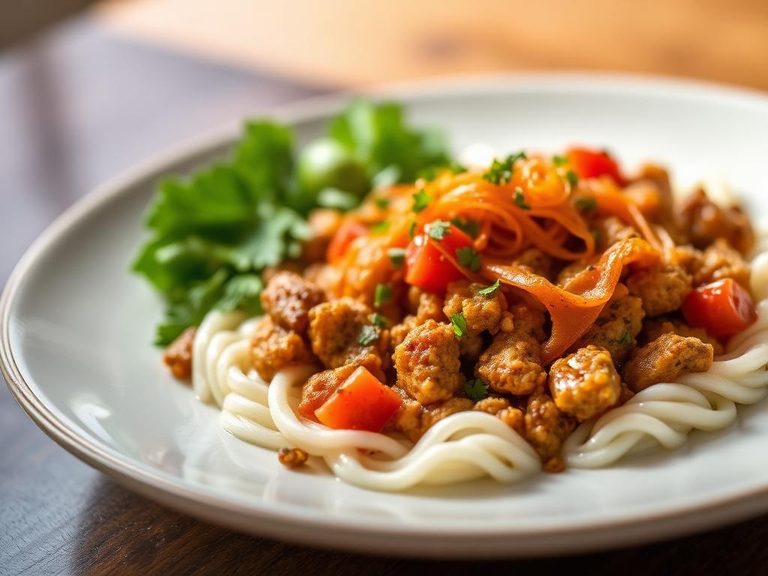
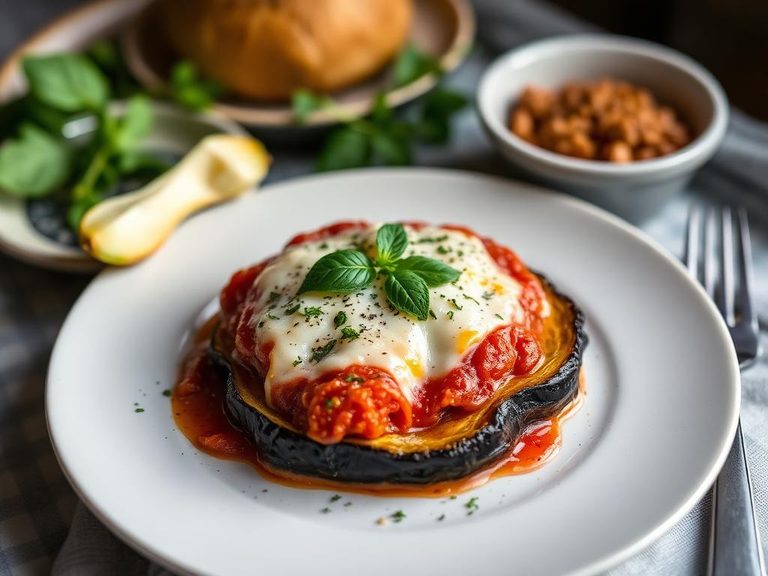
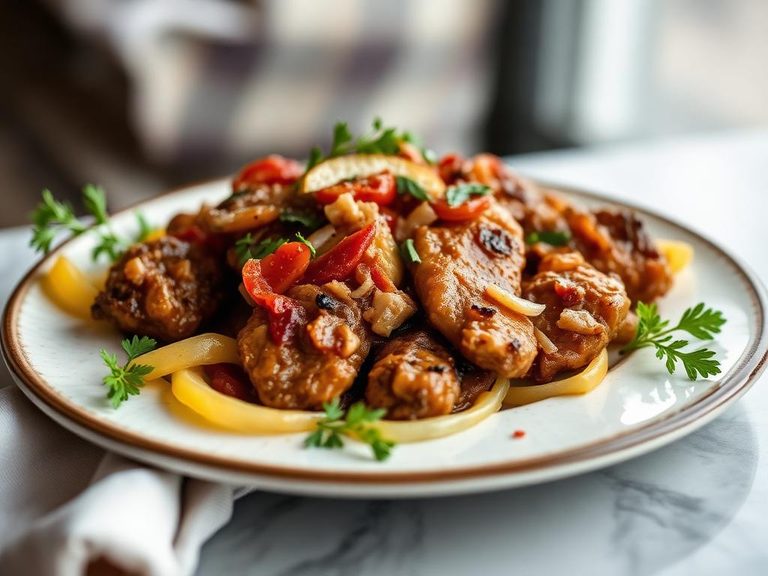
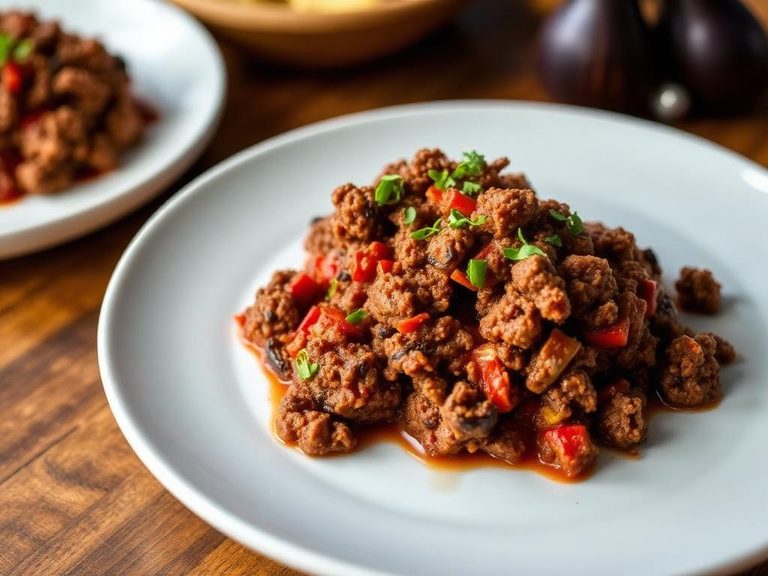
This savory casserole layers tender, silky eggplant with seasoned ground meat, often bound by a light tomato or béchamel sauce. It delivers a rich, umami-forward flavor with a satisfying contrast between the vegetable's creamy texture and the meat's hearty bite. Nutritionally, it's a lean, high-protein option at just 96 kcal per 100g, making it a substantial yet light meal choice.
Calorie split: 29% protein · 19% carbs · 51% fat
↓ Full nutrition💚 Why it's loved
People love it for its comforting, home-cooked appeal and the way the eggplant absorbs savory flavors, creating a deeply satisfying dish. It's also cherished for its versatility, fitting seamlessly into Mediterranean, Middle Eastern, and Balkan cuisines as a hearty, family-style meal.
⚠️ Watch-outs & how to enjoy it better
The dish can be high in sodium if using pre-made sauces or heavily seasoned meat, which may concern those monitoring salt intake. To counteract this, use low-sodium broth, fresh herbs, and garlic for flavor, and pair with a side of steamed greens to balance the meal. Additionally, eggplant contains oxalates, so individuals prone to kidney stones should consume in moderation and ensure adequate hydration.
Key benefits
- High protein-to-calorie ratio for muscle maintenance and satiety.
- Low glycemic index from eggplant helps manage blood sugar levels.
- Rich in fiber and antioxidants like nasunin from eggplant skin.
- Versatile base that can be adapted with various spices and herbs.
- Provides a balanced mix of protein, carbs, and healthy fats.
🍽️ Popular dishes
🌍 Where it's eaten
💡 Did you know?
Eggplant was once called 'mad apple' in medieval Europe because people believed eating it could cause insanity, a myth likely stemming from its bitter taste and nightshade family origins.
Full nutrition (USDA data · scales with serving)
| Water | 81.6 g |
| Energy | 96.0 kcal |
| Protein | 7.1 g |
| Total lipid (fat) | 5.5 g |
| Carbohydrate, by difference | 4.7 g |
| Fiber, total dietary | 1.5 g |
| Total Sugars | 2.9 g |
| Calcium, Ca | 57.0 mg |
| Iron, Fe | 0.85 mg |
| Magnesium, Mg | 15.0 mg |
| Phosphorus, P | 91.0 mg |
| Potassium, K | 224 mg |
| Sodium, Na | 176 mg |
| Zinc, Zn | 1.4 mg |
| Copper, Cu | 0.06 mg |
| Selenium, Se | 7.7 ug |
| Vitamin C, total ascorbic acid | 4.5 mg |
| Thiamin | 0.12 mg |
| Riboflavin | 0.12 mg |
| Niacin | 1.2 mg |
| Vitamin B-6 | 0.13 mg |
| Folate, total | 18.0 ug |
| Folic acid | 0.00 ug |
| Folate, food | 18.0 ug |
| Folate, DFE | 18.0 ug |
| Choline, total | 42.6 mg |
| Vitamin B-12 | 0.59 ug |
| Vitamin B-12, added | 0.00 ug |
| Vitamin A, RAE | 31.0 ug |
| Retinol | 23.0 ug |
| Carotene, beta | 101 ug |
| Carotene, alpha | 0.00 ug |
| Cryptoxanthin, beta | 1.0 ug |
| Lycopene | 536 ug |
| Lutein + zeaxanthin | 131 ug |
| Vitamin E (alpha-tocopherol) | 0.55 mg |
| Vitamin E, added | 0.00 mg |
| Vitamin D (D2 + D3) | 0.20 ug |
| Vitamin K (phylloquinone) | 21.1 ug |
| Alcohol, ethyl | 0.00 g |
| Caffeine | 0.00 mg |
| Theobromine | 0.00 mg |
Fat & fatty acid profile (per 100g)
| Fatty acids, total saturated | 1.9 g |
| SFA 4:0 | 0.01 g |
| SFA 6:0 | 0.01 g |
| SFA 8:0 | 0.01 g |
| SFA 10:0 | 0.02 g |
| SFA 12:0 | 0.02 g |
| SFA 14:0 | 0.14 g |
| SFA 16:0 | 1.1 g |
| SFA 18:0 | 0.51 g |
| Fatty acids, total monounsaturated | 2.2 g |
| MUFA 16:1 | 0.14 g |
| MUFA 18:1 | 2.0 g |
| MUFA 20:1 | 0.02 g |
| MUFA 22:1 | 0.00 g |
| Fatty acids, total polyunsaturated | 0.72 g |
| PUFA 18:2 | 0.61 g |
| PUFA 18:3 | 0.06 g |
| PUFA 18:4 | 0.00 g |
| PUFA 20:4 | 0.01 g |
| PUFA 20:5 n-3 (EPA) | 0.00 g |
| PUFA 22:5 n-3 (DPA) | 0.00 g |
| PUFA 22:6 n-3 (DHA) | 0.00 g |
| Cholesterol | 54.0 mg |
FAQ
Is eggplant and meat casserole suitable for a low-carb diet?
Yes, it's relatively low in carbs at 4.67g per 100g, making it a good option for low-carb diets, especially if you avoid high-carb toppings like breadcrumbs.
Can I make this dish vegetarian?
Absolutely—replace the meat with lentils, mushrooms, or textured vegetable protein for a plant-based version that retains the hearty texture and flavor.
How do I prevent the eggplant from becoming soggy?
Salt the eggplant slices and let them sit for 30 minutes to draw out moisture, then pat dry before cooking. This helps them hold their shape and absorb less oil.
What's the best way to store leftovers?
Store in an airtight container in the refrigerator for up to 3 days, or freeze for up to 2 months. Reheat in the oven at 350°F (175°C) to maintain texture.
Nutrient density (calculated · NRF9.3)
Nutrient Rich Foods index: beneficial nutrients (protein, fiber, vitamins, minerals) minus saturated fat, added sugar & sodium, per 100 kcal.
NRF9.3 index — Fulgoni, Keast & Drewnowski, 2009. Computed from USDA nutrients.
Weight-loss friendliness (composite index)
Energy density 0.96 kcal/g · 30% calories from protein · 1.5 g fiber · 2.9 g sugar per 100 g.
Composite of energy density (Rolls et al., 1999), protein & fiber satiety, minus sugar. A calculated heuristic — ranks satiety-per-calorie, not a clinical measure.
Dietary load (calculated from USDA values)
Potential renal acid load. Positive = acid-forming, negative = alkaline-forming.
Sodium-to-potassium ratio: 0.79 (lower is better — aim for ≤ 1)
Sodium:potassium per WHO potassium guidance. Computed from USDA nutrients.