

Cornmeal, white, self-rising, degermed, enriched
Whole food · Cereal Grains and Pasta

Photo: Wikipedia
A finely milled, degermed, and enriched white cornmeal that cooks into a smooth, pale yellow porridge or a tender, crumbly bread. It has a mild, slightly sweet corn flavor and a light, uniform texture, lacking the grit of stone-ground varieties. Its primary nutritional highlight is its high carbohydrate content, providing a quick source of energy, while the enrichment adds back B vitamins and iron.
Calorie split: 10% protein · 86% carbs · 4% fat
↓ Full nutrition💚 Why it's loved
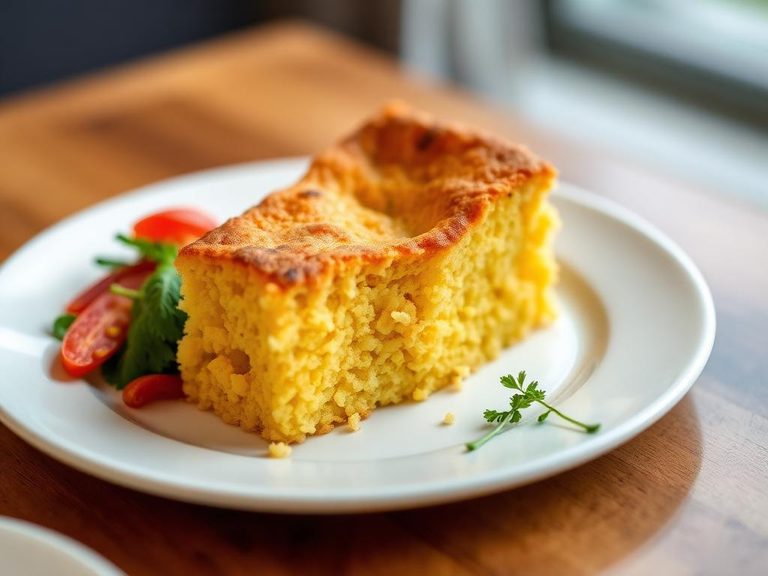
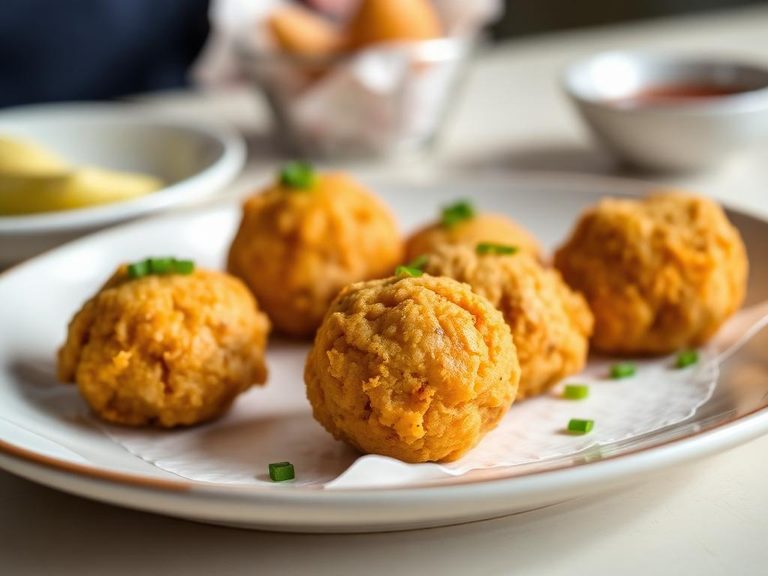
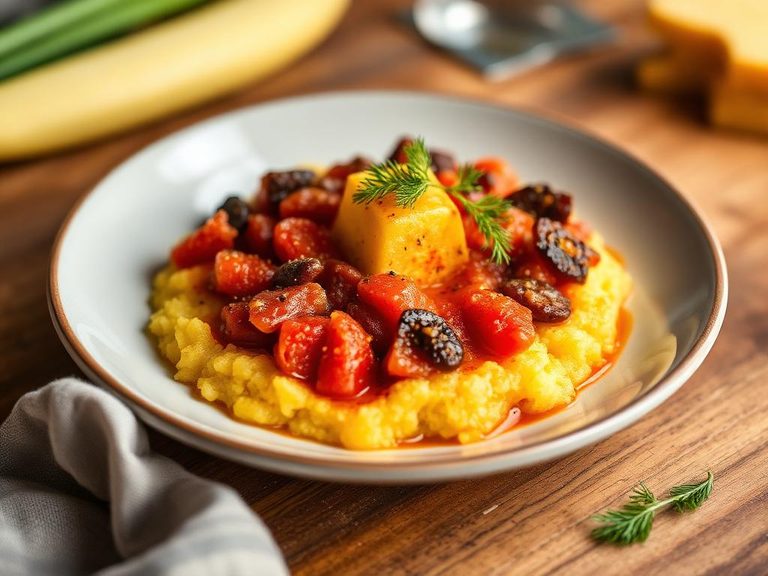
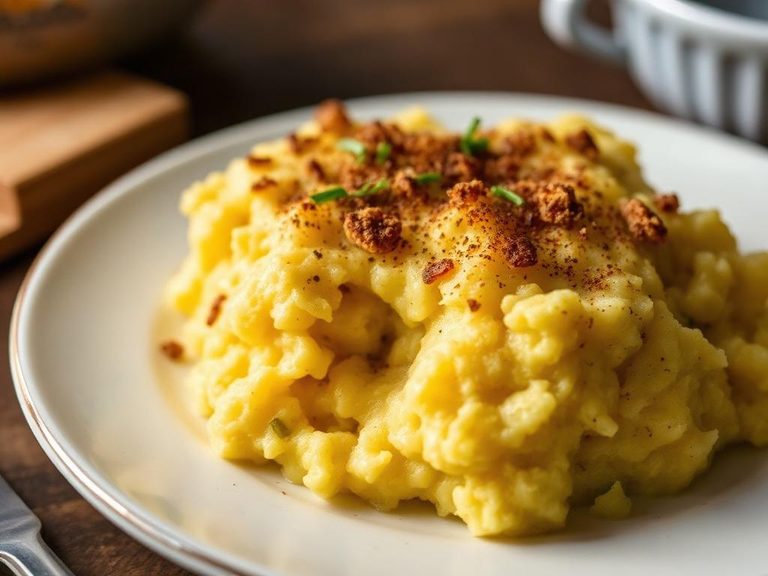
People love it for its incredibly smooth texture and mild, comforting flavor that acts as a perfect canvas for other ingredients. It's a cultural staple in the American South for making tender cornbread, hoecakes, and creamy polenta, symbolizing home cooking and tradition.
⚠️ Watch-outs & how to enjoy it better
Its high carbohydrate and low fiber content can lead to rapid blood-sugar spikes, especially when eaten in large portions. To counteract this, pair it with a source of protein (like beans or cheese) and healthy fat (like olive oil or avocado), and opt for a smaller serving. It is also often enriched with folic acid, which some individuals may wish to avoid, and can be high in sodium if using a self-rising mix.
Key benefits
- Provides a quick, dense source of energy from carbohydrates.
- Enriched with iron and B vitamins (thiamin, niacin, folic acid) to replace nutrients lost in milling.
- Naturally low in fat and contains some dietary fiber.
- Gluten-free, making it suitable for those with celiac disease or gluten sensitivity.
- Versatile base for both savory and sweet dishes.
🍽️ Popular dishes

🌍 Where it's eaten
💡 Did you know?
Self-rising cornmeal contains leavening agents (baking powder) and salt, so it was historically marketed as a convenience product for quick breads, eliminating the need to measure and mix these ingredients separately.
Full nutrition (USDA data · scales with serving)
| Water | 10.2 g |
| Energy | 355 kcal |
| Energy | 1484 kj |
| Protein | 8.4 g |
| Total lipid (fat) | 1.7 g |
| Ash | 4.9 g |
| Carbohydrate, by difference | 74.8 g |
| Fiber, total dietary | 7.1 g |
| Calcium, Ca | 350 mg |
| Iron, Fe | 4.7 mg |
| Magnesium, Mg | 49.0 mg |
| Phosphorus, P | 623 mg |
| Potassium, K | 170 mg |
| Sodium, Na | 1348 mg |
| Zinc, Zn | 1.0 mg |
| Copper, Cu | 0.13 mg |
| Vitamin C, total ascorbic acid | 0.00 mg |
| Thiamin | 0.68 mg |
| Riboflavin | 0.39 mg |
| Niacin | 4.6 mg |
| Vitamin B-6 | 0.39 mg |
| Folate, total | 233 ug |
| Folic acid | 202 ug |
| Folate, food | 31.0 ug |
| Folate, DFE | 375 ug |
| Vitamin B-12 | 0.00 ug |
| Vitamin A, RAE | 0.00 ug |
| Retinol | 0.00 ug |
| Vitamin A, IU | 0.00 iu |
| Vitamin D (D2 + D3), International Units | 0.00 iu |
| Vitamin D (D2 + D3) | 0.00 ug |
Fat & fatty acid profile (per 100g)
| Fatty acids, total saturated | 0.23 g |
| SFA 10:0 | 0.00 g |
| SFA 12:0 | 0.00 g |
| SFA 14:0 | 0.00 g |
| SFA 16:0 | 0.19 g |
| SFA 18:0 | 0.03 g |
| Fatty acids, total monounsaturated | 0.43 g |
| MUFA 16:1 | 0.01 g |
| MUFA 18:1 | 0.42 g |
| Fatty acids, total polyunsaturated | 0.74 g |
| PUFA 18:2 | 0.72 g |
| PUFA 18:3 | 0.02 g |
| Cholesterol | 0.00 mg |
Amino acid profile (per 100g)
Estimated from Cornmeal, degermed, unenriched, white — USDA does not publish this profile for Cornmeal.
| Tryptophan | 0.04 g |
| Threonine | 0.17 g |
| Isoleucine | 0.24 g |
| Leucine | 1.0 g |
| Lysine | 0.10 g |
| Methionine | 0.16 g |
| Cystine | 0.16 g |
| Phenylalanine | 0.37 g |
| Tyrosine | 0.19 g |
| Valine | 0.34 g |
| Arginine | 0.24 g |
| Histidine | 0.17 g |
| Alanine | 0.56 g |
| Aspartic acid | 0.47 g |
| Glutamic acid | 1.5 g |
| Glycine | 0.22 g |
| Proline | 0.75 g |
| Serine | 0.34 g |
| Hydroxyproline | 0.00 g |
FAQ
What is the difference between self-rising and regular cornmeal?
Self-rising cornmeal has baking powder and salt added to it, so it's designed for quick breads and batters. Regular cornmeal does not contain these leavening agents and requires separate addition of baking powder and salt if you want a risen product.
What does 'degermed' mean for cornmeal?
Degermed means the germ (the oily, nutrient-rich part of the corn kernel) has been removed. This gives the cornmeal a longer shelf life and a finer, smoother texture, but it also removes some natural fats and nutrients.
Can I use this cornmeal to make polenta?
Yes, but it will produce a very smooth, creamy polenta, unlike the coarser texture of traditional stone-ground polenta. It's a good choice if you prefer a less gritty consistency.
Nutrient density (calculated · NRF9.3)
Nutrient Rich Foods index: beneficial nutrients (protein, fiber, vitamins, minerals) minus saturated fat, added sugar & sodium, per 100 kcal.
NRF9.3 index — Fulgoni, Keast & Drewnowski, 2009. Computed from USDA nutrients.
Weight-loss friendliness (composite index)
Energy density 3.55 kcal/g · 9% calories from protein · 7.1 g fiber · 0.0 g sugar per 100 g.
Composite of energy density (Rolls et al., 1999), protein & fiber satiety, minus sugar. A calculated heuristic — ranks satiety-per-calorie, not a clinical measure.
Dietary load (calculated from USDA values)
Potential renal acid load. Positive = acid-forming, negative = alkaline-forming.
Sodium-to-potassium ratio: 7.93 (lower is better — aim for ≤ 1)
Sodium:potassium per WHO potassium guidance. Computed from USDA nutrients.